Introduction: Welcome to the AI-First Search Era
The rise of AI-powered search experiences—like Google’s Search Generative Experience (SGE), Bing’s AI co-pilot, and ChatGPT with browsing—has transformed how users interact with search engines. Instead of sifting through pages of blue links, users now receive AI-generated summaries that directly answer their queries. These summaries are concise, intelligent, and often eliminate the need for users to click through to a website.
This shift has disrupted traditional SEO strategies, placing a premium on content formatting that is optimized for machine understanding. Simply creating long-form content with high keyword density is no longer enough. Today, your content must be structured, scannable, and semantically rich so that AI models can identify, extract, and repurpose your information into search summaries.
This article explores how you can optimize your content specifically for AI summaries to improve visibility, relevance, and engagement in this new search environment.
Why Content Formatting Matters for AI Summaries
Search engines are no longer just indexing content—they’re interpreting it. With the help of Large Language Models (LLMs), they parse massive amounts of data and generate human-like answers in real time. However, these AI systems don’t “read” like humans—they depend on structural clues to understand what matters.
Poorly formatted content gets ignored or misinterpreted. Well-structured content—organized under clear headings, broken into digestible parts, and marked up semantically—is more likely to be featured in AI snapshots, AI-driven carousels, and even voice search results.
10 Key Content Formatting Techniques for AI Optimization
1. Start with a Clear and Concise Answer
Why it matters: AI summaries are built to serve users instantly. If your content doesn’t deliver an answer upfront, it won’t be featured.
Best practice: Use the inverted pyramid writing style. Begin with the key answer or outcome, then expand on it.
Example:
Query: “What is GST in India?”
Answer:
“GST (Goods and Services Tax) is a unified indirect tax in India levied on the supply of goods and services. It replaced various state and central taxes to simplify the tax system.”
Follow this with detailed explanations, use cases, and history.
2. Use Question-Based Headings (H2s & H3s)
Why it matters: AI models organize content based on section headers. Clear, question-based headings mirror user queries, making content more discoverable.
Best practice:
- Use H2s for major questions
- Use H3s for related sub-questions
- Align headings with user intent (e.g., informational, transactional)
Example Headings:
- H2: What are the benefits of registering under GST?
- H2: Who is exempt from GST in India?
- H3: GST threshold for small businesses
3. Incorporate Lists and Bullet Points
Why it matters: AI extracts content more easily when it’s organized in bite-sized chunks.
Best practice:
- Use bullet points for features, benefits, or highlights
- Use numbered lists for processes or steps
Example:
Steps to register a business in India:
- Choose a business structure (e.g., Pvt Ltd, LLP)
- Get a Digital Signature Certificate (DSC)
- Obtain a Director Identification Number (DIN)
- Apply for name approval on the MCA portal
- File incorporation documents and obtain CIN
This format is highly likely to appear in AI-generated summaries or as a “how-to” list.
4. Create FAQ Sections with Schema Markup
Why it matters: FAQ content mirrors conversational queries and is often pulled into AI overviews or voice assistants.
Best practice:
- Add FAQs at the end of each article
- Use Google’s FAQ schema markup to help search engines understand structure
Example FAQs:
Q: Is GST registration mandatory for freelancers?
A: Yes, if annual income exceeds ₹20 lakhs (₹10 lakhs in some states), GST registration is mandatory.
Q: Can I file GST returns online?
A: Yes, GST returns can be filed on the official GST portal using your credentials.
5. Use Tables for Comparisons and Structured Data
Why it matters: Tables are easy for AI to parse and present in comparison summaries.
Best practice:
Use tables for comparing products, plans, taxes, features, or laws.
Example Table:
| Type of Business | GST Required? | Threshold Turnover |
|---|---|---|
| Sole Proprietor | Yes | ₹20 lakhs |
| Pvt Ltd Company | Yes | ₹20 lakhs |
| Freelancers (Services) | Yes | ₹20 lakhs (₹10L NE) |
Such tables often appear in featured snippets or SGE panels.
6. Keep Sentences Short and Language Simple
Why it matters: AI prefers content that is easy to summarize. Long, complex sentences get misinterpreted or skipped.
Best practice:
- Keep sentences under 20 words
- Avoid unnecessary jargon
- Use active voice
- Break long paragraphs into smaller blocks
7. Highlight Key Statistics and Data
Why it matters: AI-generated summaries often feature statistics or quantifiable insights to enhance credibility.
Best practice:
- Use data points near the top of articles
- Cite authoritative sources
- Highlight numbers in bold or pull-quotes
Example:
“According to the GST Council, over 1.38 crore businesses in India are registered under GST as of 2024.”
8. Include Author Information and Publish Dates
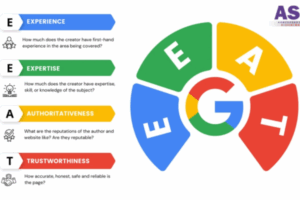
Why it matters: Google’s AI systems evaluate trustworthiness and freshness—especially for YMYL (Your Money or Your Life) content.
Best practice:
- Display author bios with credentials
- Add publish and update dates
- Link to primary sources (e.g., .gov.in, official PDFs)
9. Use Content Hubs and Internal Links
Why it matters: AI models favor content from topical authorities. Creating a web of related articles signals depth.
Best practice:
- Link related articles within your content
- Create cornerstone content pages
- Use breadcrumbs and related post widgets
Example:
From an article on “GST for Small Businesses,” link to:
- “How to File GSTR-3B Online”
- “Common GST Mistakes to Avoid”
- “GST Calculator Tool for SMEs”
10. Optimize for Conversational Search
Why it matters: AI-powered search is increasingly voice-based or chat-based. Your content should sound like it belongs in a conversation.
Best practice:
- Use natural language
- Anticipate follow-up questions
- Include variations of common phrases
Example:
Instead of:
“GST is a destination-based tax implemented on July 1, 2017.”
Try:
“GST, launched in 2017, is a tax you pay where your goods or services are consumed—not where they’re produced.”
Real-World Example: “TaxBuddy India”
Background:
TaxBuddy is a startup that provides tax filing assistance and guides for Indian freelancers and small businesses.
Challenge:
Their blog was ranking well on Google but losing visibility in AI summaries and voice search queries after SGE rollout.
Solution:
They restructured their content using the formatting strategies discussed:
- Added TL;DR summaries to each blog post
- Introduced question-based headings
- Used FAQ schema
- Created comparison tables for tax-saving options
- Shortened paragraphs and sentences
- Created content clusters on GST, ITR filing, and income tax deductions
Results:
- 37% increase in impressions from AI-powered Google Search results
- Blog content appeared in SGE overviews for over 25 tax-related queries
- 18% rise in branded search traffic (users now search “TaxBuddy GST guide”)
- Doubled newsletter signups via FAQ lead magnets
Conclusion: Content Formatting is the New SEO Frontier
As AI reshapes search, formatting has become just as important as content quality. Whether you’re a blogger, brand, or enterprise publisher, your content must be designed not just for people—but also for machines.
To succeed in this AI-first search world:
- Prioritize clarity and structure
- Use tools like schema markup, heading hierarchies, and lists
- Think about how your content would be quoted by an AI
- Format for quick summarization and accurate interpretation
Remember, your goal isn’t just to get users to your site—it’s to be the source AI trusts to summarize. Do that well, and you’ll maintain high visibility—even when clicks decline.