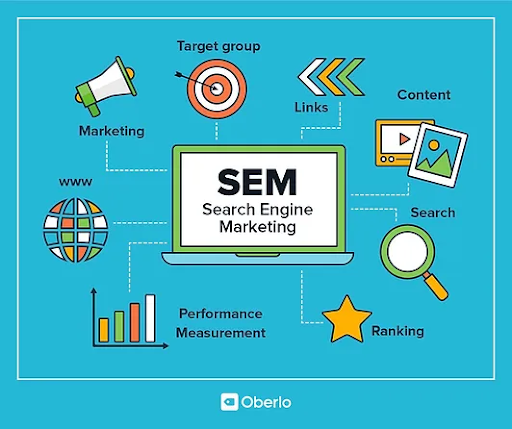
In today’s online world, every business wants to appear in front of people when they search for something on Google or other search engines. But with so many websites competing, how can a business make sure customers notice them? This is where SEM comes in. If you are new to digital marketing, you may ask, what is SEM in digital marketing? Let’s break it down in very simple words.
Meaning of SEM
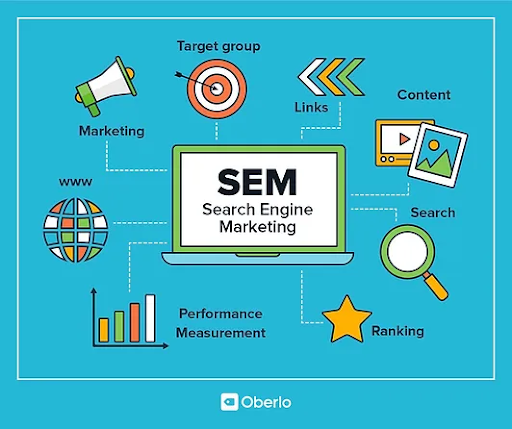
SEM stands for Search Engine Marketing. It is a method used to promote websites by making them more visible in search engine results pages (SERPs). While SEO focuses on getting free or organic traffic, SEM mostly involves paid advertising. In other words, businesses pay search engines like Google to show their ads when people search for related products or services.
For example, if someone searches “buy sports shoes online,” you might see an ad at the top of Google results. That ad is a part of SEM.
How SEM Works
The process of SEM is simple to understand:
- Keyword Research: Businesses first choose the right keywords that people are searching for.
- Creating Ads: Marketers create short, clear ads that match those keywords.
- Bidding on Keywords: In SEM, businesses bid money for their ad to appear when someone searches for that keyword.
- Showing Ads: When users type those words on Google, the search engine shows ads of the highest bidders and the most relevant businesses.
- Pay-Per-Click (PPC): Businesses only pay when someone clicks on their ad. This makes SEM cost-effective and result-oriented.
Why SEM is Important in Digital Marketing
SEM plays a very big role in the success of a business online. Here’s why:
- Instant Visibility: Unlike SEO, which takes months, SEM gives quick results. A business can appear on the first page of Google within hours of starting a campaign.
- Targeted Ads: SEM allows businesses to target the right audience based on location, age, interests, and more.
- Budget Control: Businesses can set their own budget and only pay for clicks.
- Measurable Results: With SEM tools, companies can track how many people saw their ad, clicked on it, and even made a purchase.
Common Examples of SEM
To understand SEM better, here are a few simple examples:
- A local bakery running Google Ads for “best cakes near me.”
- An online store bidding for the keyword “buy mobile phones.”
- A travel company advertising for “cheap flight tickets.”
- A fitness trainer promoting ads for “online workout classes.”
These examples show how SEM can be used by different businesses to reach their customers directly.
SEM vs SEO
Many people confuse SEM with SEO. Here’s the difference in easy terms:
- SEO: Improves a website to appear higher in Google results naturally, without paying.
- SEM: Uses paid ads to appear on top of search results quickly.
Both are part of digital marketing, and together they help businesses grow online.
Conclusion
So, what is SEM in digital marketing? In simple words, SEM means promoting a business through paid ads on search engines like Google. It helps businesses appear on the first page quickly, target the right audience, and pay only when users click their ads. SEM is powerful because it gives fast results and ensures that businesses connect with people who are already searching for their products or services.