In digital marketing, understanding how your ads are priced and measured is very important. Different advertising models help marketers track performance and control spending. One of the most popular pricing models is CPM. If you are new to online advertising, you might have heard this term but may not fully understand what it means. Let’s break down what CPM is and why it matters in a simple and easy way.
What Is CPM?
CPM stands for Cost Per Mille, where “mille” means one thousand in Latin. In simple words, CPM refers to the cost per thousand impressions of an advertisement. An impression means that your ad was shown or displayed once to a user.
For example, if a company pays ₹500 for 1,000 ad impressions, the CPM is ₹500. This means they spend ₹500 every time their ad is displayed 1,000 times on a website or app.
The CPM model is mainly used in brand awareness campaigns where the goal is to show the ad to as many people as possible, rather than getting direct clicks or sales.
Why Is CPM Important in Digital Marketing?
CPM is very important because it helps advertisers measure how much they are spending to reach a large audience. It is especially useful when the main goal is to build visibility or brand awareness instead of direct conversions.
Here are some key reasons why CPM matters:
- Brand Awareness: CPM helps companies spread their brand message to a large audience efficiently.
- Budget Planning: Advertisers can easily plan how much money to spend to reach a specific number of people.
- Performance Tracking: CPM allows marketers to measure how many times their ad was viewed within a set budget.
- Cost Comparison: By comparing CPM across platforms like Google Ads, Facebook Ads, or YouTube, advertisers can see which platform gives better exposure at a lower cost.
Overall, CPM gives a clear picture of how much you’re paying for visibility — not for clicks, but for views.
How Is CPM Calculated?
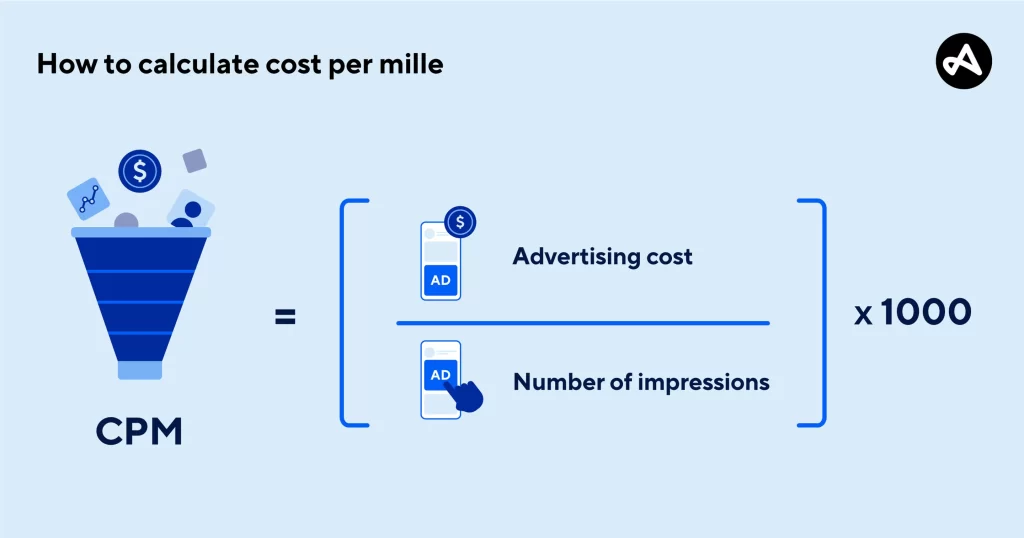
The formula to calculate CPM is simple:
CPM = (Total Cost of Campaign ÷ Total Impressions) × 1,000
For example, if you spent ₹2,000 on a campaign that received 10,000 impressions, your CPM would be ₹200.
Most digital marketing platforms automatically calculate CPM for you, so you can easily track it in your campaign reports.
When to Use CPM in Digital Marketing
CPM is best suited for campaigns where your main goal is to make people aware of your brand, product, or service. For example:
- Launching a new product: When you want as many people as possible to see your new offering.
- Building brand recognition: If your goal is to get your logo or name in front of a large audience.
- Promoting events or announcements: When you want to reach a wide audience quickly.
In these cases, CPM is more effective than paying per click because visibility is more important than direct actions.
Factors That Affect CPM
Several factors can influence CPM rates in digital marketing:
- Ad Placement: Ads shown on premium websites or top positions cost more.
- Audience Targeting: Highly specific or competitive audiences can increase CPM.
- Ad Quality: Engaging and relevant ads often enjoy lower CPM due to better performance.
- Time of Year: During festive seasons or big events, CPM rates may rise due to high demand.
- Platform Used: Different platforms have different average CPM rates. For example, LinkedIn usually has a higher CPM than Facebook.
Understanding these factors helps advertisers manage costs better and optimize campaigns for maximum reach.
Conclusion
In conclusion, CPM in digital marketing is a key metric that helps businesses measure the cost of reaching 1,000 viewers. It’s a great way to track brand visibility and awareness. While CPM doesn’t focus on clicks or conversions, it is perfect for building recognition and trust among potential customers.