Social media has transformed how people communicate, socialize, share information, and conduct business. Among the many platforms that dominate the social media landscape, Facebook has been one of the most influential since its launch in 2004. However, with the rise of other platforms like Instagram, Twitter (now X), TikTok, LinkedIn, Snapchat, and YouTube, users have a broad range of options depending on their goals, interests, and audience. While each platform shares the common goal of enabling social interaction, they differ in design, purpose, features, audience, and use cases.
This essay compares and contrasts Facebook with other major social media platforms across several dimensions—functionality, user base, content style, engagement, privacy, and business utility—and includes a real-world example to illustrate how users and businesses strategically use multiple platforms differently.
1. Facebook: A Social Media Giant
Facebook is a versatile platform designed primarily for building and maintaining personal and community relationships. It allows users to create profiles, share status updates, photos, and videos, join groups, follow pages, engage with events, and communicate via Messenger. Over time, Facebook has expanded into a central hub for news consumption, entertainment, e-commerce, and advertising.
Key features:
- News Feed
- Groups and Pages
- Events and Marketplace
- Live streaming
- Facebook Reels (short videos)
- Messenger (direct messaging)
2. Instagram: Visual Storytelling
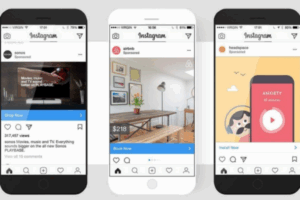
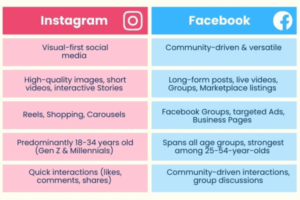
Instagram, owned by Meta (Facebook’s parent company), focuses on visual content, particularly photos and videos. Originally created to share snapshots, Instagram has evolved into a platform for influencer marketing, brand promotion, and lifestyle content. Features like Stories, Reels, and IGTV support short-form and long-form video content.
Comparison:
- Facebook is content-diverse (text, links, events), while Instagram is image/video-first.
- Facebook’s audience is older (30s–60s), while Instagram appeals more to younger users (18–35).
- Instagram lacks Facebook’s deep group/community features, but offers aesthetic and aspirational content appeal.
Contrast:
- Instagram emphasizes visual curation over conversation.
- Facebook offers more long-form content and discussion opportunities.
3. Twitter (X): Real-Time Updates and Public Conversation
Twitter, now rebranded as X, is a platform for real-time news, opinions, and public conversation. Posts (“tweets”) are short and fast-paced, encouraging timely updates and interactions. It is popular among journalists, politicians, brands, and activists for its immediacy and public visibility.
Comparison:
- Like Facebook, Twitter allows users to follow people and pages, comment, share, and like posts.
- Both platforms are used for news distribution and discussion.
Contrast:
- Twitter has a character limit (formerly 280 characters), promoting brevity.
- Facebook encourages more personal and community-based interactions; Twitter is open and topic-driven.
- Twitter doesn’t focus on private groups or detailed user profiles like Facebook.
4. TikTok: Entertainment and Short-Form Video
TikTok is a short-form video platform centered around creative expression, trends, and viral content. It uses a powerful algorithm to serve entertaining videos based on user behavior, making it highly addictive and engaging.
Comparison:
- Both platforms offer short videos—Facebook via Reels, TikTok by default.
- Both allow content discovery through algorithmic feeds and hashtags.
Contrast:
- TikTok’s interface is video-only and vertical, while Facebook offers a mix of content formats.
- TikTok has a younger, Gen Z audience, and focuses more on creative self-expression and humor.
- Facebook offers structured social networking, while TikTok emphasizes algorithm-driven entertainment.
5. LinkedIn: Professional Networking
LinkedIn is a platform for professional connections, job hunting, career development, and industry discussions. It targets business professionals, recruiters, and companies looking to network or promote professional content.
Comparison:
- Like Facebook, LinkedIn allows users to create profiles, post updates, join groups, and message others.
Contrast:
- Facebook is personal and casual; LinkedIn is formal and career-oriented.
- Facebook content includes family photos and memes, whereas LinkedIn features resumes, job posts, and thought leadership.
- Businesses use Facebook for consumer outreach, while LinkedIn is used for B2B (business-to-business) marketing.
6. Snapchat: Private Sharing and Ephemeral Content
Snapchat pioneered the idea of disappearing content and private communication through short-lived “Snaps” and Stories. It appeals mostly to teens and young adults and focuses on casual, real-time sharing.
Comparison:
- Both Facebook and Snapchat offer Stories and messaging.
- Facebook mimicked many Snapchat features (like filters and disappearing messages).
Contrast:
- Snapchat emphasizes private, momentary sharing, whereas Facebook maintains a long-term content record.
- Snapchat doesn’t offer the broad content feed or group networking Facebook does.
7. YouTube: Video Platform and Search Engine
YouTube is the leading platform for video hosting, streaming, and monetization. It functions more as a search engine for videos than a traditional social network.
Comparison:
- Both Facebook and YouTube support video content, live streaming, and comments.
- Both allow monetization through ads.
Contrast:
- Facebook is social-first, YouTube is video-first.
- YouTube is optimized for long-form video and educational content; Facebook is optimized for engagement and community.
8. Content Engagement and Algorithms
All platforms use algorithms to prioritize content, but the mechanics differ:
- Facebook’s algorithm favors content from friends, groups, and pages with high engagement.
- Instagram’s algorithm prioritizes content based on relationships, recency, and relevance.
- TikTok’s algorithm is purely interest-based—users are shown content they may like regardless of who posted it.
- Twitter/X’s algorithm focuses on recency and trending topics.
- LinkedIn’s algorithm favors professional relevance and engagement.
- YouTube’s algorithm promotes videos with high watch time and viewer retention.
Key Insight: Facebook’s algorithm encourages community-driven interaction, whereas others like TikTok or YouTube promote content-first discovery.
9. Advertising and Business Use
Facebook is one of the most robust platforms for business advertising due to its rich targeting options:
- Age, gender, interests, behavior, location
- Custom audiences and retargeting
- Marketplace for product listings
- Integration with Instagram ads
Other platforms vary in ad options:
- Instagram (as part of Meta) shares Facebook’s ad system
- LinkedIn targets professionals and job seekers—ideal for B2B
- Twitter/X allows promoted tweets and trends
- TikTok uses short, immersive ad formats, mostly for Gen Z
- Snapchat offers AR filters and Story ads
- YouTube uses skippable and non-skippable video ads
Contrast: Facebook excels in demographic targeting and conversions, whereas platforms like TikTok and YouTube are stronger in brand awareness through viral content and long-form engagement.
10. Real-World Example: Multi-Platform Strategy by a Clothing Brand
Consider a mid-sized clothing brand called UrbanEdge Apparel.
They use multiple platforms strategically:
- Facebook: Posts updates, runs ads to target specific age groups, uses Messenger for customer service, and manages a private group for loyal fans.
- Instagram: Shares styled photos, Reels with outfit transitions, and Stories showing behind-the-scenes looks.
- TikTok: Creates humorous videos and fashion tips to reach Gen Z.
- Twitter/X: Shares flash sales, responds to customer questions, and posts trending memes.
- LinkedIn: Posts about company culture and recruitment.
- YouTube: Hosts detailed fashion guides and seasonal lookbooks.
This multi-platform approach leverages each platform’s unique strengths—Facebook for targeted advertising and community, Instagram for visuals, TikTok for virality, and LinkedIn for employer branding.
Conclusion
Facebook remains one of the most comprehensive social media platforms, offering a wide array of features for communication, content sharing, community-building, and business promotion. However, other platforms like Instagram, Twitter/X, TikTok, LinkedIn, Snapchat, and YouTube each serve distinct purposes and appeal to different audiences.
- Facebook offers a balanced, feature-rich platform but faces competition in visual content (Instagram), real-time news (Twitter/X), and short-form video (TikTok).
- Businesses and individuals benefit most when they understand the strengths and limitations of each platform and use them together strategically.
In a constantly evolving digital landscape, the ability to compare, contrast, and creatively leverage these platforms is key to success in communication, marketing, and social engagement.