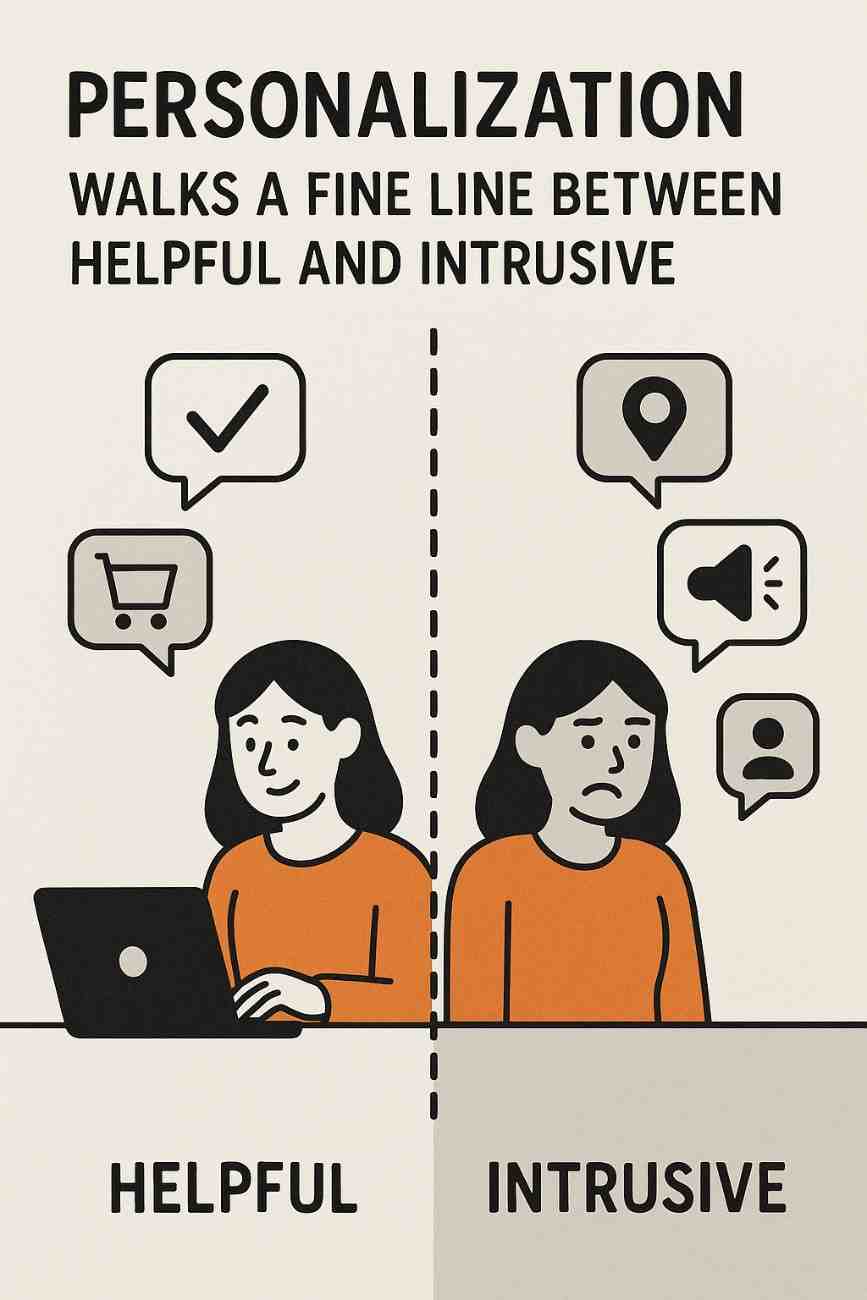
Personalization in marketing, e-commerce, and digital services has become a cornerstone of modern customer engagement. By leveraging data to tailor experiences to individual preferences, businesses can enhance user satisfaction, increase engagement, and drive conversions. However, personalization treads a delicate balance between being helpful—delivering relevant, valuable content—and being intrusive, where it risks violating privacy, eroding trust, or overwhelming users. This fine line is shaped by factors such as data collection practices, user consent, transparency, and the appropriateness of personalized content. Below, we explore how personalization navigates this balance, the ethical and practical implications, and provide an example to illustrate the consequences of crossing the line into intrusiveness.
The Value of Personalization
Personalization uses data such as browsing history, purchase records, demographic information, and user preferences to customize experiences. For example, an e-commerce platform might recommend products based on past purchases, or a streaming service might suggest movies aligned with a user’s viewing history. When done well, personalization offers significant benefits:
- Enhanced User Experience: Tailored recommendations save time and effort, helping users find products, services, or content that match their interests. For instance, Spotify’s personalized playlists, like Discover Weekly, introduce users to new music they’re likely to enjoy, improving satisfaction.
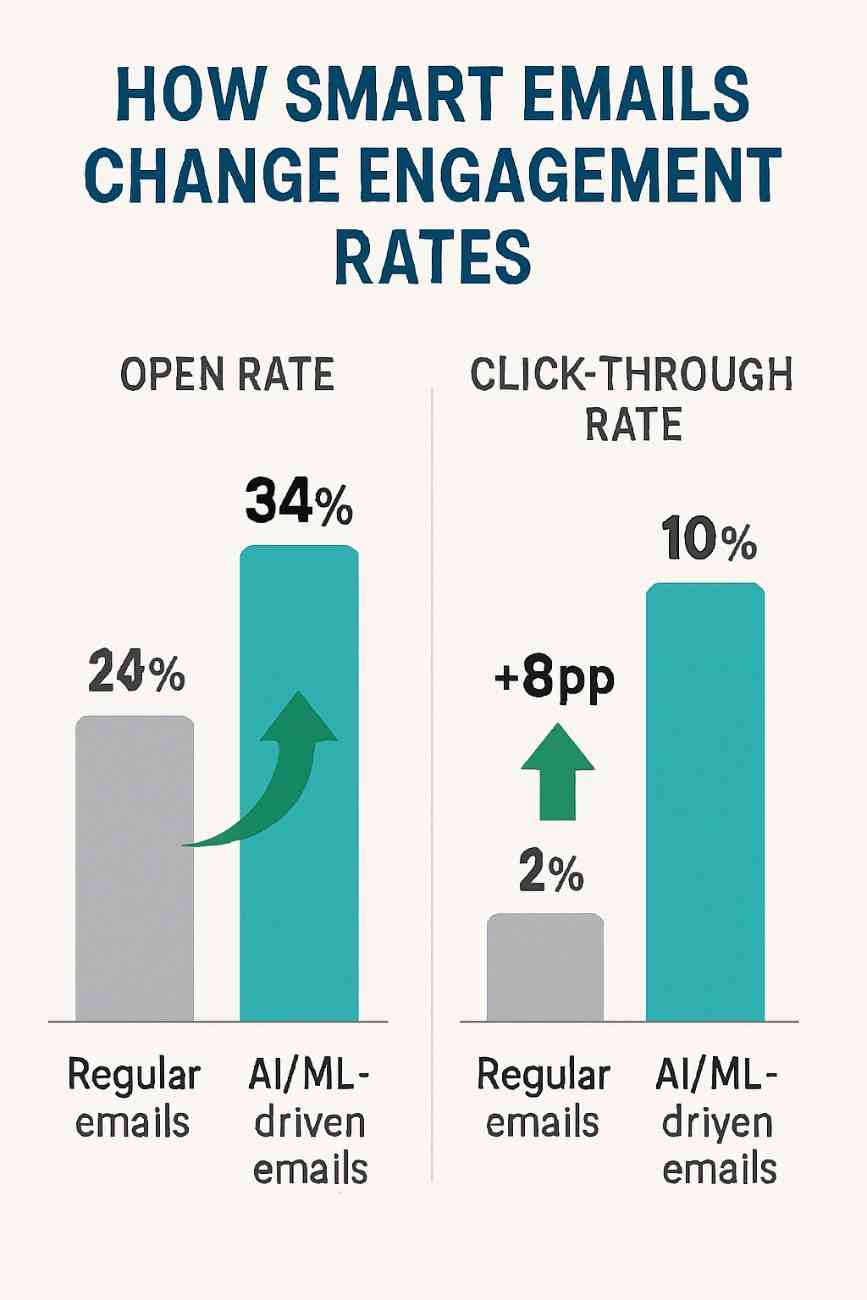
- Increased Engagement: Personalized emails with relevant subject lines or offers can boost open rates by 26% and click-through rates by 14%, according to marketing studies. This shows that users are more likely to engage with content that feels relevant.
- Improved Business Outcomes: Personalization can drive sales, with 80% of consumers more likely to purchase from brands offering tailored experiences, per Epsilon research. Businesses benefit from higher conversion rates and customer loyalty.
These advantages make personalization a powerful tool, but its effectiveness hinges on respecting user boundaries and maintaining trust.
The Risks of Intrusive Personalization
When personalization oversteps, it can become intrusive, leading to discomfort, distrust, or outright rejection by users. Several factors contribute to this risk:
Excessive Data Collection
Personalization relies on collecting vast amounts of data, often including sensitive information like location, search history, or personal preferences. If users are unaware of how their data is collected or feel it’s being gathered without consent, personalization can feel like surveillance. For example, tracking a user’s location to send hyper-localized ads might seem helpful, but if done without clear permission, it can feel like an invasion of privacy.
Lack of Transparency and Consent
Ethical personalization requires clear communication about what data is collected and how it’s used. If businesses bury disclosures in fine print or use vague terms like “improving services,” users may feel manipulated. The General Data Protection Regulation (GDPR) and California Consumer Privacy Act (CCPA) mandate explicit consent for data use, yet some companies skirt these rules, risking fines and user backlash. Without transparency, even well-intentioned personalization can seem deceptive.
Over-Personalization
When personalization becomes too specific, it can cross into “creepy” territory. For instance, if an email references a user’s recent in-store purchase or a specific webpage they viewed without clear context, it may unsettle them. This phenomenon, known as the “privacy paradox,” occurs when users value personalization but feel uneasy about the data required to achieve it. A 2019 Pew Research study found that 63% of Americans believe companies know too much about them, highlighting the fine line between helpful and intrusive.
Irrelevant or Overwhelming Content
Poorly executed personalization can frustrate users if recommendations are inaccurate or excessive. For example, bombarding users with emails based on outdated preferences or irrelevant data can lead to annoyance and disengagement. High email frequency—say, multiple daily messages—can also overwhelm users, with 49% of consumers unsubscribing due to too many emails, according to a 2021 MarketingSherpa survey.
Exploitation of Vulnerable Groups
Personalization targeting vulnerable populations, such as children or those with specific health conditions, raises ethical concerns. For instance, using data to target ads for weight-loss products to individuals searching for health-related terms can exploit insecurities, crossing into manipulative territory. Ethical personalization avoids preying on vulnerabilities and prioritizes user well-being.
Ethical Considerations in Balancing Personalization
To walk the fine line between helpful and intrusive, businesses must adhere to ethical principles:
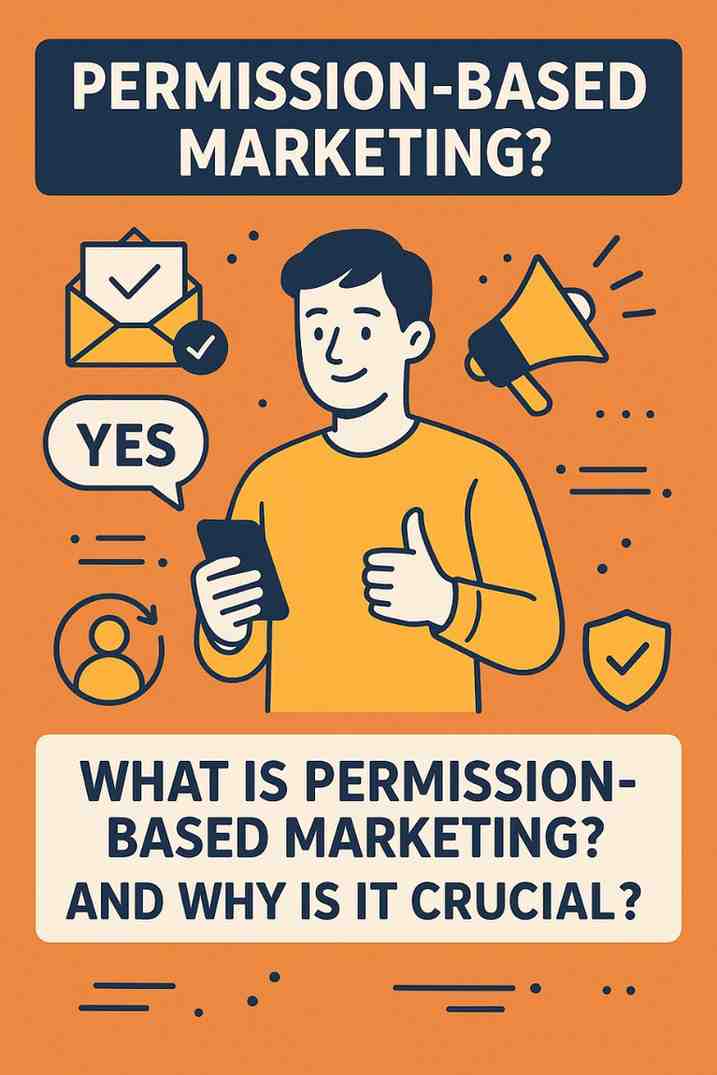
- Consent and Control: Users should have clear options to opt in or out of personalization and control what data is used. For example, offering a “customize preferences” feature empowers users to set boundaries.
- Transparency: Businesses must disclose data collection methods and purposes in plain language. A 2020 Cisco survey found that 86% of consumers want more transparency about data use, underscoring its importance.
- Relevance and Restraint: Personalization should be accurate and moderated to avoid overwhelming users. Algorithms must be refined to ensure recommendations align with current preferences.
- Data Security: Protecting user data from breaches is critical. A single data leak can erode trust, as seen in cases like the 2018 Facebook-Cambridge Analytica scandal, which sparked widespread outrage over misused personal data.
- Respect for Context: Personalization should consider the sensitivity of the context. For example, sending condolence-related ads after a user searches for funeral services can feel exploitative rather than helpful.
By aligning personalization with these principles, businesses can maximize its benefits while minimizing intrusiveness.
The Role of Technology and User Expectations
Advancements in artificial intelligence and machine learning have made personalization more sophisticated, enabling hyper-targeted experiences. However, these technologies also amplify risks. AI can analyze vast datasets to predict behavior, but if algorithms infer sensitive information—like health conditions or financial status—without user knowledge, it can feel invasive. For example, Target’s 2012 case, where its algorithm identified a teen’s pregnancy based on shopping patterns and sent targeted ads, sparked backlash for crossing privacy boundaries.
User expectations also shape the balance. Younger generations, like Gen Z, often expect personalized experiences but are highly privacy-conscious, with 64% willing to share data only if they trust the brand, per a 2022 Morning Consult study. Businesses must navigate these expectations carefully, ensuring personalization feels like a service, not surveillance.
Example: A Retailer’s Personalization Misstep
To illustrate the fine line between helpful and intrusive personalization, consider the case of “StyleTrend,” an online fashion retailer. StyleTrend uses customer data, including browsing history, purchase records, and location, to personalize email campaigns. Initially, its efforts are well-received: customers appreciate emails recommending outfits based on past purchases, such as suggesting a matching scarf for a recently bought jacket. Open rates soar to 30%, and sales increase by 15%.
Encouraged by this success, StyleTrend ramps up its personalization efforts. It integrates third-party data, including social media activity and search histories, to create hyper-targeted campaigns. For example, it sends emails referencing specific items customers viewed on its website, like “Still thinking about that red dress?” It also uses geolocation to send ads for nearby store events, assuming customers will find this convenient.
However, the approach backfires. Customers begin receiving emails that feel overly specific, such as promotions for products they casually browsed late at night or ads for store events based on their real-time location. One customer, Sarah, receives an email referencing a pair of shoes she viewed while researching a gift for a friend, followed by a discount offer for a store 10 minutes from her current location. Unaware that she had enabled location tracking, Sarah feels uneasy, perceiving the email as invasive. She posts about her experience on X, sparking a thread with hundreds of users sharing similar concerns about StyleTrend’s “creepy” tactics.
The backlash grows as customers discover StyleTrend purchased third-party data without clear disclosure, violating GDPR’s transparency requirements. The company faces a €500,000 fine for non-compliance and a 25% drop in email open rates as users unsubscribe or mark emails as spam. StyleTrend’s reputation takes a hit, with negative reviews on platforms like Trustpilot labeling it “untrustworthy.” The retailer spends $300,000 on a PR campaign to rebuild trust and revamps its personalization strategy to prioritize consent and transparency, but regaining customer confidence proves challenging.
This example highlights how personalization can shift from helpful to intrusive when it lacks transparency, overuses data, or ignores user boundaries. StyleTrend’s initial success showed the value of relevant recommendations, but its aggressive tactics alienated customers and damaged its brand.
Strategies to Stay on the Helpful Side
To ensure personalization remains helpful, businesses can adopt the following strategies:
- Clear Opt-In Processes: Use double opt-in mechanisms to confirm user consent and provide granular control over personalization preferences.
- Contextual Relevance: Tailor content based on recent, explicit user actions rather than inferred or sensitive data. For example, recommend products based on a user’s cart rather than their search history on unrelated sites.
- Moderation: Limit the frequency of personalized communications to avoid overwhelming users. A 2021 HubSpot study found that weekly emails are optimal for most consumers.
- Feedback Mechanisms: Allow users to provide feedback on personalization accuracy, enabling continuous improvement of algorithms.
- Ethical Data Use: Avoid using sensitive data, like health or financial information, unless explicitly authorized by the user.
By prioritizing user agency and trust, businesses can deliver personalization that enhances experiences without crossing into intrusiveness.
Conclusion
Personalization walks a fine line between helpful and intrusive, balancing the benefits of tailored experiences with the risks of privacy violations, distrust, and user discomfort. When executed with transparency, consent, and relevance, personalization enhances user satisfaction and drives business success. However, excessive data collection, lack of transparency, or overly specific targeting can make users feel surveilled or manipulated, leading to backlash and reputational damage. The case of StyleTrend illustrates how overstepping boundaries can turn a valuable strategy into a costly mistake. By adhering to ethical principles and respecting user expectations, businesses can harness personalization’s potential while staying firmly on the helpful side of the line.