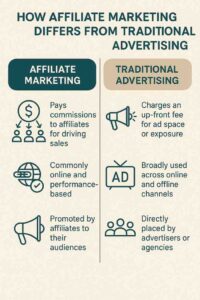
Affiliate marketing is a performance-based marketing strategy where businesses reward affiliates—bloggers, influencers, or website owners—for driving traffic or sales through their promotional efforts, typically via referral links or codes. In 2025, affiliate marketing remains a thriving industry, generating over $8 billion annually in the U.S. alone (Statista, 2024), as businesses leverage digital platforms to reach targeted audiences cost-effectively. However, not all products or services are equally suited for affiliate marketing. The success of an affiliate campaign hinges on specific characteristics that make a product or service appealing to affiliates and their audiences. These characteristics include high demand, attractive commissions, digital or scalable delivery, clear value propositions, strong brand reputation, and effective support for affiliates. This essay explores these factors in detail, their importance, and challenges, and provides a real-world example to illustrate an ideal product for affiliate marketing.
Characteristics of an Ideal Product or Service for Affiliate Marketing
1. High Market Demand and Audience Appeal
A product or service ideal for affiliate marketing must have strong consumer demand and resonate with a specific audience:
-
Mechanism: Products addressing popular needs—such as health, wealth, or lifestyle—perform well, as affiliates can tap into existing markets. Niche products with passionate audiences (e.g., fitness gear, eco-friendly goods) are particularly effective, as affiliates can target engaged communities via blogs, social media, or YouTube.
-
Examples: Fitness trackers like Fitbit or online courses for personal finance attract affiliates due to widespread interest. In India, wellness products like ayurvedic supplements have surged, with 60% of consumers prioritizing health post-2024 (Deloitte, 2025).
-
Importance: High demand ensures affiliates can generate traffic and conversions, maximizing earnings. Products with seasonal or trending appeal (e.g., holiday gifts) also attract affiliates for short-term campaigns.
-
Challenges: Oversaturated markets, like weight loss supplements, lead to fierce competition, reducing affiliate margins. Affiliates must differentiate through unique content or niche targeting.
2. Attractive Commission Structures
Competitive commission rates and payout models make a product or service appealing to affiliates:
-
Mechanism: High commissions (e.g., 20–50%) or recurring payouts for subscriptions incentivize affiliates to promote a product. Tiered structures, rewarding top performers, or bonuses for milestones further motivate affiliates. For instance, SaaS platforms often offer 30% recurring commissions for customer subscriptions.
-
Examples: Web hosting services like Bluehost offer $65–$200 per signup, while Amazon Associates provides 1–10% per sale, appealing to high-volume affiliates. In India, fintech apps like Groww offer ₹100–₹500 per account signup (X posts, 2025).
-
Importance: Attractive commissions ensure affiliates prioritize a product over competitors, dedicating resources to promotion. Recurring models sustain long-term partnerships.
-
Challenges: Low-margin products limit commission rates, deterring affiliates. Balancing profitability and incentives requires careful pricing strategies.
3. Digital or Scalable Delivery
Digital products or services with low fulfillment costs are ideal for affiliate marketing due to their scalability:
-
Mechanism: Digital products—such as e-books, software, online courses, or streaming subscriptions—require no physical inventory, enabling instant delivery and global reach. Scalable services, like cloud hosting or VPNs, support unlimited customers without supply constraints.
-
Examples: NordVPN, a digital VPN service, is promoted globally with ease, while physical products like furniture face logistical hurdles. In India, EdTech platforms like BYJU’S leverage digital delivery for affiliate campaigns.
-
Importance: Digital delivery reduces overhead, allowing higher commissions and seamless customer experiences. Affiliates can promote to diverse audiences without geographic limitations.
-
Challenges: Digital products face piracy risks, requiring robust DRM. Physical products with digital components (e.g., smart devices) can bridge scalability but add complexity.
4. Clear and Compelling Value Proposition
A product or service with a strong, easily communicated value proposition attracts affiliates and converts audiences:
-
Mechanism: Products solving specific pain points—such as time-saving tools, cost-effective solutions, or lifestyle enhancements—are easier to market. Clear benefits, supported by testimonials or data, enable affiliates to craft persuasive content (e.g., reviews, tutorials).
-
Examples: Grammarly’s writing tool, with its promise of error-free communication, is ideal for affiliate blogs targeting students and professionals. In India, UPI apps like PhonePe highlight instant payments, appealing to tech-savvy audiences.
-
Importance: A compelling value proposition simplifies affiliate messaging, boosting click-through and conversion rates. Products with unique selling points (USPs) stand out in crowded markets.
-
Challenges: Generic products struggle to differentiate, requiring affiliates to invest in creative marketing. Misleading claims risk reputational damage for affiliates and brands.
5. Strong Brand Reputation and Trust
A reputable brand with a proven track record enhances affiliate marketing success:
-
Mechanism: Trusted brands reduce consumer skepticism, increasing conversion rates for affiliate campaigns. Affiliates prefer partnering with brands known for quality, reliability, and customer satisfaction, as these align with their audience’s expectations and protect their credibility.
-
Examples: ClickBank, a leading affiliate platform, promotes products from trusted vendors with verified reviews. In India, brands like TATA’s Croma gain affiliate traction due to consumer trust in electronics (X posts, 2024).
-
Importance: Trust accelerates purchasing decisions, especially for high-ticket items or subscriptions. Affiliates avoid risky brands to preserve their audience’s loyalty.
-
Challenges: Building brand reputation is time-intensive, and past scandals (e.g., data breaches) deter affiliates. New brands must invest in PR and transparency to gain traction.
6. Effective Affiliate Program Support
Robust affiliate programs with resources and support attract and empower affiliates:
-
Mechanism: Programs offering marketing materials (e.g., banners, email templates), real-time tracking dashboards, and dedicated affiliate managers streamline promotion efforts. Prompt payouts, clear terms, and tools like Impact or ShareASale enhance affiliate engagement.
-
Examples: Shopify’s affiliate program provides $150 per referral, with creative assets and tutorials. In India, Amazon’s affiliate dashboard offers detailed analytics, supporting affiliates across niches.
-
Importance: Comprehensive support reduces affiliate effort, enabling focus on content creation and traffic generation. Transparent programs build long-term partnerships.
-
Challenges: Poorly managed programs with delayed payments or outdated resources frustrate affiliates, leading to churn. High entry barriers (e.g., exclusivity clauses) exclude smaller affiliates.
7. Long Sales Cycle or Recurring Revenue Potential
Products with extended sales cycles or recurring revenue models are highly attractive:
-
Mechanism: Services like SaaS, memberships, or subscriptions (e.g., Netflix, Adobe Creative Cloud) offer recurring commissions, ensuring sustained affiliate earnings. High-ticket items with longer decision periods (e.g., mattresses, insurance) yield higher payouts, justifying affiliate investment.
-
Examples: ConvertKit’s email marketing tool offers 30% recurring commissions, appealing to niche bloggers. In India, mutual fund platforms like Zerodha Coin provide recurring affiliate payouts.
-
Importance: Recurring revenue incentivizes affiliates to build long-term campaigns, while high-ticket items reward intensive promotion efforts.
-
Challenges: Long sales cycles require affiliates to nurture leads, increasing effort. Churn in subscription services reduces recurring payouts.
Challenges in Affiliate Marketing
-
Market Saturation: Popular niches face intense competition, reducing affiliate margins.
-
Fraud Risks: Click fraud or fake conversions erode trust, requiring robust tracking systems.
-
Regulatory Compliance: GDPR, CCPA, and India’s DPDPA mandate transparent data practices, impacting affiliate tracking (fines up to ₹250 crore, DPDPA, 2025).
-
Audience Trust: Over-promotion or misleading claims damage affiliate credibility.
-
Platform Dependence: Changes in affiliate platforms (e.g., Amazon’s 2020 commission cuts) disrupt earnings.
Impacts of Ideal Characteristics
Products or services with these characteristics:
-
Increase Affiliate Engagement: High commissions and support drive affiliate participation.
-
Boost Conversion Rates: Clear value propositions and trust convert audiences, with 15% average conversion rates for top programs (Impact, 2024).
-
Reduce Costs: Digital delivery and scalability lower business overhead, enabling higher payouts.
-
Enhance Brand Reach: Affiliates expand market presence, with 81% of brands using affiliate marketing (Statista, 2024).
-
Ensure Compliance: Trusted brands align with regulations, avoiding penalties.
Case Study: NordVPN Affiliate Program
NordVPN, a leading virtual private network (VPN) service, exemplifies a product ideal for affiliate marketing, with success relevant to 2025.
Background
NordVPN, launched in 2012, offers secure internet access through encrypted connections, serving over 14 million users globally. Its affiliate program, managed via Impact, is a top performer, attracting thousands of affiliates, including bloggers, YouTubers, and review sites.
Why NordVPN Is Ideal
-
High Market Demand: Growing privacy concerns, with 70% of internet users worried about data tracking (Pew Research, 2024), drive VPN demand. In India, VPN usage surged post-2024 due to cybersecurity awareness (X posts, 2025).
-
Attractive Commissions: NordVPN offers 40–60% commissions on new subscriptions and 30% on renewals, with payouts up to $100 per sale. Cookie windows of 30 days maximize conversions.
-
Digital Delivery: As a SaaS product, NordVPN delivers instantly via downloads, supporting global scalability with no inventory costs.
-
Clear Value Proposition: NordVPN’s promise of “secure, private, and fast internet” resonates with tech-savvy audiences, supported by features like 6,000+ servers and no-logs policy.
-
Strong Brand Reputation: With endorsements from CNET and PCMag, NordVPN’s trust reduces conversion barriers. Its Panama-based no-logs policy aligns with privacy expectations.
-
Robust Affiliate Support: NordVPN provides banners, videos, and landing pages, with a dedicated dashboard for tracking. Affiliate managers offer personalized guidance, ensuring success.
-
Recurring Revenue: Multi-year subscriptions (e.g., 2-year plans) yield recurring commissions, incentivizing long-term promotion.
Affiliate Success
-
Affiliate Reach: Tech bloggers like TechRadar and YouTubers like Linus Tech Tips promote NordVPN, driving millions in sales annually. In India, influencers on X target urban millennials, boosting signups.
-
Conversion Rates: NordVPN’s 10–15% conversion rates, per Impact data, reflect its strong value proposition and trust.
-
Impact: The program generates 30% of NordVPN’s revenue, with affiliates earning $10–$50K monthly (X posts, 2024).
Lessons Learned
-
Target Niche Audiences: Privacy-focused content attracts engaged users.
-
Leverage Trust: Third-party endorsements enhance credibility.
-
Optimize Support: High-quality creatives and tracking boost affiliate efficiency.
-
Offer Recurring Payouts: Sustained commissions build loyalty.
Conclusion
Products or services ideal for affiliate marketing exhibit high market demand, attractive commissions, digital or scalable delivery, clear value propositions, strong brand reputation, effective affiliate support, and recurring revenue potential. These characteristics drive affiliate engagement, boost conversions, and expand brand reach while aligning with regulatory and market trends. NordVPN’s affiliate program exemplifies these traits, leveraging privacy demand, high payouts, and robust support to achieve global success. As affiliate marketing grows in 2025, organizations must design programs with these characteristics to mitigate competition, fraud, and compliance risks, particularly in India’s burgeoning digital market. By aligning products with affiliate needs, businesses can harness this powerful strategy to thrive in the digital ecosystem.