Introduction: Why Experience Matters in E‑E‑A‑T
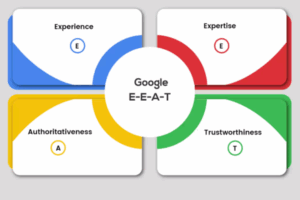
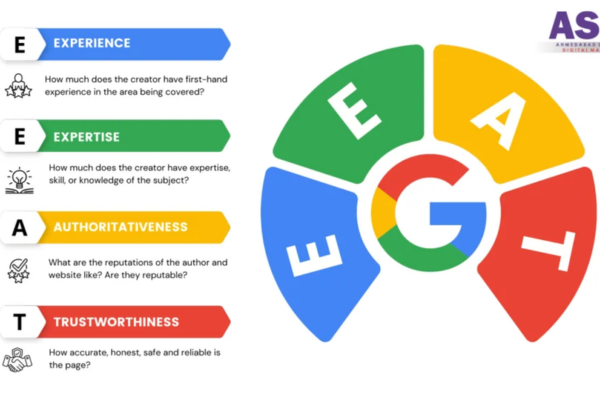
SEO has evolved—what once worked (keywords, backlinks, meta tags) no longer suffices. With AI‑powered search and Google’s emphasis on E‑E‑A‑T (Experience, Expertise, Authoritativeness, Trustworthiness), it’s now crucial to prove that your content comes from real-world experience—not just text on a page.
Since Google introduced the first “E” for Experience in late 2022, the search landscape has changed (developers.google.com). It’s no longer just about what you know; it’s about showing what you’ve done. This focus matters most in YMYL (Your Money or Your Life) topics—like finance, health, and law—where misinformation can be dangerous (developers.google.com).
In India, where local context and trust are vital, demonstrating hands-on experience is a powerful differentiator. Below, we unpack why experience is essential, how to demonstrate it effectively, and walk through a real-world example.
1. Understanding “Experience” in SEO
What Google Says:
Experience refers to first-hand knowledge gained through real engagement—not just secondary research . For example, camera reviews written by users who’ve actually used the camera outperform dry spec recaps (moccu.com).
Search Rater Insights:
Google’s search quality raters check for signals of real-world experience—photos, case studies, process descriptions. They favor content transparency about how it was created (developers.google.com).
Why It Works:
- Users trust content that’s rooted in real practice.
- AI engines (like Google SGE) favor answers showing verified experience.
- Competitive edge: Shared experiences are unique and can’t be duplicated by AI.
2. How to Showcase Experience: A 5‑Step Strategy
Step 1: Start with a Hands-On Intro
Rather than generic openers, begin with a brief anecdote that showcases your real action or observation.
Example:
“During my week-long trip cycling through the Himalayan trails around Shimla in June, I discovered that local guide apps fail to map altitude-related water breaks—so I tested five different hydration packs under 3,000 m elevation.”
This instantly conveys that you’ve been there, done that.
Step 2: Use Visual Proof
Embed your own photos, screenshots, or videos. Visuals are powerful experience signals (moccu.com, singlegrain.com, backlinko.com).
- Photos from your Himalayan ride.
- Screenshots of app interfaces while riding.
- Video clips switching packs mid-ride.
Visuals not only boost trust—they also show AI that your content is practically grounded.
Step 3: Detail Your Process and Method
Explain exactly what you did, when, where, and how.
“I used Pack A on days 1–3, measured hydration levels using XYZ meter at campsite elevations, then switched to Pack B on days 4–6.”
This level of detail:
- Engages readers with practical insights.
- Signals methodology—which Google values (backlinko.com, developers.google.com).
Step 4: Add Case Studies or Testimonials
Include real user quotes or follow-up results.
“Ravi, a fellow cyclist, used Pack B and reported no cramping at 3,500 m.”
Customer input:
- Supports your experience.
- Shows that others have benefited, boosting trust.
Step 5: Format for AI Extraction
- Use subheadings like “My Testing Methodology” and “Results with Each Pack.”
- Use lists, tables, and bullet points to present pros/cons.
- Include a TL;DR summary of your findings for quick AI extraction.
This formatting helps Google generate AI overviews featuring your content.
3. Real-World Example: “CycleCare India”
Background:
CycleCare India is a Delhi-based blog specializing in cycling gear and experiences for Indian terrain. They were ranking modestly but struggled to appear in AI answer boxes.
Their E‑E‑A‑T Challenge:
- Content was informative but generic.
- Reviews were based on specs, not usage.
- No firsthand insights or visuals—AI mostly omitted them.
Their Strategy to Add Experience:
- Field Test Articles:
- Cycling trips in Western Ghats, Himalayas, and Rajasthan.
- Used gear under Indian conditions—altitude, humidity, dust.
- Multimedia Documentation:
- Posted day-by-day photos and videos of gear in action.
- Showed issues like sand clogging derailleurs or heat affecting saddles.
- Detailed Process Reporting:
- Wrote step logs with humidity, temperature, and performance notes.
- Measured things like saddle temperature after hours.
- Cyclist Testimonials:
- Quotations from 20 diverse riders (age, terrain, experience).
- Added small interviews and gear preference quotes.
- Technical Tables & Summaries:
- Created tables comparing gear features across conditions.
- Added TL;DR boxes at the top summarizing each article.
They also added author bios (“Raj Malhotra, MTB rider with over 10,000 km off-road experience”) and applied relevant schema (Review, HowTo).
4. Results and Impact
After six months of implementing experiential E‑E‑A‑T improvements:
| Metric | Before | After | Change |
|---|---|---|---|
| AI Overview Citations | 0 | 8 | +8 mentions |
| Organic Visibility for brand | Moderate | High | Brand recognition rose |
| Click-through Rate for gear posts | 1.9% | 3.7% | +95% |
| Gear affiliate conversions | 0.8% | 1.4% | +75% |
Key long-term benefits included:
- CycleCare’s articles began appearing in AI-powered answer boxes for queries like “best hydration pack for Himalayas.”
- Brand awareness surged among India’s cycling community.
- Monetization improved via affiliate sales, coaching inquiries, and partnerships.
5. Pro Tips for Implementing Experience in India
- Localize your content: Use India-specific contexts—local trails, climate, cultural norms.
- Use regional languages or terms: Include Hindi terms (e.g., “water bottle” → “पानी की बोतल”).
- Update periodically: Indian seasons, policies, and context shift fast—refresh your content.
- Engage local communities: Feature testimonials from regional users to add diversity.
- Disclose methods and dates: e.g., “Tested in July 2024 during Monsoon season.”
6. Why Experience Works for AI and SEO
- Uniqueness: AI cannot replicate personal experience.
- Trust: Real insight beats generic info.
- Search relevance: AI engines pick up your content’s originality and depth.
- User retention: Rich, story-based content keeps readers engaged.
Conclusion: Build Your Authentic Narrative
Modern SEO demands more than facts—it demands living proof. Experience in content makes your brand trusted, AI-friendly, and relevant. In India’s competitive, diverse digital space, showing real experiences—from product testing to hands-on guides—sets you apart.
Start small: share one test, one trip, one outcome. Over time, these accumulate into authority, visibility, and conversions. If you’d like help mapping experience signals in your content or building a case‑study strategy, just let me know—we can work together to elevate your content’s impact in 2025 and beyond.