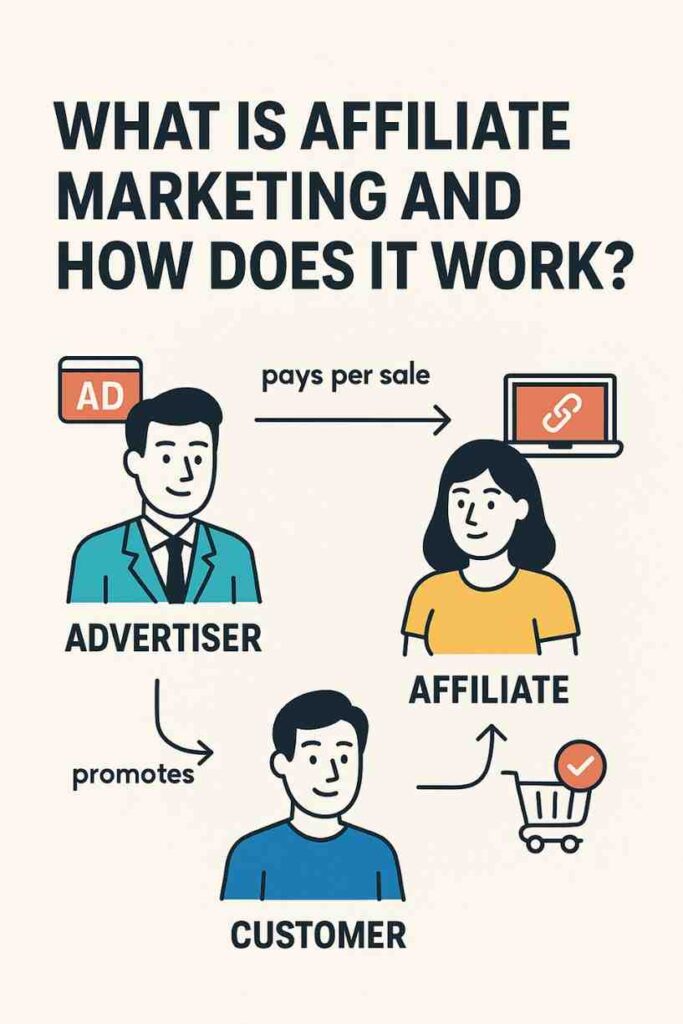
Affiliate marketing is a performance-based marketing strategy where individuals or companies (affiliates) promote products or services of another business (merchant or advertiser) and earn a commission for each sale, lead, or action generated through their referral. It is one of the most effective and scalable ways of monetizing a website, blog, or social media following and has become a core component of many digital marketing strategies.
This model benefits all parties involved: the merchant gains increased sales and reach, the affiliate earns passive income for their promotional efforts, and consumers may discover valuable products or services they wouldn’t have found otherwise. Let’s explore affiliate marketing in-depth, including its mechanics, key players, types, benefits, and a practical example.
1. Understanding Affiliate Marketing
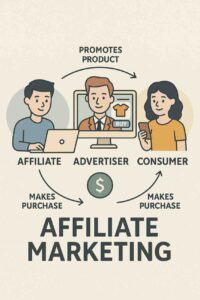
Affiliate marketing functions similarly to a traditional commission-based sales model, except it’s driven through digital platforms. At its core, it’s about revenue sharing. A business rewards affiliates for sending customers their way — usually through a unique tracking link. When a consumer clicks on an affiliate’s link and completes a desired action (like purchasing a product), the affiliate gets a portion of the profit.
2. The Key Players in Affiliate Marketing
To understand how affiliate marketing works, it’s essential to understand the roles of the key participants:
a. Merchant (Advertiser/Product Owner)
The merchant is the individual or company that creates and owns the product or service. They want to sell their offering and are willing to pay others (affiliates) a commission to help promote it. Examples of merchants include companies like Amazon, Nike, and small startups offering software or digital courses.
b. Affiliate (Publisher)
The affiliate promotes the merchant’s products to their audience. Affiliates can be individuals (such as influencers, bloggers, or YouTubers) or businesses (such as review websites or email marketers). Their main role is to generate traffic and drive conversions.
c. Consumer (Customer)
The consumer is the end-user who interacts with the affiliate’s content and makes a purchase or completes a specific action. The transaction is seamless for the consumer; they typically do not pay more because of the affiliate’s commission.
d. Affiliate Network (Optional)
Affiliate networks act as intermediaries between affiliates and merchants. They provide tools to track sales, manage payments, and access affiliate programs. Examples include ShareASale, CJ Affiliate, and ClickBank.
3. How Affiliate Marketing Works
The process can be broken down into several steps:
Step 1: Affiliate Joins a Program
The affiliate signs up for a merchant’s affiliate program, either directly through the merchant’s website or through an affiliate network. Once approved, they receive unique affiliate links or codes to promote products.
Step 2: Promotion of Products
The affiliate integrates these links into their content — such as blog posts, YouTube videos, emails, or social media posts. These promotions may take the form of product reviews, tutorials, comparison guides, or recommendations.
Step 3: Consumer Clicks the Affiliate Link
When a user clicks on the affiliate’s link, a cookie is placed in their browser. This cookie tracks their actions and attributes any subsequent purchases to the affiliate. Cookie durations vary — it could be 24 hours or up to 90 days.
Step 4: Consumer Makes a Purchase or Takes Action
If the consumer makes a purchase (or completes another specified action like filling out a form), the sale is recorded. The affiliate network or software tracks the transaction back to the affiliate’s ID.
Step 5: Affiliate Earns Commission
The affiliate receives a commission based on the agreed terms — this could be a percentage of the sale or a fixed amount per lead or signup. Payments are made periodically, such as monthly or bi-weekly.
4. Types of Affiliate Marketing Models
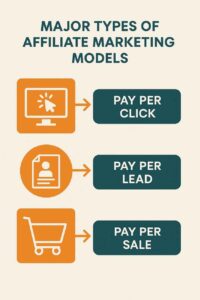
Affiliate marketing comes in several forms, including:
a. Pay-Per-Sale (PPS)
This is the most common model. The affiliate earns a commission when the customer completes a purchase. For example, Amazon pays 1% to 10% per sale depending on the product category.
b. Pay-Per-Click (PPC)
Affiliates earn money when users click on the affiliate link, regardless of whether they buy. This model is less common, as it carries more risk for the merchant.
c. Pay-Per-Lead (PPL)
Affiliates earn money when referred users complete a desired action, such as signing up for a free trial or subscribing to a newsletter. This is often used for software, insurance, or financial services.
5. Benefits of Affiliate Marketing
Affiliate marketing offers advantages for both affiliates and merchants:
For Affiliates:
-
Low Startup Costs: No need to create or own a product.
-
Passive Income Potential: Earn commissions long after the content is published.
-
Flexibility: Work from anywhere and promote products you believe in.
-
Scalability: You can promote multiple products across platforms and grow your income.
For Merchants:
-
Cost-Effective Marketing: Pay only for performance (sales or leads).
-
Broader Reach: Access new audiences via affiliates’ channels.
-
Increased Credibility: Consumers often trust affiliates more than direct ads.
6. Challenges in Affiliate Marketing
Despite its benefits, affiliate marketing also presents certain challenges:
-
High Competition: Many affiliates promote the same products, making it hard to stand out.
-
Commission Cuts: Merchants can reduce commission rates or cancel programs at any time.
-
Affiliate Fraud: Some affiliates may try to manipulate the system using fake leads or clicks.
-
Dependency on Merchant: If a program closes or a product becomes obsolete, affiliate income may vanish.
7. Tools and Strategies for Successful Affiliate Marketing
To succeed in affiliate marketing, affiliates often use several tools and strategies:
a. Content Creation
High-quality content that adds value — like tutorials, reviews, or how-to guides — can drive traffic and conversions.
b. SEO (Search Engine Optimization)
Optimizing content for search engines helps attract organic traffic. Keyword research, on-page SEO, and backlinking are essential components.
c. Email Marketing
Building an email list allows affiliates to nurture relationships and promote relevant offers directly.
d. Social Media
Platforms like Instagram, Facebook, and Pinterest can be used to promote affiliate products, especially for niches like fashion, beauty, and lifestyle.
e. Analytics Tools
Tracking tools such as Google Analytics, affiliate dashboards, and custom UTM links help affiliates measure performance and optimize campaigns.
8. Real-World Example: Amazon Associates Program
One of the best-known examples of affiliate marketing is the Amazon Associates Program.
How it works:
-
An affiliate (say, a tech blogger) joins the program and gets a unique affiliate link for a product like a smartphone.
-
They write a blog post titled “Top 5 Smartphones Under ₹30,000 in 2025” and include the affiliate link for the recommended phone.
-
A reader visits the blog, clicks on the link, and buys the phone on Amazon.
-
The blogger earns a commission — say 4% of the sale price.
Amazon’s affiliate program also pays commissions for additional products purchased by the customer during the same session — even if they weren’t part of the affiliate’s content.
9. Future Trends in Affiliate Marketing
Affiliate marketing continues to evolve. Here are some notable trends:
-
Influencer Marketing Integration: Social influencers are playing a greater role in affiliate strategies.
-
AI and Automation: Tools are helping automate content creation, link management, and performance tracking.
-
Voice and Video Search Optimization: As voice search and video content grow, affiliates are optimizing for these formats.
-
Niche Focus: Affiliates are narrowing their focus to specific niches to build stronger audience trust and engagement.
10. Conclusion
Affiliate marketing is a powerful and accessible way for individuals and businesses to generate income online by promoting products and services of other brands. It thrives on trust, quality content, and audience engagement. With minimal investment, affiliates can build a sustainable revenue stream, while merchants gain from cost-effective exposure and increased sales.
Whether you’re a blogger, influencer, or marketer, understanding the mechanics and strategies behind affiliate marketing can open the door to significant digital earning opportunities. Like any business model, success depends on effort, patience, consistency, and continuous learning.