Home Blog Page 51

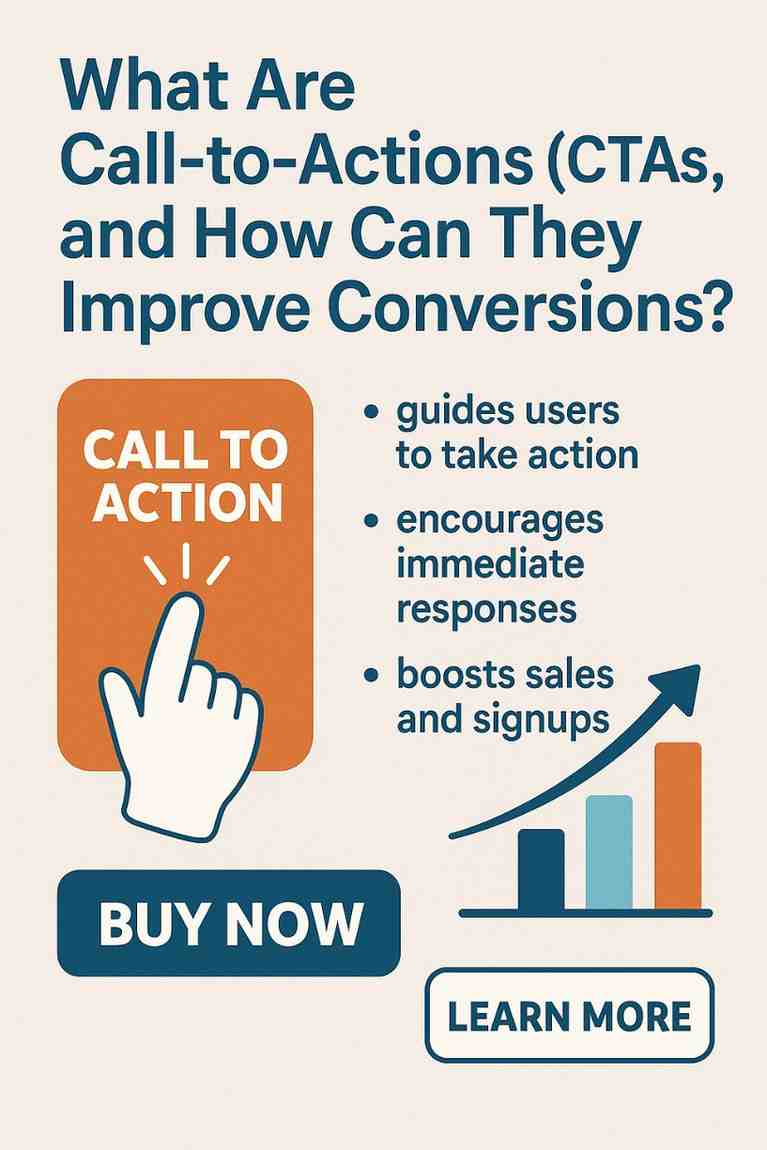
What Are Call-to-Actions (CTAs), and How Can They Improve Conversions?

Introduction

In the fast-paced world of digital marketing, attention is currency. Capturing that attention is a challenge—but guiding it toward meaningful action is the real goal. That’s where Call-to-Actions (CTAs) come in.

A Call-to-Action (CTA) is a prompt that encourages users to take a specific action, such as subscribing to a newsletter, downloading a resource, making a purchase, or clicking an affiliate link. CTAs are the bridge between engagement and conversion—they guide the user from being a passive reader or viewer to an active participant in your funnel.

CTAs are everywhere: on websites, emails, landing pages, blogs, pop-ups, YouTube videos, and even social media captions. They are not just optional enhancements—they are critical conversion tools that make your content or campaign goal-driven.

In this comprehensive guide, we’ll break down:

  • What CTAs are

  • Different types of CTAs

  • Why they are essential for conversions

  • Best practices for creating high-performing CTAs

  • Common mistakes to avoid

  • A real-world example that demonstrates CTAs in action


What is a Call-to-Action (CTA)?

A Call-to-Action is a phrase, button, link, or visual cue that tells users what to do next. It typically appears after some form of content (e.g., a blog post, email, video) and provides clear instructions about the desired action.

Examples of Simple CTAs:

  • “Buy Now”

  • “Download the Guide”

  • “Sign Up for Free”

  • “Subscribe to Our Channel”

  • “Try It Risk-Free”

  • “Get 30% Off Today”

CTAs can be text-based, graphic, or interactive. The key is that they are intentional and clearly direct users to take a specific, measurable action.


Why CTAs Matter in Marketing and Conversions

Every marketing effort—from content creation to ad campaigns—has an objective. You might want users to:

  • Buy a product

  • Join an email list

  • Share your content

  • Download a freebie

  • Sign up for a trial

But users won’t do these things on their own—you have to guide them.

That’s what CTAs do. They:

  • Focus attention on the next step

  • Motivate action

  • Reduce friction by clearly stating what to do

  • Increase conversion rates

Think of CTAs as digital signposts. Without them, users can get lost, distracted, or disengaged—no matter how good your content is.


Types of Call-to-Actions

CTAs come in many forms depending on their purpose. Let’s explore the most common types:

1. Lead Generation CTAs

These are designed to capture user information (email, name, etc.) for future marketing.

Examples:

  • “Download Our Free E-book”

  • “Get Your Free Checklist Now”

  • “Join Our Newsletter for Weekly Tips”

Where to Use:
Blogs, pop-ups, sidebars, landing pages.


2. Click-Through CTAs

These CTAs move users to another page—typically a product or sales page.

Examples:

  • “Learn More”

  • “See Pricing”

  • “Shop Now”

Where to Use:
Homepage, ads, email campaigns.


3. Sales-Focused CTAs

The goal here is immediate conversion: get users to buy or sign up.

Examples:

  • “Add to Cart”

  • “Buy Now and Save 25%”

  • “Start Free Trial Today”

Where to Use:
Product pages, landing pages, checkout pages.


4. Social Media CTAs

These CTAs encourage sharing, engagement, or following.

Examples:

  • “Tag a Friend Who Needs This!”

  • “Share This Post”

  • “Follow Us for More Tips”

Where to Use:
Instagram captions, Facebook ads, TikTok videos, Pinterest pins.


5. Event/Registration CTAs

Designed to get sign-ups for events, webinars, or appointments.

Examples:

  • “Reserve Your Spot Now”

  • “Register for the Free Webinar”

  • “Book Your Consultation”

Where to Use:
Webinar pages, emails, social media, LinkedIn.


6. Affiliate CTAs

These promote products/services with your affiliate link.

Examples:

  • “Get Grammarly Premium at 20% Off”

  • “Start Your Blog with Bluehost Today”

  • “Try Canva Pro – Free for 30 Days”

Where to Use:
Affiliate blogs, YouTube videos, resource pages, review sites.


The Psychology Behind Effective CTAs

An effective CTA taps into human psychology and decision-making triggers:

Urgency

  • “Limited time only”

  • “Offer expires tonight”

Creates FOMO (fear of missing out), encouraging faster action.

Scarcity

  • “Only 5 spots left”

  • “Last chance to enroll”

Triggers action by making the offer feel exclusive or time-sensitive.

Benefit-Driven Language

  • “Boost your productivity today”

  • “Start your weight loss journey”

Tells users what’s in it for them, not just what to do.

Clarity and Simplicity

  • “Download the guide”

  • “Sign up now”

People are more likely to act when the next step is crystal clear.


How CTAs Improve Conversions

Here’s how CTAs directly influence your marketing results:

1. Guide Users Through the Funnel

CTAs help users move from one stage to another—awareness to interest, interest to decision, and decision to purchase.

For example:

  • Read blog → “Download Free Checklist” → Email list → “Buy Course”

2. Turn Passive Visitors into Leads or Customers

You can’t assume visitors will take action on their own. A CTA gives them that nudge.

Without CTAs:

User reads your blog and leaves.
With CTAs:
User reads your blog, signs up, and becomes a lead.

3. Increase Engagement

CTAs can increase interactions like shares, comments, and time-on-page, boosting your SEO and overall marketing performance.

4. Improve ROI

By encouraging specific actions, CTAs ensure your marketing efforts are focused on outcomes, not just traffic or clicks.


Real-World Example: CTAs in a Blog Funnel

Let’s take the example of Sarah, a fitness blogger who earns through affiliate marketing and digital products.

Her Blog Post:

“10 Best Protein Powders for Women in 2025”

She Adds These CTAs Strategically:

  • Inline Text CTA:
    “Want to know which protein powder I personally use? Click here to find out.”

  • Image CTA:
    A banner saying: “Get 20% Off My Favorite Plant-Based Protein – Shop Now”

  • End of Post CTA:
    “Still unsure which protein suits your lifestyle? Download my free Protein Picker Guide below.”

  • Exit-Intent Pop-Up:
    “Wait! Get a free 7-day clean eating meal plan when you subscribe!”

Results:

  • Affiliate sales from people clicking the shop link.

  • New email subscribers who receive future product promotions.

  • Longer page engagement and social shares due to relevant content and CTAs.

Sarah’s CTAs convert because they:

  • Are relevant to the topic

  • Solve problems (protein confusion)

  • Offer value (free guide)

  • Guide the next logical step


Best Practices for Crafting High-Converting CTAs

  1. Be Clear, Not Clever
    Ambiguity kills conversions. Say exactly what happens when they click.

  2. Use Action-Oriented Verbs
    Start with verbs like Download, Get, Start, Discover, Learn, Try.

  3. Highlight Benefits
    Instead of “Click here,” say “Click to Get Your Free Budgeting Template.”

  4. Create Visual Contrast
    Make your CTA buttons stand out using colors that contrast the background.

  5. Place CTAs Strategically
    Use above-the-fold, mid-content, and end-of-content placements for maximum exposure.

  6. Test and Optimize
    A/B test different CTA texts, colors, placements, and formats to see what drives the best results.


Common Mistakes to Avoid with CTAs

Being Vague:
“Submit” or “Click here” without context is weak.

Overwhelming Users with Too Many CTAs:
More is not better. Focus on one goal per page.

Not Mobile-Friendly:
Ensure CTAs are easy to tap and read on phones and tablets.

Forgetting to Track CTA Performance:
Use tools like Google Analytics, Hotjar, or native email analytics to monitor clicks and conversions.


Conclusion

In affiliate marketing, blogging, eCommerce, or lead generation—Call-to-Actions are the turning point. They are the moment where your effort pays off: when a user decides to do something because you asked them clearly, confidently, and at the right time.

Whether you want to grow your list, increase affiliate income, boost engagement, or drive traffic to a sales page, your CTA is the key.

Think of your CTA as your digital salesperson. It doesn’t shout. It doesn’t beg. It simply says: “Here’s what to do next, and here’s why it matters.”

A well-placed, well-crafted CTA can double or even triple your conversion rate. So don’t leave it to chance—design CTAs with purpose, measure their impact, and refine them continually.


Want help writing CTAs for your blog, landing page, or affiliate campaign? I can help you create persuasive, goal-driven CTAs tailored to your niche or audience—just let me know your project!
What Is Cloaking and Why Is It Sometimes Used in Affiliate Marketing?

Introduction

Affiliate marketing is a widely adopted digital strategy where individuals or companies earn commissions by promoting and selling products or services created by other businesses. As affiliate marketing has grown in popularity, so have the tactics used to maximize conversions and profits. Among these tactics, one controversial and often misunderstood method is cloaking.

Cloaking is a technique that has legitimate uses but also a history of misuse. It walks a fine line between optimization and deception, depending on how it’s implemented. In the world of affiliate marketing, cloaking can be both a helpful tool and a risky shortcut. In this article, we’ll explain what cloaking is, why affiliate marketers sometimes use it, the advantages and ethical implications, and include an appropriate example to illustrate its role in affiliate campaigns.


What Is Cloaking in Affiliate Marketing?

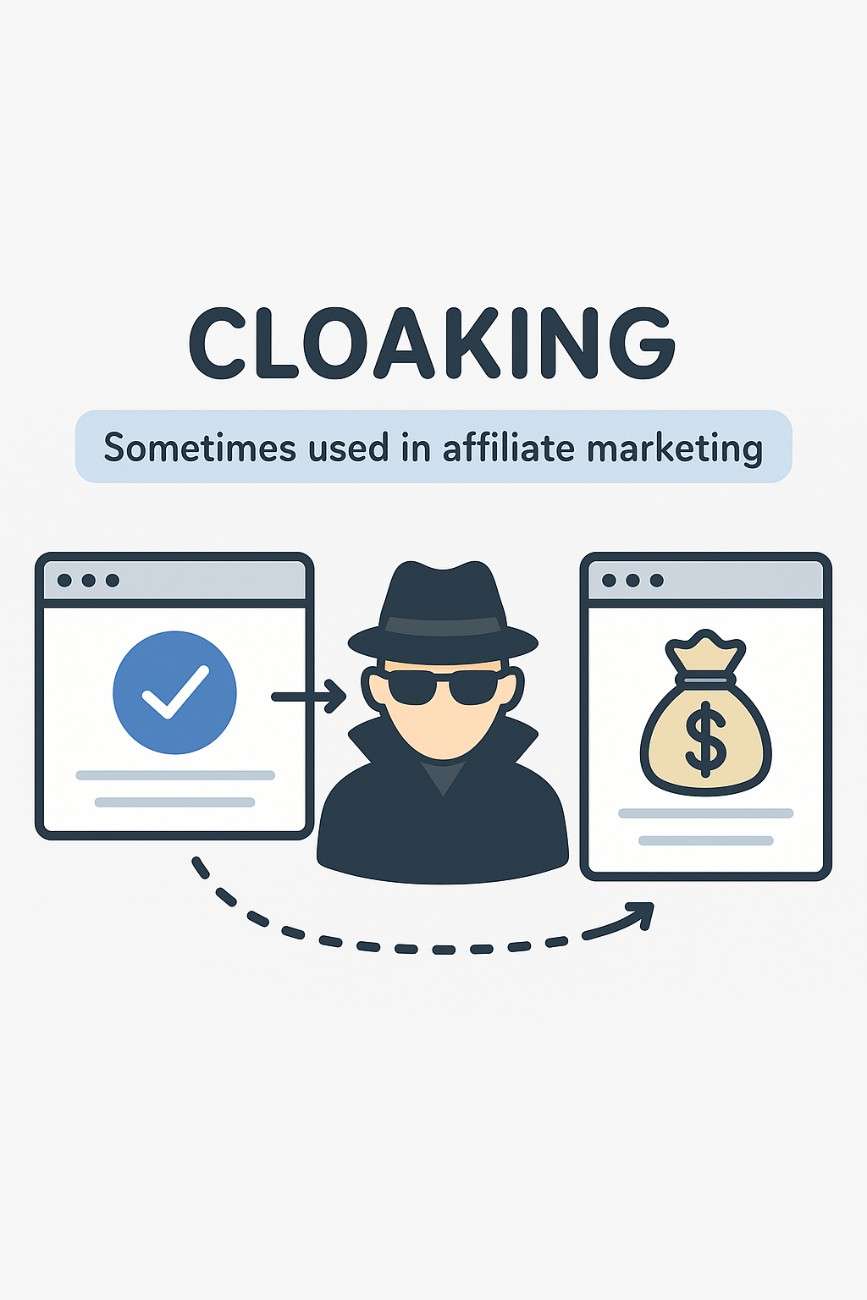
Cloaking in affiliate marketing refers to the practice of disguising or masking the destination URL of an affiliate link to make it appear cleaner, more trustworthy, or different from the actual tracking link. This is done by redirecting users to an affiliate product page through a custom URL or by using scripts or plug-ins to hide the true structure of the link.

While this may sound simple or even innocent, cloaking can also involve advanced tactics where the content shown to users is different from what is shown to search engines or advertising networks—raising questions of transparency and compliance.


Types of Cloaking in Affiliate Marketing

There are two main categories of cloaking:

1. URL Cloaking (Link Masking or Pretty Links) – Common and Mostly Legitimate

This is the most widely used and often accepted form of cloaking. Here, an affiliate uses a redirection or link-shortening technique to mask a long or unattractive affiliate URL.

For example:

  • Original affiliate link:
    https://affiliateprogram.com/product?ref=34562&campaign=summer-sale

  • Cloaked URL:
    https://mywebsite.com/recommends/product

This type of cloaking is mostly harmless and used for:

  • Better user experience

  • Improved branding

  • Easier tracking

  • Protecting commissions (more on this later)

2. Content Cloaking – Deceptive and Often Against Policy

This involves showing different content to users and search engines (or ad platforms like Google or Facebook). For instance, a page might appear to be a normal blog post to a Google bot but display a sales-heavy landing page to human visitors.

This version of cloaking is considered black hat SEO or advertising and can lead to bans, penalties, or de-indexing from search engines.


Why Is Cloaking Used in Affiliate Marketing?

Affiliate marketers use cloaking for several reasons, some ethical and some questionable. Let’s explore both sides:


Legitimate Reasons for Cloaking

1. To Make Links Cleaner and More User-Friendly

Long and complex affiliate URLs can look suspicious or unprofessional to users. Cloaking makes them more readable and branded.

Example:

  • Uncloaked: https://abc-affiliate.com/offer?partner=19824&token=shg2x9d

  • Cloaked: https://yourdomain.com/go/product-deal

Users are more likely to click on a clean, trustworthy-looking link, especially when it’s on a blog, email, or social media post.

2. To Prevent Affiliate Link Theft (Commission Hijacking)

Affiliate links can sometimes be hijacked by unscrupulous users who replace the affiliate ID with their own or redirect traffic through their own affiliate link to earn commissions that rightfully belong to someone else.

By cloaking the link through your domain or a script, it becomes harder for people to tamper with it.

3. For Better Tracking and Analytics

Cloaking tools often provide built-in click tracking, geo-targeting, split-testing, and performance monitoring. This helps affiliate marketers measure their campaign’s success more accurately.

Tools commonly used:

  • Pretty Links (WordPress)

  • ThirstyAffiliates

  • ClickMagick

  • Bitly (limited functionality)

4. To Improve Email Deliverability

Affiliate links in emails can trigger spam filters. Cloaked links using your domain are less likely to be flagged, improving inbox placement and open rates.


Questionable or Unethical Reasons for Cloaking

1. To Deceive Search Engines or Ad Networks

Some marketers use cloaking to show compliant content to Google or Facebook while directing actual users to aggressive sales pages, adult content, or products that violate platform policies.

Example: A Facebook reviewer sees a landing page promoting a free health guide, but users who click the ad are redirected to a weight loss supplement page.

This can result in:

  • Account bans

  • Ad disapproval

  • Google penalties

  • Legal consequences in extreme cases

2. To Hide Affiliate Status

Sometimes, marketers use cloaking to conceal that they are promoting products for a commission, which can breach transparency rules and affiliate program terms.

For instance, Amazon’s Affiliate Program explicitly states that links must not be cloaked or hidden. Violating such terms can get marketers removed from programs or lose their earnings.

3. To Mislead Users

Unethical cloaking can also involve showing one product or offer in the link text but redirecting users to something entirely different—an experience that damages trust and credibility.


Example of Cloaking in a Real-World Scenario

Scenario: A Blogger Promoting Web Hosting Services

John runs a blog that teaches people how to create and monetize their own websites. One of the products he promotes is web hosting, such as Bluehost or Hostinger, via affiliate links.

Instead of sharing the raw affiliate link:

ruby
https://www.bluehost.com/track/JohnAffiliateID/

He uses a WordPress plugin like Pretty Links to create:

arduino
https://johnsblog.com/go/bluehost-deal

This link appears clean, on-brand, and trustworthy. John adds it to:

  • His blog post: “How to Start a WordPress Blog in 2025”

  • YouTube video description

  • Email newsletter

Benefits in His Case:

  • The cloaked link improves click-through rate because it looks like a recommendation from his own site.

  • He gets detailed click tracking via Pretty Links.

  • He avoids affiliate ID theft.

  • The link is easier to remember and share verbally or on podcasts.

This is an ethical and commonly accepted form of cloaking.

However, if John were to use scripts that show a different landing page to search engines than to real visitors (to bypass ad guidelines), he would be entering black hat territory, which could lead to serious consequences.


Pros and Cons of Cloaking in Affiliate Marketing

Pros (Ethical Use) Cons (If Abused)
Cleaner, branded links Can violate affiliate program terms
Higher click-through rates May breach ad policies (e.g., Google Ads)
Enhanced link protection Risk of search engine penalties
Better analytics and tracking Trust issues if transparency is lacking
Improved email deliverability Possible legal or reputational damage

Best Practices for Ethical Cloaking

  1. Disclose Affiliate Relationships
    Use clear disclaimers: “This post contains affiliate links. I may earn a commission at no extra cost to you.”

  2. Avoid Deceptive Redirections
    Don’t redirect users to misleading pages or change destinations after the click.

  3. Follow Platform and Program Rules
    Some platforms like Amazon explicitly forbid cloaking. Always read and follow affiliate terms.

  4. Use Trustworthy Tools
    Stick to well-reviewed plugins and tools that allow customization without trickery.

  5. Be Transparent With Your Audience
    People are more likely to trust your recommendations if they know you’re honest and upfront.


Conclusion

Cloaking in affiliate marketing is a double-edged sword. When used ethically, it enhances branding, link protection, user experience, and analytics. It helps marketers share links that look cleaner and more trustworthy, improving click-through rates and overall performance.

However, when used deceptively to trick users, bypass ad policies, or mislead search engines, cloaking becomes unethical and risky. It can lead to penalties from affiliate programs, advertising bans, and a loss of audience trust.

Understanding the difference between ethical link masking and malicious cloaking is critical for any affiliate marketer. Done right, cloaking is a legitimate tool in your digital toolbox. Done wrong, it can damage your business beyond repair.

As with any affiliate strategy, the key is transparency, value, and respect for the audience.


Would you like a step-by-step tutorial on how to ethically cloak affiliate links using tools like Pretty Links or ThirstyAffiliates? I’d be happy to help!

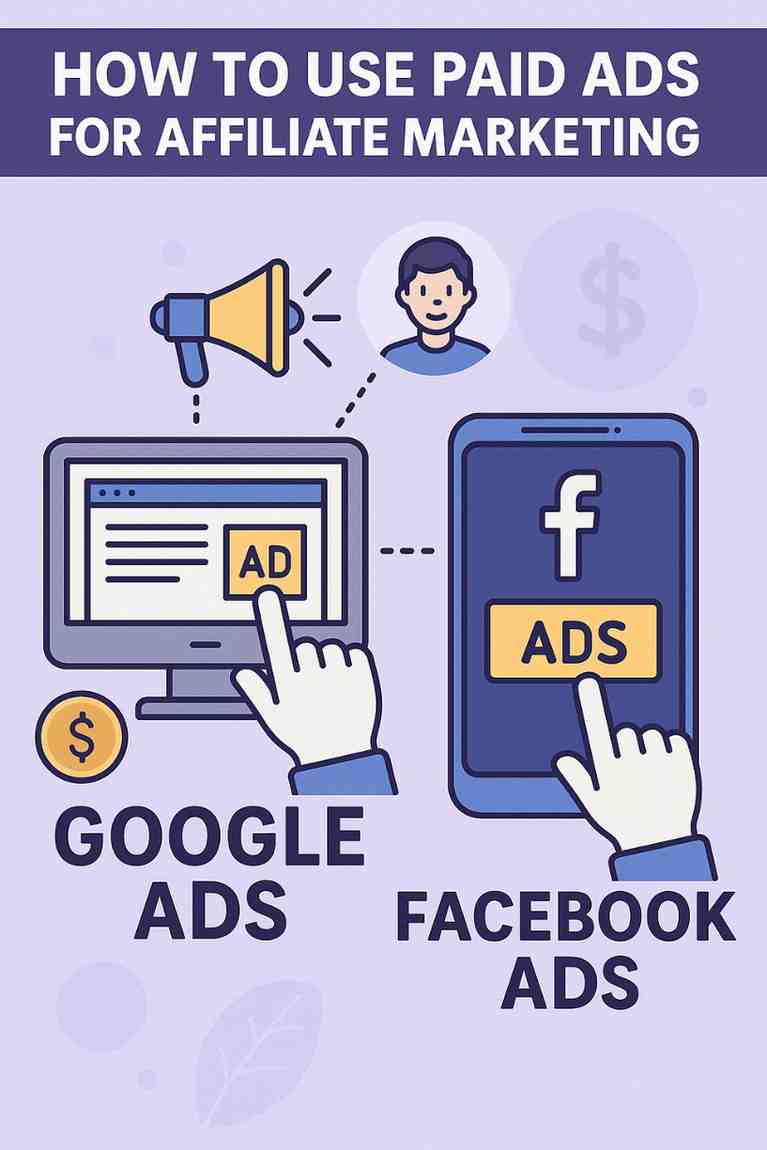
How to Use Paid Ads Like Google Ads and Facebook Ads for Affiliate Marketing?

Paid advertising, such as Google Ads and Facebook Ads, is a powerful strategy for affiliate marketers to drive targeted traffic to their content or affiliate links, accelerating visibility and conversions compared to organic methods like SEO or social media. While affiliate marketing traditionally relies on organic traffic for cost-effectiveness, paid ads offer a way to quickly reach high-intent audiences, especially for beginners or those seeking faster results. However, using paid ads effectively requires careful planning, compliance with affiliate program rules, and optimization to ensure a positive return on investment (ROI). In 2025, with advanced ad platforms and stricter regulations, mastering paid ads is both an opportunity and a challenge for affiliates. This essay outlines how to use Google Ads and Facebook Ads for affiliate marketing, detailing strategies, best practices, challenges, and benefits, followed by a practical example to illustrate their application.


Why Use Paid Ads for Affiliate Marketing?

Paid ads allow affiliates to:

  • Reach Targeted Audiences: Platforms like Google Ads and Facebook Ads offer precise targeting (e.g., demographics, interests, or search intent), ensuring traffic aligns with affiliate offers.
  • Accelerate Results: Unlike SEO, which can take months, paid ads drive immediate traffic, ideal for testing campaigns or scaling quickly.
  • Increase Conversions: High-intent users (e.g., those searching “best VPN 2025” on Google) are more likely to convert via affiliate links.
  • Test and Optimize: Ads provide data on audience behavior, enabling affiliates to refine strategies for better ROI.
  • Complement Organic Efforts: Paid ads amplify organic channels like blogs or social media, diversifying traffic sources.

However, paid ads come with risks, such as high costs, compliance issues, and the need for optimization to avoid losses. Below, we explore how to use Google Ads and Facebook Ads effectively for affiliate marketing.


Using Google Ads for Affiliate Marketing

Google Ads is a pay-per-click (PPC) platform that allows affiliates to bid on keywords, displaying ads in Google search results, display networks, or YouTube. It’s ideal for capturing high-intent users actively searching for products or solutions.

1. Understand Affiliate Program Rules

Many affiliate programs, like Amazon Associates, prohibit direct linking from ads to affiliate links, requiring a landing page or bridge page to host content. Others, like ShareASale or CJ Affiliate, may allow direct links but have specific guidelines.

  • Action: Review program terms (e.g., Amazon requires a content-rich landing page). Use a landing page to comply and add value (e.g., a product review).
  • Tool: Bitly (free) to create trackable affiliate links.
2. Conduct Keyword Research

Targeting the right keywords ensures ads reach users with purchase intent.

  • Action: Use Google Keyword Planner (free) to find high-intent, low-competition keywords (e.g., “best budget headphones 2025”). Focus on long-tail keywords for lower costs and higher relevance.
  • Significance: Precise keywords reduce ad spend and increase conversions.
  • Tool: Ubersuggest (free) for additional keyword insights.
3. Create a Landing Page

A landing page is often required to host affiliate content, ensuring compliance and improving conversions.

  • Action: Build a landing page with Carrd ($19/year) or Wix (free) featuring a product review, comparison, or guide. Include a clear Call-to-Action (CTA) like “Shop Now” with an affiliate link.
  • Significance: Landing pages pre-sell products, increasing trust and click-through rates.
  • Tool: Canva (free) for visuals, Yoast SEO (free) for optimization.
4. Set Up Google Ads Campaign

Create a campaign tailored to your niche and budget.

  • Action:
    • Campaign Type: Choose Search Ads for high-intent users or Display Ads for broader reach.
    • Ad Copy: Write compelling ads with keywords (e.g., “Best Budget Headphones 2025 – Top Picks!”) and a strong CTA (e.g., “Discover Now”).
    • Budget: Start with $5–$10/day to test, adjusting based on ROI.
    • Targeting: Use location, device, or audience settings to focus on your niche (e.g., students aged 18–24).
  • Significance: Targeted campaigns maximize relevance and minimize wasted spend.
  • Tool: Google Ads Editor (free) for campaign management.
5. Track and Optimize

Monitor ad performance to improve ROI and scale successful campaigns.

  • Action: Use Google Analytics (free) to track landing page traffic and conversions. Adjust keywords, bids, or ad copy based on metrics like click-through rate (CTR) or cost-per-conversion.
  • Significance: Optimization ensures profitability by reducing costs and increasing conversions.
  • Tool: Google Tag Manager (free) for tracking setup.

Using Facebook Ads for Affiliate Marketing

Facebook Ads (including Instagram Ads, as part of Meta’s platform) allows affiliates to target audiences based on demographics, interests, and behaviors, making it ideal for visual or lifestyle-focused niches.

1. Understand Compliance

Like Google, many affiliate programs restrict direct linking, and Facebook has strict ad policies (e.g., no misleading claims).

  • Action: Use a landing page or bridge page to host affiliate content. Ensure ads comply with Facebook’s guidelines (e.g., avoid “get-rich-quick” claims).
  • Tool: Bitly for compliant link tracking.
2. Define Your Audience

Facebook’s strength lies in its granular targeting options.

  • Action: Target specific demographics (e.g., age 18–30, interests in fitness), behaviors (e.g., online shoppers), or lookalike audiences based on your email list or website visitors.
  • Significance: Precise targeting reaches users likely to engage with your affiliate offers.
  • Tool: Facebook Audience Insights (free) for audience research.
3. Create Engaging Ad Creatives

Visuals and copy are critical for capturing attention on Facebook and Instagram.

  • Action:
    • Visuals: Use Canva to create eye-catching images or short videos (e.g., a product demo reel).
    • Copy: Write concise, benefit-driven copy (e.g., “Top Fitness Trackers for 2025 – Save Big!”) with a strong CTA.
    • Ad Types: Use carousel ads to showcase multiple products or video ads for storytelling.
  • Significance: Engaging creatives boost CTR and conversions.
  • Tool: DaVinci Resolve (free) for video editing.
4. Set Up a Landing Page

A landing page enhances conversions and ensures compliance.

  • Action: Create a lead capture page (e.g., offering a “Free Fitness Guide”) or a product comparison page with affiliate links using Carrd or Leadpages (~$37/month).
  • Significance: Landing pages build trust and allow email list growth for ongoing promotions.
  • Tool: Mailchimp (free for 500 subscribers) for email integration.
5. Launch and Optimize Ads

Start small and refine based on performance data.

  • Action:
    • Budget: Begin with $5–$10/day, scaling up for profitable campaigns.
    • Ad Placements: Use automatic placements (Facebook, Instagram, Audience Network) for maximum reach.
    • Track Metrics: Monitor CTR, cost-per-click (CPC), and conversions via Facebook Ads Manager and affiliate dashboards.
    • Optimize: Test different visuals, copy, or audiences to improve ROI.
  • Significance: Optimization ensures cost-effective campaigns with higher returns.
  • Tool: Facebook Pixel (free) for tracking conversions.

Best Practices for Paid Ads in Affiliate Marketing

  1. Start Small: Test with low budgets ($5–$10/day) to minimize risk while learning.
  2. Use Landing Pages: Ensure compliance and boost conversions with value-driven pages.
  3. Target High-Intent Audiences: Focus on users ready to buy (e.g., Google’s searchers or Facebook’s engaged shoppers).
  4. Disclose Affiliate Links: Include FTC-compliant disclosures (e.g., “This ad contains affiliate links”) on landing pages.
  5. Combine with Organic Efforts: Use SEO or social media to reduce reliance on paid ads.
  6. Monitor ROI: Regularly calculate earnings vs. ad spend to ensure profitability.
  7. Stay Compliant: Follow platform and program rules to avoid bans.

Challenges of Using Paid Ads

  • Cost: Ads require upfront investment, risking losses if campaigns underperform.
  • Learning Curve: Mastering ad platforms and optimization takes time, especially for beginners.
  • Compliance Risks: Violating program or platform rules (e.g., direct linking in Amazon) can lead to account suspensions.
  • Competition: Popular niches have high ad costs due to bidding wars.
  • Ad Fatigue: Audiences may ignore repetitive ads, requiring frequent creative refreshes.

Benefits of Paid Ads

  • Fast Results: Immediate traffic compared to SEO’s 3–12-month timeline.
  • Precise Targeting: Reaches niche audiences likely to convert.
  • Scalability: Successful campaigns can be scaled to increase earnings.
  • Data-Driven Insights: Ad metrics guide content and strategy optimization.
  • Flexibility: Works for blogs, YouTube, or direct affiliate links (where allowed).

Example: Using Paid Ads for Affiliate Marketing

Scenario: Maya, a 22-year-old student, wants to earn $300/month promoting fitness trackers in the “budget fitness gear” niche using Google Ads and Facebook Ads. She has a $100/month ad budget.

Step-by-Step Approach:

  1. Choose Niche and Program (Week 1):
    • Maya selects “budget fitness trackers” after confirming demand with Google Trends. She joins Amazon Associates (4% commission, ~$8/sale for a $200 tracker) and Fitbit’s program via Impact (3% commission, ~$6/sale).
  2. Create a Landing Page (Weeks 2–3):
    • Maya uses Carrd ($19/year) to build a landing page, “Top 5 Budget Fitness Trackers for 2025,” optimized for “best budget fitness trackers 2025” using Ubersuggest.
    • Content: Includes a comparison table (Fitbit Inspire 3 vs. Xiaomi Band 8), pros/cons, user feedback from Amazon reviews, and CTAs (“Buy Fitbit Now” or “Shop Xiaomi on Amazon”). She adds a Canva infographic and an FTC disclosure.
    • SEO: Optimized with Yoast SEO (free) for keywords and tracked via Google Analytics.
  3. Set Up Google Ads (Weeks 4–6):
    • Campaign: Maya creates a Search Ads campaign targeting “best budget fitness trackers 2025” and “Fitbit Inspire 3 review” (500 searches/month, low competition).
    • Ad Copy: “Best Budget Fitness Trackers 2025 – Save Big on Fitbit & Xiaomi!” with a CTA to her landing page.
    • Budget: $5/day ($150/month), focusing on high-intent keywords.
    • Outcome: Drives 50 clicks/day at $0.10/click, with 2,000 monthly landing page visitors.
  4. Set Up Facebook Ads (Weeks 7–9):
    • Audience: Targets 18–30-year-olds interested in fitness and online shopping.
    • Creative: Uses a Canva video ad showing the Fitbit Inspire 3 in use, with copy: “Track Your Workouts for Less – Top Fitness Trackers 2025!”
    • Budget: $5/day ($150/month), using carousel ads for multiple trackers.
    • Outcome: Drives 1,500 landing page visitors/month at $0.20/click.
  5. Promote Organically (Weeks 10–12):
    • Maya shares the landing page on Pinterest, gaining 500 visitors/month. She posts Instagram reels, driving 100 clicks/month via Linktree.
    • Using Mailchimp, she offers a “Free Fitness Tracker Guide,” collecting 200 subscribers and sending newsletters with affiliate links.
  6. Track and Optimize (Weeks 13–20):
    • Google Analytics shows 4,000 monthly landing page visitors (2,000 Google Ads, 1,500 Facebook Ads, 500 organic). The page has a 10% click-through rate (400 affiliate link clicks).
    • Amazon reports 25 Fitbit sales ($5,000 total, $200 commission at 4%), and Impact reports 15 Xiaomi sales ($3,000 total, $90 commission at 3%), totaling $290/month.
    • Maya tests new ad copy (“Save on Top Fitness Trackers!”) with Google Optimize, increasing CTR by 5%, pushing earnings to $320/month.
    • ROI: $320 earnings – $300 ad spend = $20 profit/month, with potential to scale.

Analysis: Maya’s success stems from targeted Google Ads and Facebook Ads, a well-optimized landing page, and organic promotion to reduce ad reliance. Free tools (Canva, Ubersuggest, Mailchimp) and low-cost Carrd keep expenses minimal. Her compliance with program rules and data-driven optimization ensure profitability, exceeding her $300/month goal.


Conclusion

Using paid ads like Google Ads and Facebook Ads for affiliate marketing involves leveraging their targeting capabilities to drive high-intent traffic to landing pages or affiliate links, accelerating conversions compared to organic methods. Key steps include understanding program rules, conducting keyword or audience research, creating compelling landing pages, setting up targeted campaigns, and optimizing based on data. Challenges like costs and compliance are mitigated with small budgets, free tools, and adherence to guidelines. Maya’s example in the fitness tracker niche shows how a beginner can earn $320/month with a $300/month ad budget, combining paid and organic strategies. In 2025, as ad platforms evolve and competition intensifies, mastering paid ads offers affiliates a scalable, data-driven way to boost traffic and commissions, making it a vital tool for achieving sustainable success in affiliate marketing.

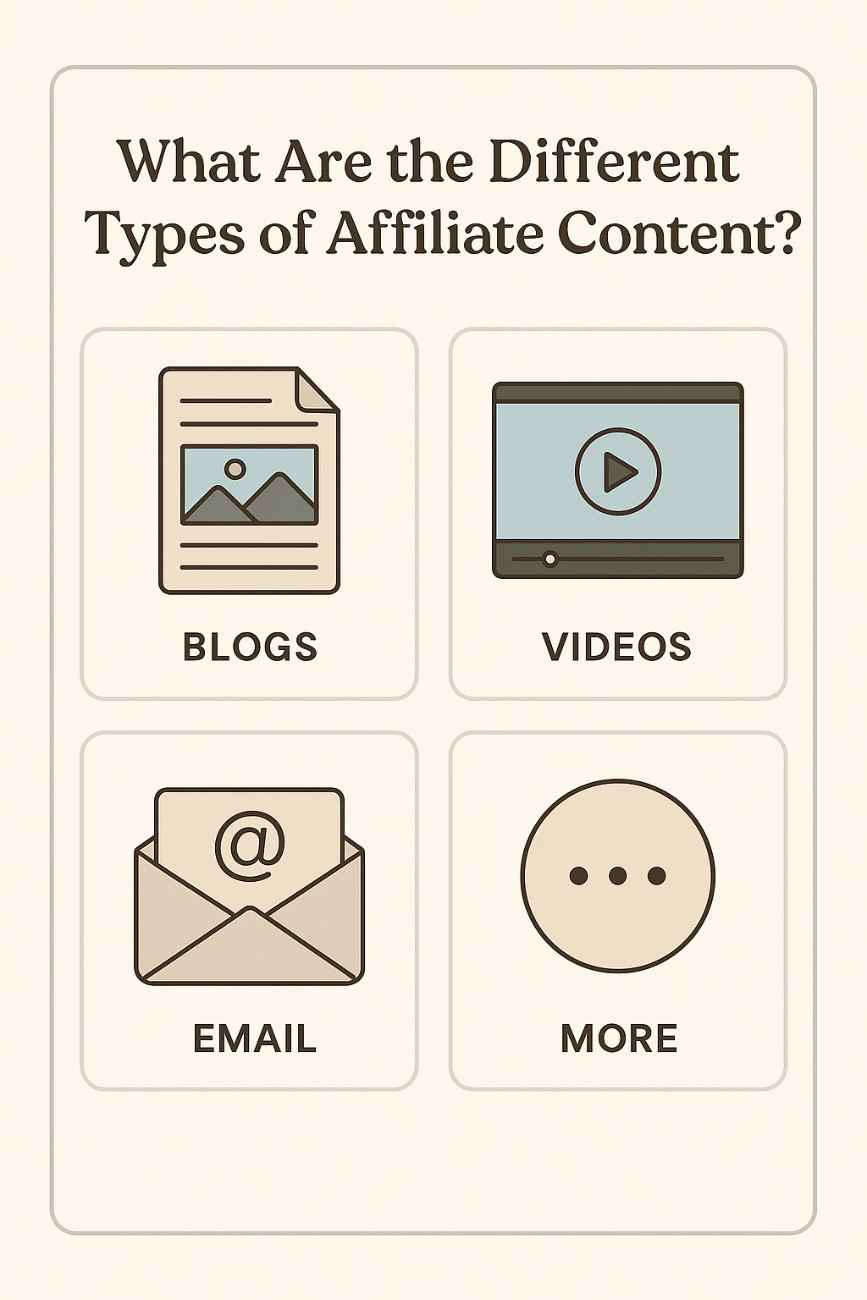
What Are the Different Types of Affiliate Content? (Blogs, Videos, Email, and More)

Affiliate Marketing

Affiliate marketing is a powerful way to earn income online by promoting products or services and earning a commission for every sale or lead generated through your referral link. But behind every successful affiliate marketer is a solid content strategy. Why? Because content is the vehicle through which affiliate promotions are delivered. Without engaging, valuable, and well-targeted content, affiliate links would have no audience, no engagement—and certainly no conversions.

Affiliate content is more than just inserting links into random posts. It’s about delivering the right message to the right audience at the right time—whether that’s through a blog post, a video, an email, or another medium.

In this detailed guide, we’ll explore the different types of affiliate content, how they work, their strengths and weaknesses, and when to use each format. We’ll also give a real-world example of how an affiliate marketer uses multiple content types together to maximize results.


Why Content Matters in Affiliate Marketing

Before diving into content types, let’s briefly understand why content is so important in affiliate marketing:

  • It builds trust and authority with your audience.

  • It educates the user about the benefits of the product.

  • It helps overcome objections or skepticism.

  • It aligns with user intent—whether someone is looking to learn, compare, or buy.

By matching your affiliate content to the user journey (awareness, consideration, decision), you can effectively guide your audience from interest to action—clicking and converting on your affiliate links.


The Main Types of Affiliate Content

Let’s now examine the most common types of affiliate content with their unique advantages and best-use cases:


1. Blog Posts and Articles

Overview

Blogging remains one of the most popular and effective affiliate marketing strategies. It offers flexibility, long-form depth, and the ability to rank for keywords in search engines (SEO).

Popular Blog Formats for Affiliate Marketing:

  • Product Reviews – Honest, in-depth evaluations of a single product.

    • Example: “Grammarly Premium Review 2025 – Is It Worth It?”

  • Comparison Posts – Comparing multiple products or services.

    • Example: “Bluehost vs SiteGround – Which Hosting Is Better for Beginners?”

  • Listicles – Lists of recommended tools or products.

    • Example: “Top 10 Budget Smartphones for Students in 2025”

  • How-To Guides and Tutorials – Educational content that integrates affiliate tools.

    • Example: “How to Start a Blog in 30 Minutes (Step-by-Step Guide)”

Benefits:

  • Good for SEO and long-term traffic.

  • Easy to insert contextual affiliate links.

  • Builds authority in your niche.

Challenges:

  • Requires consistent content creation.

  • SEO takes time and knowledge.


2. YouTube and Video Content

Overview

Video marketing is exploding in popularity, especially on platforms like YouTube, Instagram Reels, and TikTok. Video lets you show a product in action, building trust and engagement quickly.

Popular Video Formats:

  • Unboxings and First Impressions

    • Example: “Unboxing the DJI Osmo Pocket 3 – Best Vlogging Camera?”

  • Product Demonstrations

    • Example: “How to Use Canva to Design Instagram Posts (Beginner Tutorial)”

  • Side-by-Side Comparisons

    • Example: “Canva vs Adobe Express – Which Is Better for Creators?”

  • List Videos

    • Example: “Top 5 Budget Microphones for Podcasting in 2025”

You can place affiliate links in the video description, pinned comments, or within the video using pop-ups and annotations (where available).

Benefits:

  • High engagement and viewer retention.

  • Builds trust with a face or voice behind the content.

  • Videos can rank on both YouTube and Google.

Challenges:

  • Requires time, planning, and editing skills.

  • You need camera equipment and good lighting/audio.

  • Harder to update than written content.


3. Email Marketing

Overview

Email remains one of the most profitable digital marketing channels. With affiliate marketing, email helps you build a relationship with your audience and promote products in a personalized way.

Common Email Types for Affiliate Promotion:

  • Product Recommendations

    • Example: “Here’s the New Tool I’m Using to Organize My Workflow”

  • Exclusive Offers or Coupons

    • Example: “Get 40% Off Grammarly Premium This Week Only”

  • Email Sequences / Autoresponders

    • Example: A 5-day welcome series with a final pitch for an affiliate tool.

  • Content Roundups

    • Example: “Top 3 Blog Posts You May Have Missed (with affiliate links)”

Benefits:

  • You own your list—no algorithm involved.

  • High conversion rates due to trust and segmentation.

  • Perfect for repeat promotions and follow-ups.

Challenges:

  • You need to build your email list first.

  • Requires smart automation and timing to avoid sounding too salesy.


4. Social Media Content

Overview

Social media platforms like Instagram, Facebook, Pinterest, and TikTok are great for reaching new audiences and sharing short-form affiliate content.

Popular Content Ideas:

  • Product highlights in Stories or Reels

  • Behind-the-scenes content using the product

  • Mini reviews with direct purchase links

  • Shoppable posts or link-in-bio landing pages

Benefits:

  • Immediate reach and viral potential.

  • Perfect for visual or lifestyle-related products (beauty, fashion, fitness).

  • Easy to engage with comments and feedback.

Challenges:

  • Platforms often restrict direct affiliate links.

  • Fast-moving content—requires regular posting.

  • Not evergreen like blog posts or videos.


5. Ebooks and Lead Magnets

Overview

Free ebooks or checklists can be used to educate and capture leads while inserting affiliate links within the content.

Example:

  • “The Ultimate Guide to Remote Work in 2025” – includes tools for time management, VPNs, and ergonomic furniture, all with affiliate links.

Benefits:

  • Adds massive value in exchange for an email address.

  • Can be used as part of a funnel.

  • Offers long-term utility.

Challenges:

  • Time-consuming to create.

  • Requires traffic or a funnel to distribute.


6. Podcasts

Overview

Podcasts are growing fast. Hosts can recommend tools or products verbally and include affiliate links in show notes.

Example:

A finance podcaster talks about budgeting apps and promotes an affiliate deal with a tool like YNAB or Mint.

Benefits:

  • Highly loyal audiences.

  • Less competition in many niches.

  • Passive, multitask-friendly consumption.

Challenges:

  • Harder to track link clicks.

  • Setup can be technical.

  • Requires a regular publishing schedule.


Real-World Example: Using Multiple Content Types Together

Let’s take the example of James, an affiliate marketer in the productivity tools niche. He promotes Notion, an all-in-one workspace tool.

Here’s how James uses different content formats to grow his affiliate revenue:

  1. Blog:

    • Writes an in-depth guide: “How I Use Notion to Organize My Life – 2025 Productivity Hack”

    • Includes affiliate links to Notion Pro.

  2. YouTube:

    • Creates a video: “My Notion Setup for Weekly Planning – Full Walkthrough”

    • Drops the same affiliate link in the description.

  3. Email:

    • Sends an email to his list: “My Top 3 Digital Tools for Focus (Includes Free Templates)”

    • Notion is #1, with the link included.

  4. Instagram:

    • Posts a reel: “Before vs After Using Notion for Daily Routines”

    • Adds link in bio.

  5. Free Ebook:

    • Offers a download: “7-Day Productivity Blueprint Using Notion”

    • The ebook includes affiliate links and bonus tools.

This multi-channel approach ensures James meets his audience wherever they are—reading, watching, or scrolling—and increases his chances of conversions.


Best Practices for Affiliate Content

  • Always disclose affiliate links clearly.

  • Prioritize value over promotion.

  • Match content format to audience behavior (e.g., Gen Z prefers short videos, professionals may prefer blogs).

  • Use data and analytics to track what’s working.

  • Repurpose content across platforms for efficiency.


Conclusion

Affiliate content is not one-size-fits-all. Different audiences, platforms, and products require different approaches. By understanding the strengths and limitations of various content types—blogs, videos, emails, social media, ebooks, and podcasts—you can build a diverse affiliate strategy that reaches more people and drives more sales.

No matter which format you choose, the golden rule is this: solve a problem, share a story, and offer value first. When you do that, your affiliate promotions will feel like helpful recommendations, not pushy sales pitches—and your earnings will reflect that.


Would you like help building a content calendar or writing your first affiliate blog or email? I’d be happy to assist with templates or content ideas tailored to your niche!

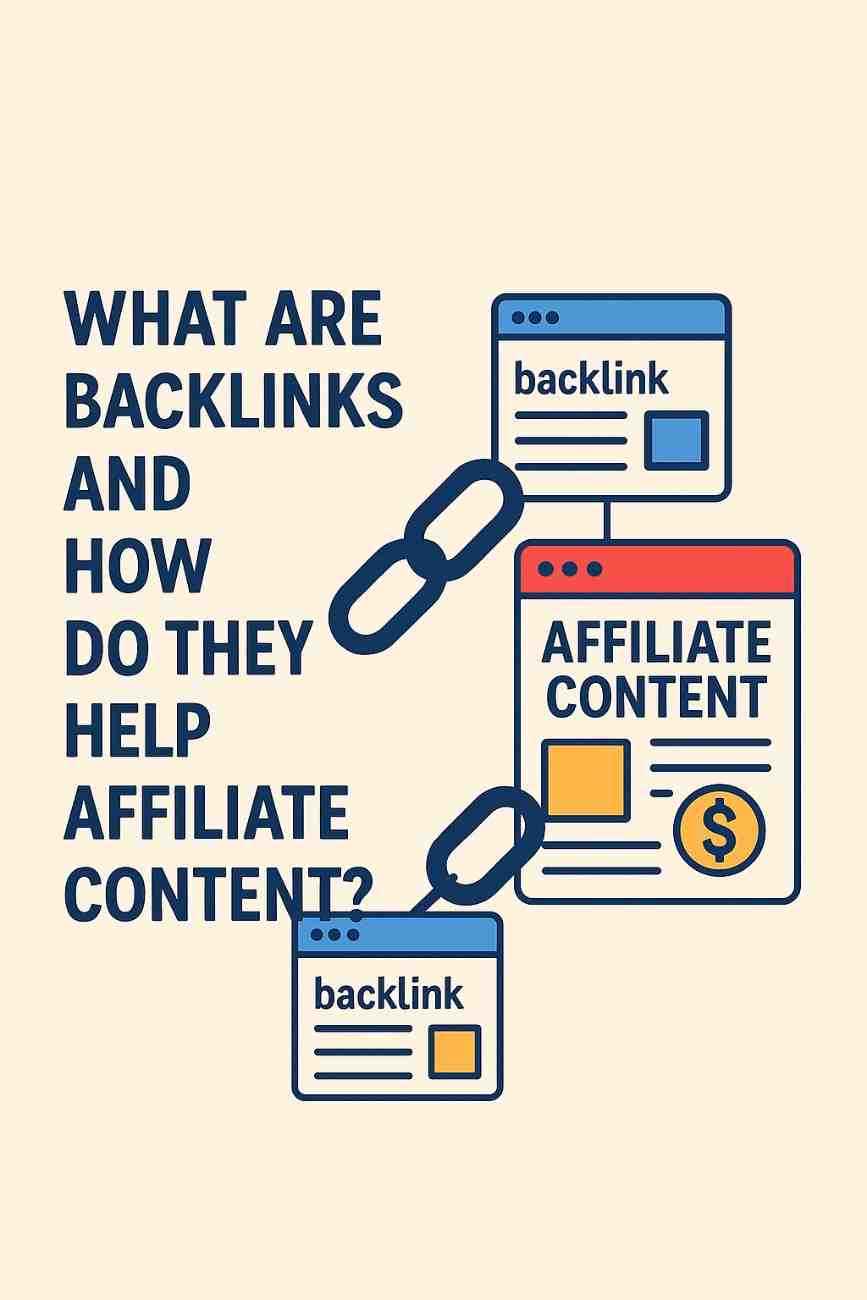
What Are Backlinks and How Do They Help Affiliate Content?

Affiliate Marketing

In the realm of digital marketing, backlinks—also known as inbound or incoming links—are hyperlinks from one website to another. They are a critical component of Search Engine Optimization (SEO) and play a significant role in enhancing the visibility, credibility, and performance of affiliate content. For affiliate marketers, who rely on driving traffic to content embedded with affiliate links to earn commissions, backlinks are a powerful tool to boost search engine rankings, attract targeted audiences, and increase conversions. In 2025, with search engines like Google prioritizing high-quality, authoritative content under its E-E-A-T (Experience, Expertise, Authoritativeness, Trustworthiness) guidelines, understanding and leveraging backlinks is essential for success in affiliate marketing. This essay explores the nature of backlinks, their importance in affiliate marketing, strategies to acquire them, challenges, and benefits, followed by a practical example to illustrate their application.


Understanding Backlinks

A backlink occurs when an external website links to a page on your site. For example, if a tech blog links to your affiliate review of a laptop, that’s a backlink. Search engines view backlinks as “votes of confidence,” signaling that your content is valuable and trustworthy. However, not all backlinks are equal. Their quality depends on factors like:

  • Authority of the Linking Site: Backlinks from high-authority sites (e.g., Forbes, TechRadar) carry more weight than those from low-quality or spammy sites.
  • Relevance: Links from sites in the same niche (e.g., a tech site linking to a gadget review) are more valuable than unrelated links.
  • Anchor Text: The clickable text of the link (e.g., “best laptops 2025”) should be relevant to your content.
  • Dofollow vs. Nofollow: Dofollow links pass SEO authority, while nofollow links (often used in forums or comments) don’t, though they can still drive traffic.
  • Link Placement: Links within content (e.g., in a blog post) are more impactful than footer or sidebar links.

In affiliate marketing, backlinks enhance content like product reviews, comparison posts, or guides, which contain affiliate links to merchant sites (e.g., Amazon, ShareASale). By improving the SEO performance of this content, backlinks indirectly boost affiliate earnings.


How Backlinks Help Affiliate Content

Backlinks are a cornerstone of affiliate marketing success because they directly and indirectly contribute to traffic, rankings, and conversions. Here’s how they benefit affiliate content:

1. Improve Search Engine Rankings

Search engines, particularly Google, use backlinks as a key ranking factor. A page with high-quality backlinks is seen as authoritative, increasing its likelihood of ranking higher for target keywords.

  • Impact: Higher rankings for affiliate content (e.g., a post targeting “best budget headphones 2025”) attract more organic traffic, leading to more affiliate link clicks.
  • Example: A backlink from a tech blog to your headphone review can push it from page 2 to page 1 on Google, significantly increasing visibility.
  • Significance: Organic traffic is cost-effective and sustainable, ideal for affiliates with limited budgets.
2. Drive Referral Traffic

Backlinks from relevant, high-traffic sites can send targeted visitors directly to your affiliate content.

  • Impact: Visitors from niche-related sites (e.g., a fitness blog linking to your yoga mat review) are more likely to engage with your content and click affiliate links due to their pre-existing interest.
  • Example: A link from a student-focused blog to your “best laptops for students” post can drive 100 monthly visitors, some of whom convert via your Amazon links.
  • Significance: Referral traffic supplements organic search, diversifying traffic sources and reducing reliance on SEO alone.
3. Enhance Credibility and Trust

Backlinks from reputable sites signal to both search engines and users that your content is trustworthy, aligning with Google’s E-E-A-T guidelines.

  • Impact: In affiliate marketing, trust is critical, especially in YMYL (Your Money, Your Life) niches like finance or health. Credible backlinks make readers more likely to trust your recommendations and act on affiliate links.
  • Example: A backlink from a well-known finance blog to your review of a budgeting app enhances your authority, encouraging sign-ups.
  • Significance: Trust increases conversion rates, as readers are more comfortable purchasing through your links.
4. Boost Domain Authority

Backlinks contribute to your site’s overall Domain Authority (DA), a metric (developed by Moz) that predicts how well a site will rank. Higher DA improves rankings for all your content, not just the linked page.

  • Impact: A site with strong backlinks ranks better for multiple affiliate posts, amplifying earnings across your portfolio.
  • Example: Backlinks to your tech blog from various gadget sites increase your DA, helping new posts (e.g., “best smartwatches 2025”) rank faster.
  • Significance: Higher DA creates a compounding effect, making future content creation more impactful.
5. Support Long-Term, Passive Income

Backlinks contribute to evergreen content by maintaining or improving rankings over time, generating consistent traffic to affiliate links.

  • Impact: Unlike paid ads, which stop driving traffic when funding ends, backlinks provide ongoing benefits, supporting passive income goals.
  • Example: A backlink from a 2023 guest post continues driving traffic to your affiliate review in 2025, yielding commissions years later.
  • Significance: Evergreen traffic aligns with affiliate marketing’s goal of sustainable earnings.
6. Amplify Content Reach

Backlinks expose your content to new audiences through the linking site’s readership, social shares, or secondary links.

  • Impact: Increased exposure in niche communities (e.g., tech forums) can lead to additional backlinks or social engagement, further boosting SEO and traffic.
  • Example: A backlink from a Reddit thread discussing headphones spreads to other forums, amplifying your review’s reach.
  • Significance: Broader reach diversifies traffic and enhances brand awareness for your affiliate content.

Strategies to Acquire Backlinks for Affiliate Content

Building high-quality backlinks requires proactive effort and ethical practices, as low-quality or spammy links can harm rankings. Here are the best strategies for 2025:

  1. Guest Posting:
    • Write high-value articles for reputable blogs in your niche, including a backlink to your affiliate content. For example, a guest post on a tech blog about “Top Gadgets for 2025” can link to your laptop review.
    • Tool: BuzzSumo (free trial) to find guest posting opportunities.
    • Tip: Focus on sites with high DA and niche relevance.
  2. Create Shareable Content:
    • Develop in-depth, unique content like guides, infographics, or comparison posts that naturally attract links. For example, “Ultimate Guide to Choosing Wireless Earbuds” may earn links from tech sites.
    • Tool: Canva (free) for infographics, Ahrefs (~$99/month) to analyze competitors’ linkable content.
    • Tip: Promote content on X or Reddit to encourage shares.
  3. Engage in Niche Communities:
    • Participate in forums (e.g., Reddit’s r/TechGadgets), Quora, or niche groups, subtly linking to your content where allowed. For example, answer a question about headphones with a link to your review.
    • Tool: Bitly (free) for trackable links.
    • Tip: Prioritize value over promotion to avoid bans.
  4. Broken Link Building:
    • Identify broken links on relevant sites using Ahrefs or Check My Links (free Chrome extension), then suggest your affiliate content as a replacement.
    • Example: Replace a broken link to a laptop review with your post.
    • Tip: Personalize outreach emails to site owners.
  5. Collaborate with Influencers or Bloggers:
    • Partner with niche influencers or bloggers to co-create content or earn mentions with backlinks. For example, a fitness influencer might link to your yoga mat comparison in a workout guide.
    • Tool: Hunter.io (free) for finding blogger emails.
    • Tip: Offer value (e.g., free content) in exchange for links.
  6. Resource Page Outreach:
    • Find resource pages in your niche (e.g., “Best Tech Resources”) and pitch your affiliate content for inclusion.
    • Tool: Google Search (free) with queries like “tech resources inurl:links.”
    • Tip: Highlight your content’s unique value.

Challenges of Using Backlinks in Affiliate Marketing

  • Time-Intensive: Building high-quality backlinks via guest posting or outreach takes weeks or months.
  • Quality vs. Quantity: Low-quality or spammy links (e.g., from link farms) can trigger Google penalties, harming rankings.
  • Rejection Risk: Outreach efforts may face low response rates, requiring persistence.
  • Niche Relevance: Securing relevant backlinks in competitive niches like tech or finance is harder than in less crowded ones.
  • Cost: Premium tools like Ahrefs or paid guest posts (~$50–$200) may strain beginner budgets.

Benefits of Backlinks for Affiliate Content

  • Higher Rankings: Boosts visibility for affiliate posts, driving organic traffic.
  • Targeted Traffic: Attracts niche audiences likely to convert via affiliate links.
  • Increased Trust: Enhances credibility, critical for YMYL niches.
  • Passive Income: Supports evergreen content for long-term earnings.
  • Scalability: Higher DA improves rankings for all content, amplifying income potential.

Example: Using Backlinks to Boost Affiliate Content

Scenario: Alex, a 21-year-old student, wants to earn $200/month promoting fitness products in the “home workout gear” niche. He creates a comparison post and uses backlinks to enhance its performance.

Step-by-Step Approach:

  1. Choose Niche and Content (Week 1):
    • Alex selects “home workout gear” and creates a comparison post, “Resistance Bands vs. Dumbbells: Best for Home Workouts in 2025,” targeting students. He joins Amazon Associates (4–8% commissions) and Rogue Fitness via ShareASale (5–10% commissions).
  2. Create Comparison Post (Weeks 2–3):
    • Alex uses Wix (free) to build a blog, “FitStudentHub,” and writes a 1,800-word post optimized for “resistance bands vs. dumbbells 2025” using Ubersuggest (free).
    • Structure: Includes a comparison table (price, portability, versatility), pros/cons, and CTAs with affiliate links (via Bitly). He adds a Canva infographic and an FTC disclosure.
    • SEO: Uses Yoast SEO (free) for on-page optimization and submits a sitemap via Google Search Console (free).
  3. Build Backlinks (Weeks 4–12):
    • Guest Posting: Alex writes a guest post, “Top 5 Home Workout Tools for Students,” for a fitness blog (DA 40), linking to his comparison post. He finds the opportunity via BuzzSumo.
    • Community Engagement: He answers questions on Reddit’s r/Fitness (e.g., “Bands or dumbbells for beginners?”), linking to his post, earning 5 backlinks from forum threads.
    • Broken Link Building: Using Check My Links, Alex finds a broken link on a fitness site’s resource page and pitches his post as a replacement, securing 1 backlink.
    • Resource Page Outreach: He emails 20 fitness resource pages, landing 2 backlinks by highlighting his post’s value.
    • Total: 8 high-quality backlinks from niche sites.
  4. Promote Content (Weeks 13–16):
    • Alex shares pins on Pinterest, driving 1,000 visitors/month. He posts Instagram reels showing band workouts, gaining 400 followers and 100 clicks/month via Linktree.
    • Using Mailchimp (free), he offers a “7-Day Home Workout Plan,” collecting 150 subscribers and sending newsletters with his post’s link.
  5. Track and Optimize (Weeks 17–24):
    • Google Analytics shows 2,500 monthly visitors, with backlinks contributing 30% of traffic. The post ranks on Google’s page 1 for “resistance bands vs. dumbbells,” boosting organic clicks.
    • Amazon reports 20 band sales ($500 total, $25 commission at 5%) and Rogue reports 10 dumbbell sales ($1,000 total, $80 commission at 8%), totaling $105/month.
    • Alex updates the post with 2025 pricing and adds a YouTube comparison video, earning 5 more backlinks from video shares, pushing earnings to $210/month.

Analysis: Alex’s backlinks from guest posts, forums, and resource pages significantly boost his post’s ranking and traffic, driving targeted clicks to affiliate links. Free tools (Wix, Canva, Ubersuggest, Mailchimp) and strategic outreach keep costs low ($0 except time). His multi-channel promotion (Pinterest, Instagram, email) amplifies reach, while backlinks ensure long-term visibility. Exceeding his $200/month goal, Alex demonstrates how backlinks can transform affiliate content performance.


Best Practices for Backlinks in Affiliate Marketing

  • Prioritize Quality: Focus on high-DA, niche-relevant backlinks over quantity.
  • Be Ethical: Avoid black-hat tactics like buying links, which risk penalties.
  • Diversify Sources: Combine guest posts, forums, and resource pages for a natural link profile.
  • Monitor Links: Use Ahrefs or Google Search Console to track backlinks and disavow harmful ones.
  • Stay Relevant: Ensure anchor text and linking sites align with your content.
  • Leverage Free Tools: Use Canva, Bitly, and Hunter.io to minimize costs.

Conclusion

Backlinks are hyperlinks from external sites that significantly enhance affiliate content by improving search engine rankings, driving referral traffic, boosting credibility, and supporting passive income. In affiliate marketing, they amplify the visibility of content like reviews or comparisons, increasing clicks on affiliate links and commissions. Strategies like guest posting, shareable content, and community engagement build high-quality backlinks, though challenges like time investment and rejection risks require persistence. Alex’s example in the fitness niche shows how a beginner can use backlinks to earn $210/month, leveraging free tools and strategic outreach. In 2025, as search engines prioritize authority and relevance, backlinks remain a vital tool for affiliates to achieve sustainable success, driving targeted traffic and maximizing earnings in the competitive digital landscape.

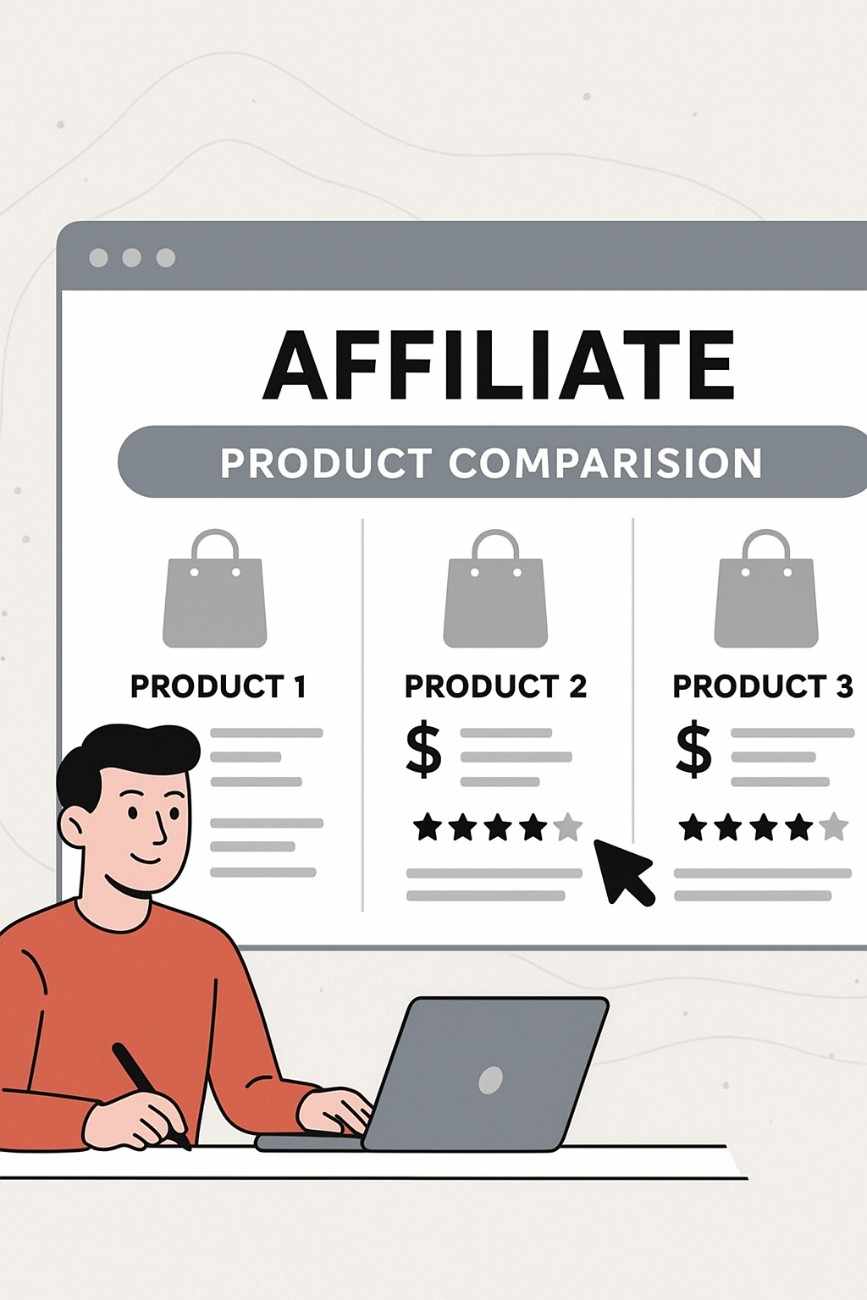
What Is the Best Way to Compare Products as an Affiliate?

Comparing products is a highly effective strategy in affiliate marketing, as it helps potential customers make informed purchasing decisions while driving clicks and conversions through affiliate links. By presenting side-by-side comparisons of products within a niche, affiliates can address consumer pain points, highlight key differences, and guide audiences toward the best options, thereby increasing trust and commissions. In 2025, with consumers relying heavily on online research and search engines prioritizing high-quality, user-focused content, crafting effective product comparisons requires a strategic blend of research, content creation, SEO, and persuasive techniques. This essay outlines the best practices for comparing products as an affiliate, detailing the steps, benefits, challenges, and tools involved, followed by a practical example to illustrate the process.


Why Product Comparisons Are Effective in Affiliate Marketing

Product comparison content is a cornerstone of affiliate marketing because it:

  • Addresses Buyer Intent: Consumers often search for comparisons (e.g., “Sony vs. Bose earbuds 2025”) when they’re ready to buy, making them high-intent prospects.
  • Builds Trust: Transparent, detailed comparisons demonstrate expertise and impartiality, fostering credibility.
  • Drives SEO Traffic: Comparison posts target specific, long-tail keywords, ranking well on search engines and attracting organic traffic.
  • Increases Conversions: By highlighting pros, cons, and unique features, comparisons guide readers to click affiliate links for the best-suited product.
  • Supports Evergreen Content: Well-crafted comparisons remain relevant for popular products, generating passive income over time.

However, creating effective product comparisons involves overcoming challenges like research complexity, maintaining neutrality, and standing out in competitive niches. Below, we explore the best way to compare products as an affiliate, with actionable steps tailored for 2025.


Steps to Compare Products Effectively as an Affiliate

1. Select the Right Products and Niche

Choosing relevant products within a focused niche is critical to attract a targeted audience and ensure viable affiliate commissions.

  • Key Actions:
    • Identify a Niche: Focus on a niche with demand and moderate competition (e.g., “budget tech gadgets” vs. broad “tech”). Use Google Trends (free) to validate demand.
    • Choose Comparable Products: Select 2–5 products with similar features but distinct differences (e.g., Sony WF-1000XM5 vs. Bose QuietComfort Earbuds). Ensure they’re available through affiliate programs like Amazon Associates (1–10% commissions) or ShareASale.
    • Align with Audience Needs: Pick products that solve specific problems (e.g., noise-canceling earbuds for students or commuters).
  • Significance: Relevant products ensure engagement and higher conversion potential.
  • Tools: Ubersuggest (free) for niche research, X for trending product discussions.
2. Conduct In-Depth Product Research

Thorough research is essential to provide accurate, detailed comparisons that build trust and authority.

  • Key Actions:
    • Gather Product Details: Collect specs, pricing, features, and warranties from merchant sites, Amazon listings, or manufacturer pages.
    • Analyze User Feedback: Review customer ratings and comments on Amazon, Reddit, or X to understand real-world experiences (e.g., battery life issues or comfort).
    • Test Products (If Possible): Use the products yourself to share authentic insights (e.g., “I tested Sony’s earbuds during a noisy commute”). If not feasible, aggregate user reviews.
    • Compare Competitors: Identify key differentiators (e.g., Sony’s superior noise cancellation vs. Bose’s comfort).
  • Significance: Comprehensive research ensures accuracy and meets Google’s E-E-A-T (Experience, Expertise, Authoritativeness, Trustworthiness) standards.
  • Tools: BuzzSumo (free trial) for competitor analysis, Reddit for user sentiment.
3. Optimize for SEO

SEO is crucial to rank comparison content on search engines, driving organic traffic from users searching for product comparisons.

  • Key Actions:
    • Keyword Research: Target long-tail keywords with high intent (e.g., “Sony WF-1000XM5 vs. Bose QuietComfort Earbuds 2025”) using Google Keyword Planner (free) or Ahrefs (~$99/month).
    • Optimize Structure: Include keywords in the title (e.g., “Sony WF-1000XM5 vs. Bose QuietComfort Earbuds: Which Is Best for 2025?”), meta description, H1/H2 headings, and URL.
    • Enhance Readability: Use comparison tables, bullet points, and images with alt text (e.g., “Sony WF-1000XM5 earbuds”).
    • Link Strategically: Add internal links to related content (e.g., individual product reviews) and external links to authoritative sources (e.g., manufacturer specs).
  • Significance: High rankings attract targeted, high-intent traffic, increasing affiliate link clicks.
  • Tools: Yoast SEO (free) for on-page optimization, Google Search Console (free) for tracking rankings.
4. Structure the Comparison Content

A clear, logical structure makes the comparison easy to follow, engaging, and persuasive.

  • Key Components:
    • Headline: Keyword-rich and compelling (e.g., “Sony WF-1000XM5 vs. Bose QuietComfort Earbuds: 2025 Comparison”).
    • Introduction: Hook readers with a problem or question (e.g., “Can’t decide between Sony and Bose earbuds for your commute?”) and outline the comparison’s purpose.
    • Overview Table: Summarize key specs (e.g., price, battery life, noise cancellation) in a side-by-side table for quick reference.
    • Detailed Comparison: Break down categories like features, performance, price, and user experience (e.g., “Sound Quality: Sony excels in bass, while Bose offers balanced audio”).
    • Pros and Cons: List strengths and weaknesses for each product to show transparency.
    • Personal Insights or User Feedback: Share your experience or aggregate reviews (e.g., “Sony’s noise cancellation blocked out train noise, per my test”).
    • Recommendation: Suggest the best product for specific audiences (e.g., “Sony for audiophiles, Bose for comfort-seekers”).
    • Call-to-Action (CTA): Include affiliate links with clear CTAs (e.g., “Buy Sony on Amazon” or “Check Bose Price”).
    • Disclosure: Add an FTC-compliant disclosure (e.g., “This post contains affiliate links, and I may earn a commission at no cost to you”).
  • Significance: A structured comparison simplifies decision-making, boosting conversions.
  • Tools: Canva (free) for visuals like comparison tables, Grammarly (free) for polished writing.
5. Incorporate Persuasive and Transparent Elements

Persuasion drives clicks, but transparency maintains trust, ensuring readers feel confident in your recommendations.

  • Key Actions:
    • Highlight Benefits: Emphasize how products solve problems (e.g., “Sony’s noise cancellation is perfect for noisy campuses”).
    • Address Objections: Counter concerns like price or complexity (e.g., “Bose’s $249 price is justified by its comfort and durability”).
    • Use Social Proof: Include ratings, testimonials, or user quotes (e.g., “4.8/5 stars from 3,000 Amazon reviews for Sony”).
    • Add Visuals: Use images or videos (e.g., earbuds in use) to demonstrate features.
    • Be Honest: Disclose limitations (e.g., “Sony’s app is less intuitive than Bose’s”).
  • Significance: Balances persuasion with authenticity, increasing trust and conversions.
  • Tools: DaVinci Resolve (free) for video editing, Canva for infographics.
6. Promote the Comparison

Driving traffic to the comparison is essential to maximize its reach and affiliate link clicks.

  • Key Actions:
    • Social Media: Share on Pinterest (pins for “Sony vs. Bose earbuds”), Instagram (reels showing features), and X (engaging in tech discussions).
    • Email Marketing: Use Mailchimp (free for 500 subscribers) to send newsletters with a lead magnet (e.g., “Free Tech Buying Guide”).
    • Paid Ads (Optional): Run low-budget Meta Ads ($5/day) targeting niche audiences (e.g., students).
    • Communities: Share subtly in Reddit subreddits (e.g., r/TechGadgets) or Quora, respecting rules.
  • Significance: Multi-channel promotion amplifies traffic, increasing click-through potential.
  • Tools: Buffer (free) for social media scheduling, Bitly (free) for link tracking.
7. Track and Optimize Performance

Monitoring and refining the comparison ensures sustained success and higher earnings.

  • Key Actions:
    • Track Metrics: Use Google Analytics (free) for traffic and affiliate dashboards for clicks/conversions.
    • A/B Test: Experiment with CTAs or headlines using Google Optimize (free) to boost click-through rates.
    • Update Content: Refresh with new prices, features, or models (e.g., “Updated for 2025 releases”).
  • Significance: Optimization maximizes conversions and keeps content relevant.
  • Tools: Google Search Console for ranking updates, affiliate network dashboards.

Challenges in Product Comparisons

  • Research Intensity: Comparing multiple products requires extensive data collection, which is time-consuming.
  • Maintaining Neutrality: Balancing honesty with persuasion to avoid bias is tricky.
  • SEO Competition: Popular comparisons (e.g., “Sony vs. Bose”) face high competition, requiring strong SEO.
  • Keeping Content Fresh: Product updates or price changes necessitate regular revisions.
  • Compliance Risks: Failing to disclose affiliate links or follow program rules can lead to bans.

Benefits of Product Comparisons

  • High Conversion Rates: Targeted comparisons attract ready-to-buy audiences, boosting commissions.
  • Evergreen Potential: Well-optimized comparisons generate traffic for years.
  • Authority Building: Detailed, transparent content establishes expertise, meeting E-E-A-T standards.
  • Versatility: Comparisons work across platforms (blogs, YouTube, social media).
  • Scalability: Affiliates can create multiple comparisons across products or niches.

Example: Comparing Wireless Earbuds as an Affiliate

Scenario: Sarah, a 23-year-old student, wants to earn $250/month by promoting tech gadgets. She creates a comparison post for the Sony WF-1000XM5 ($299, 4% commission via Amazon Associates) and Bose QuietComfort Earbuds ($249, 4% commission) in the “wireless earbuds for students” niche.

Step-by-Step Approach:

  1. Select Products (Week 1):
    • Sarah chooses “wireless earbuds for students” after confirming demand with Google Trends. She selects Sony WF-1000XM5 and Bose QuietComfort Earbuds for their popularity and affiliate availability via Amazon Associates.
  2. Research Products (Week 2):
    • Sarah gathers specs from Amazon and manufacturer sites: Sony (8-hour battery, noise cancellation, $299) vs. Bose (6-hour battery, superior comfort, $249).
    • She analyzes 2,000+ Amazon reviews (Sony: 4.8/5; Bose: 4.7/5) and Reddit threads for user feedback (e.g., Sony’s better bass, Bose’s lighter design).
    • Sarah tests Sony earbuds (borrowed) and cites user reviews for Bose.
  3. Create Comparison Post (Weeks 3–4):
    • Sarah uses WordPress.org with Bluehost ($50/year) to create a blog, “TechBit,” and writes a 1,800-word post: “Sony WF-1000XM5 vs. Bose QuietComfort Earbuds: Which Is Best for Students in 2025?”
    • Structure:
      • Headline: Optimized for “Sony WF-1000XM5 vs. Bose QuietComfort 2025.”
      • Introduction: “Struggling to choose between Sony and Bose earbuds for studying or commuting? Here’s our detailed comparison.”
      • Comparison Table: Lists price, battery life, noise cancellation, and weight.
      • Detailed Sections: Compares sound quality, comfort, battery, and price/value.
      • Pros/Cons: Sony (Pros: superior noise cancellation; Cons: higher price); Bose (Pros: comfortable fit; Cons: shorter battery).
      • Recommendation: “Sony for audiophiles, Bose for long-term comfort.”
      • CTA: “Buy Sony on Amazon” and “Shop Bose Now” (affiliate links via Bitly).
      • Disclosure: “This post contains affiliate links.”
    • Sarah uses Canva for a comparison infographic and Yoast SEO for optimization.
  4. Promote the Post (Weeks 5–12):
    • Sarah shares pins on Pinterest, driving 1,500 visitors/month. She posts Instagram reels demonstrating earbuds, gaining 600 followers and 150 clicks/month via Linktree.
    • On X, she engages in tech discussions, driving 100 clicks/month. She uses Mailchimp to offer a “Tech Deals Guide,” collecting 200 subscribers and sending weekly newsletters.
    • Sarah answers Quora questions (e.g., “Sony vs. Bose earbuds?”), linking to her post.
  5. Track and Optimize (Weeks 13–20):
    • Google Analytics shows 2,500 monthly visitors, with a 15% click-through rate (375 affiliate link clicks). Amazon reports 15 Sony sales ($4,485 total, $179 commission) and 10 Bose sales ($2,490 total, $99 commission), totaling $278/month.
    • Sarah updates the post with 2025 pricing and adds a YouTube comparison video, boosting earnings to $300/month.

Analysis: Sarah’s comparison succeeds due to thorough research, SEO optimization, and multi-channel promotion using free tools (Canva, Mailchimp, Bitly) and affordable hosting. Her transparent, detailed content builds trust, while Pinterest and email drive targeted traffic. Exceeding her $250/month goal, Sarah demonstrates the power of product comparisons in affiliate marketing.


Conclusion

Comparing products as an affiliate is a strategic approach that leverages detailed research, SEO, structured content, and multi-channel promotion to drive conversions. By selecting relevant products, creating transparent comparisons, and optimizing for search engines, affiliates can attract high-intent audiences and maximize commissions. Challenges like research intensity and competition are overcome with free tools and persistence. Sarah’s example in the earbuds niche shows how a beginner can earn $300/month by comparing products effectively, using affordable resources and targeted strategies. In 2025, as consumers seek trusted, informative content, product comparisons remain a vital tool for affiliates to build authority, drive traffic, and achieve sustainable success in the competitive affiliate marketing landscape.

The Importance of Keyword Research in Affiliate Marketing

Affiliate marketing is one of the most popular ways to generate passive income online. It involves promoting products or services offered by others and earning a commission for every sale or lead generated through your unique affiliate link. But to succeed in this competitive space, simply creating content is not enough. You need to ensure that your content reaches the right audience—people who are actively searching for what you’re promoting. This is where keyword research becomes crucial.

In this comprehensive guide, we’ll explore the importance of keyword research in affiliate marketing, how it works, why it matters, and how to use it effectively. We’ll also provide a practical example to show how keyword research can transform a mediocre affiliate campaign into a highly profitable one.


What Is Keyword Research?

Keyword research is the process of identifying the specific words and phrases (keywords) that people use when searching for information, products, or services online. For affiliate marketers, keyword research reveals what potential buyers are typing into search engines like Google, YouTube, or Amazon.

By targeting the right keywords in your content (blogs, videos, reviews, etc.), you increase the chances of your content ranking higher on search engines, attracting organic traffic—that is, visitors who find your content naturally without paid advertising.

In short, keyword research bridges the gap between what people are searching for and what affiliate marketers can offer.


Why Is Keyword Research Important in Affiliate Marketing?

1. Drives Targeted Traffic

Unlike general website visitors, people searching for specific keywords have a clear intent. Someone searching for “best running shoes under $100” is more likely to make a purchase soon compared to someone just browsing a generic site.

By optimizing your content for such “buyer-intent” keywords, you attract high-conversion traffic—people who are ready to take action.

2. Improves Search Engine Rankings (SEO)

Google and other search engines use algorithms to decide which pages to show for each search query. If your content is aligned with relevant, well-researched keywords, it has a much better chance of ranking on the first page of results.

Higher rankings = more visibility = more clicks = more affiliate sales.

Without proper keyword research, your content may never be seen by the audience it’s intended for.

3. Maximizes ROI Without Paid Ads

Affiliate marketers often work with limited budgets. Instead of spending on ads, many rely on organic search traffic. Keyword research helps you create content that gets found naturally, making it a cost-effective and sustainable way to drive income.

4. Reveals Market Demand and Trends

Keyword research helps you understand what people are actively searching for in your niche. This allows you to:

  • Identify trending products or topics.

  • Avoid wasting time on low-demand offers.

  • Focus on what’s likely to generate revenue.

It also helps you uncover content gaps—areas that competitors may not have covered well—so you can step in and provide better solutions.

5. Informs Your Content Strategy

With good keyword data, you can map out your entire content calendar based on:

  • High-volume keywords (for traffic)

  • Low-competition keywords (for easy ranking)

  • Long-tail keywords (for targeting specific buyer intents)

This ensures you’re always creating content with purpose, not just guessing.


Types of Keywords in Affiliate Marketing

Not all keywords are created equal. Understanding the different types can help you target the right audience at the right stage of the buying process.

1. Informational Keywords

These are used when someone is looking for general knowledge or how-to content.

Examples:

  • “How to start a blog”

  • “What is a VPN?”

  • “Benefits of whey protein”

You can include affiliate links in informational content, but conversion rates are usually lower unless the content also includes product recommendations.

2. Navigational Keywords

These are used when people are looking for a specific website or brand.

Examples:

  • “Grammarly login”

  • “Nike official site”

Less useful for affiliate marketing unless you’re promoting the brand in question.

3. Transactional or Commercial Keywords

These are used when someone is ready to buy. These are gold for affiliate marketers.

Examples:

  • “Best web hosting for small business”

  • “Buy iPhone 13 online”

  • “Grammarly premium discount code”

These keywords signal a strong purchase intent, which means higher conversion potential when affiliate links are included.

4. Long-Tail Keywords

These are longer, more specific phrases with lower search volume but higher conversion potential.

Examples:

  • “Best affordable noise-canceling headphones for travel”

  • “Beginner DSLR camera under $500 with Wi-Fi”

Targeting long-tail keywords helps new affiliate marketers rank faster and reach highly specific audiences.


How to Do Keyword Research for Affiliate Marketing

1. Use Keyword Research Tools

Popular tools include:

  • Google Keyword Planner

  • Ubersuggest

  • Ahrefs

  • SEMrush

  • Moz

  • AnswerThePublic

  • Keywords Everywhere (browser extension)

These tools show:

  • Monthly search volume

  • Competition level

  • Keyword difficulty

  • Related keyword ideas

2. Study Your Competitors

Look at top-ranking affiliate blogs or videos in your niche. Analyze their content and see which keywords they’re targeting. Tools like Ahrefs and SEMrush can reveal competitors’ top-performing pages.

3. Use Google Search Suggestions

Start typing a keyword into Google and see what suggestions pop up. These are real queries people are searching for.

Also, scroll down to the bottom of the search results to view “related searches.”

4. Analyze Keyword Intent

Don’t chase volume alone. A keyword with 300 monthly searches and high buyer intent may be more valuable than a general keyword with 3,000 monthly searches but low intent.

Example:

  • “How to edit photos on mobile” (informational)

  • “Best photo editing apps with free trial” (commercial intent)

Always aim to target keywords that match user intent and your affiliate offer.


Real-World Example: Affiliate Website Promoting Web Hosting

Let’s say you’ve built an affiliate website promoting web hosting services. You want to earn commissions by referring users to services like Bluehost, Hostinger, or SiteGround.

Instead of targeting broad, competitive keywords like “web hosting,” you use keyword research tools and find the following long-tail keywords:

  • “Best web hosting for WordPress beginners” (2,900 searches/month)

  • “Affordable web hosting with free domain” (800 searches/month)

  • “Bluehost vs SiteGround for small business” (1,200 searches/month)

  • “How to start a blog in India 2025” (3,100 searches/month)

You now create specific content around each of these:

  1. A blog post comparing Bluehost and SiteGround, with pros and cons, pricing, and performance.

  2. A tutorial on setting up a WordPress blog using Bluehost, including screenshots and your affiliate link.

  3. A YouTube video titled “Best Hosting for Beginners – 2025 Review,” including links in the description.

  4. A Pinterest graphic that drives traffic to your blog guide.

Because your keywords are targeted and buyer-focused, your content attracts users with clear intent. They read your reviews, trust your insights, and click your affiliate link to buy hosting—earning you commissions.

Now multiply this by 30–40 blog posts and videos. With a strong SEO foundation built on keyword research, your site can become a long-term passive income asset.


Common Mistakes to Avoid in Keyword Research

  1. Chasing High-Volume, High-Competition Keywords
    As a beginner, trying to rank for “best camera” or “VPN” is like trying to beat Amazon. Focus on specific, long-tail keywords first.

  2. Ignoring User Intent
    A keyword might be popular, but if it doesn’t align with your affiliate offer, it won’t convert.

  3. Keyword Stuffing
    Cramming too many keywords into your content can hurt readability and rankings. Use them naturally.

  4. Skipping Competitor Research
    Don’t reinvent the wheel. Study what works for others and improve on it.


Conclusion

In the world of affiliate marketing, keyword research is not optional—it’s essential. It acts as your roadmap, helping you understand your audience’s needs, create relevant content, attract organic traffic, and ultimately, increase affiliate conversions.

Without keyword research, you’re simply shooting in the dark—publishing content without any guarantee of visibility or engagement. With it, you gain clarity, direction, and a higher chance of building a profitable affiliate business.

Remember, the key isn’t just to create content—but to create the right content that people are actively looking for. Keyword research helps you do exactly that.


Need help doing keyword research for your niche?
I can help you create a list of low-competition, high-conversion keywords tailored to your affiliate site. Just tell me your niche!

What is Content Marketing in Affiliate Marketing

Introduction

Affiliate marketing is a performance-based marketing strategy where individuals or businesses earn a commission by promoting other companies’ products or services. On the other hand, content marketing involves creating and sharing valuable, relevant content to attract and retain an audience—and ultimately, to drive profitable customer action.

When these two powerful strategies come together, they form what is called content marketing in affiliate marketing—a long-term, trust-based approach to promoting affiliate products or services using high-quality, informative, and engaging content.

This article explores how content marketing functions in the realm of affiliate marketing, why it is so effective, and how marketers use it strategically to build trust, engage audiences, and earn sustainable income. We will also provide a real-world example for context.


Understanding Content Marketing in Affiliate Marketing

In affiliate marketing, content is more than just filler material—it’s the primary tool for educating potential buyers, building authority, establishing trust, and guiding users toward making a purchase through an affiliate link. Unlike traditional advertising that directly pushes products, content marketing aims to pull customers in by offering real value.

So, what does this look like in practice?

Here are some types of content commonly used in affiliate marketing:

  • Blog posts and articles (product reviews, comparison guides)

  • YouTube videos (how-tos, demonstrations)

  • Social media posts and reels

  • Email newsletters

  • Podcasts

  • E-books and guides

  • Webinars and live sessions

Each piece of content is crafted to solve a problem, answer a question, or fulfill a need—while subtly integrating affiliate promotions that align with the content’s theme.


Why Content Marketing Works in Affiliate Marketing

1. Builds Trust and Authority

Content marketing allows affiliate marketers to position themselves as knowledgeable experts in a specific niche. When a user finds a well-researched article, helpful video, or insightful comparison guide, they are more likely to trust the person or brand behind it.

This trust is crucial—users are far more likely to click on an affiliate link and make a purchase if they feel the recommendation is honest and backed by expertise.

2. Increases Engagement

Well-crafted content keeps the audience engaged. Whether it’s a blog post that holds attention for 5 minutes or a 10-minute YouTube tutorial, good content helps create longer user interaction, which increases the chances of conversions.

3. Improves SEO and Organic Reach

Content marketing improves search engine optimization (SEO) by targeting keywords your audience is searching for. A high-ranking article or video on Google or YouTube can drive free, organic traffic for months or even years—without spending on ads.

For example, a blog post titled “Top 10 Budget Cameras for YouTube Creators in 2025” may rank on Google and consistently attract people looking to buy cameras, making it a perfect spot to include affiliate links.

4. Supports Multiple Customer Journey Stages

Content allows you to target potential customers at different stages of the buyer’s journey:

  • Awareness stage: General informative content (e.g., “Why You Should Use Noise-Cancelling Headphones”)

  • Consideration stage: Comparisons and reviews (e.g., “Bose vs Sony Headphones – Which is Better?”)

  • Decision stage: In-depth product guides with affiliate links (e.g., “Best Deals on Sony WH-1000XM5 – Full Review and Buying Guide”)

This strategic use of content ensures you’re addressing the audience’s needs at every step, thus increasing the likelihood of conversion.


Types of Content Used in Affiliate Marketing

Let’s explore how different formats support affiliate marketing goals:

1. Blog Posts and Articles

Blogging is one of the most popular methods in affiliate content marketing. Articles allow you to write in-depth reviews, how-to guides, comparisons, and listicles.

Examples:

  • “Top 5 Web Hosting Services for Bloggers in 2025”

  • “Complete Guide to Choosing the Right Protein Supplement”

Each of these posts can include affiliate links naturally within the text or as call-to-action (CTA) buttons.

2. Video Content

YouTube videos or embedded website videos offer a dynamic way to demonstrate a product. Viewers can see how the product works, increasing trust and reducing purchase hesitation.

Examples:

  • Product unboxing and reviews

  • Tutorials (e.g., “How to Set Up a WordPress Blog Using Bluehost”)

  • Comparison videos (e.g., “iPhone vs Samsung for Vlogging – Full Review”)

Video descriptions can include affiliate links, making it easy for viewers to purchase the featured items.

3. Email Newsletters

Once you build an audience, email marketing becomes an effective channel for affiliate content. You can provide exclusive content, product updates, and promotions directly to your subscribers.

Example:
A fitness blogger might send a weekly email with workout tips and recommend affiliate products like protein powders or workout gear.

4. Social Media Content

Platforms like Instagram, Facebook, and Pinterest allow for short-form, visual content. Stories, reels, and carousel posts can highlight product features, showcase tutorials, or provide mini-reviews.

You can use trackable affiliate links via link-in-bio tools or swipe-up features (on eligible accounts).

5. E-books and Long-Form Guides

Free downloadable content like e-books or whitepapers can include affiliate links throughout the material. These guides provide in-depth value and help nurture long-term engagement.

Example:
An e-book titled “The Beginner’s Guide to Starting a Podcast” could include affiliate links for recommended microphones, software, and hosting platforms.


Real-World Example: Pat Flynn – Smart Passive Income

One of the most well-known examples of content marketing in affiliate marketing is Pat Flynn, the creator of the blog and podcast Smart Passive Income.

Pat Flynn began by blogging about his journey in online business, creating high-value content that attracted thousands of readers interested in entrepreneurship, online income, and marketing tools.

He wrote detailed posts on topics like:

  • “How to Start a Podcast”

  • “Tools I Use for Online Business”

  • “Why I Switched to ConvertKit (Email Marketing Platform)”

In each post, he transparently disclosed affiliate links, explained why he recommended the tools, and often included step-by-step tutorials or free templates. His readers trusted him because of his transparency, expertise, and authenticity.

By combining blogs, podcasts, YouTube videos, and email marketing, Pat Flynn turned his content into a multi-million-dollar affiliate marketing empire—largely driven by value-first content.


Best Practices for Content Marketing in Affiliate Marketing

To succeed with content-driven affiliate marketing, here are some best practices:

1. Focus on Value, Not Just Sales

Content should prioritize helping the user, not just selling a product. If your content solves a problem, the sale will naturally follow.

2. Be Honest and Transparent

Disclose affiliate relationships openly. Honesty builds trust and is often required by laws and platforms (e.g., FTC guidelines).

3. Choose Products Relevant to Your Niche

Only promote products that align with your audience’s interests and your content. Relevance improves conversions and maintains credibility.

4. Use Strong Calls-to-Action (CTAs)

Tell readers or viewers exactly what to do next—click the link, try the product, or sign up for a trial.

5. Track and Optimize Performance

Use affiliate dashboards and link tracking tools to monitor performance. Optimize based on what content performs best.


Conclusion

Content marketing in affiliate marketing is one of the most powerful, sustainable ways to generate income online. By delivering valuable content that informs, educates, or entertains, affiliate marketers can build trust with their audience and seamlessly guide them toward relevant products or services.

This strategy is not about selling—it’s about serving your audience. When done right, content marketing builds a loyal community, generates consistent traffic, and creates multiple income streams, all while promoting products you genuinely believe in.

Whether through blogs, videos, emails, or social media, content is the bridge that connects your audience’s problems to the solutions offered by affiliate products—and that’s what makes this approach both ethical and effective in the long run.

How to Become a Digital Marketing Specialist

Digital marketing is one of the fastest-growing fields today. Many people are interested in building a career in digital marketing, and becoming a digital...

What is SMM in Digital Marketing

SMM, or Social Media Marketing, is one of the most important parts of digital marketing. In simple words, SMM is the process of using...

What is Google Analytics in Digital Marketing

Google Analytics is one of the most important tools in digital marketing. It helps businesses understand how people interact with their websites and online...

What is Google AdWords in Digital Marketing

Google AdWords is one of the most important tools in digital marketing. Many businesses use AdWords to reach their target audience online and increase...

What Is CPM in Digital Marketing

In digital marketing, understanding how your ads are priced and measured is very important. Different advertising models help marketers track performance and control spending....