Home Blog Page 52

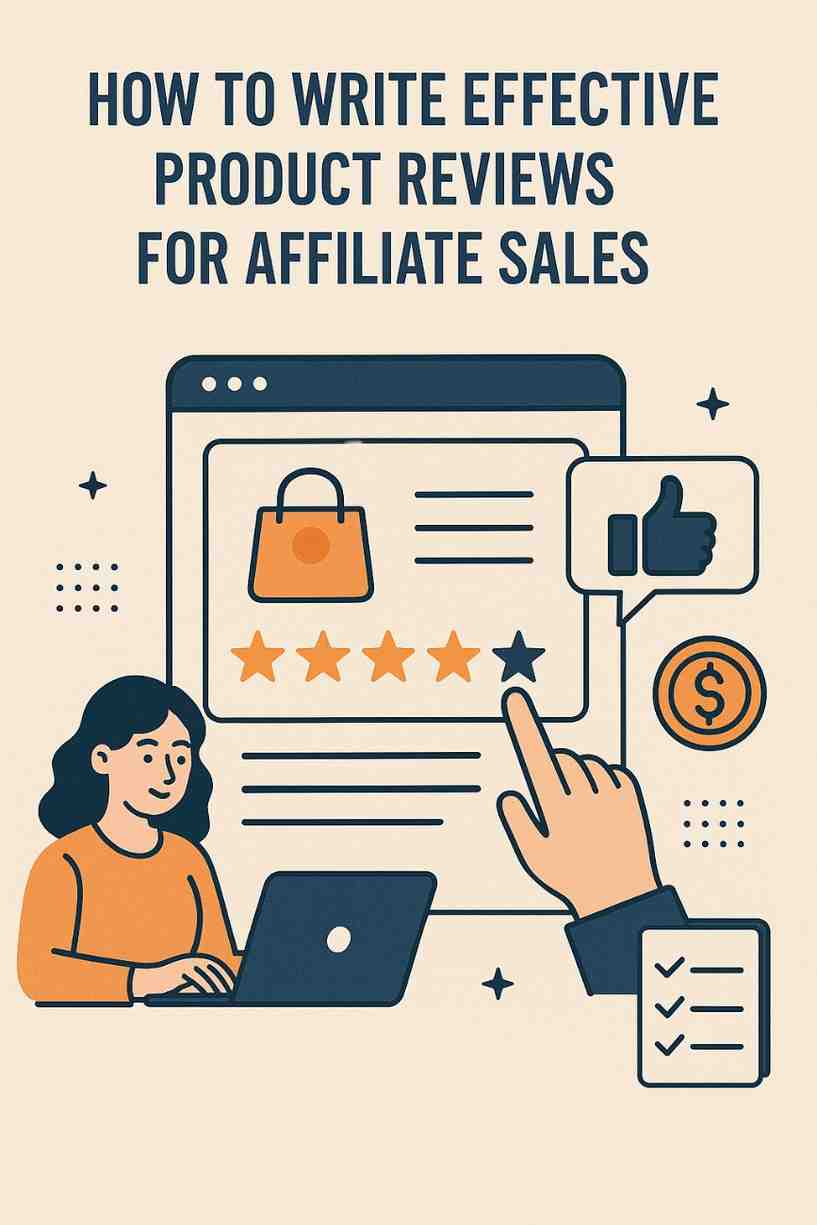
How to Write Effective Product Reviews for Affiliate Sales

Affiliate Marketing

Product reviews are a cornerstone of affiliate marketing, serving as a powerful tool to drive traffic, build trust, and convert readers into buyers through affiliate links. For affiliate marketers, particularly beginners, crafting effective product reviews requires a strategic approach that balances informative content, persuasive techniques, and search engine optimization (SEO) to maximize visibility and conversions. In 2025, with consumers increasingly relying on online reviews and search engines prioritizing high-quality, user-focused content, mastering the art of writing product reviews is essential for success. This essay explores the step-by-step process of writing effective product reviews for affiliate sales, detailing key strategies, best practices, and challenges, followed by a practical example to illustrate their application.


Why Product Reviews Are Essential for Affiliate Sales

Product reviews are highly effective in affiliate marketing because they:

  • Address Consumer Needs: Reviews provide detailed information, comparisons, and insights, helping readers make informed purchasing decisions.
  • Build Trust: Honest, transparent reviews establish credibility, encouraging readers to trust affiliate recommendations.
  • Drive SEO Traffic: Well-optimized reviews rank high on search engines, attracting organic, high-intent traffic.
  • Increase Conversions: By highlighting benefits and addressing objections, reviews persuade readers to click affiliate links and buy.
  • Support Evergreen Content: Reviews for popular products remain relevant, generating passive income over time.

However, writing effective reviews requires careful planning to avoid common pitfalls like overly salesy tones or lack of depth. Below, we outline the key steps to create compelling product reviews, supported by strategies tailored for 2025’s digital landscape.


Steps to Write Effective Product Reviews

1. Choose the Right Product and Niche

Selecting a relevant product within a well-defined niche is the foundation of an effective review. The product should align with your audience’s interests and offer viable affiliate commissions.

  • Key Actions:
    • Research Demand: Use Google Trends (free) or Ubersuggest (free) to identify trending products in your niche (e.g., “wireless earbuds” in tech).
    • Select Affiliate Programs: Join reputable programs like Amazon Associates (1–10% commissions), ShareASale, or niche-specific programs with higher payouts (e.g., 20–50% for SaaS).
    • Match Audience Needs: Choose products that solve specific problems (e.g., budget-friendly earbuds for students).
  • Significance: A relevant product ensures audience engagement and higher conversion potential.
  • Tools: Google Keyword Planner (free) for keyword research, X for niche trends.
2. Conduct Thorough Product Research

A credible review requires in-depth knowledge of the product, its features, and its competitors to provide value and address reader questions.

  • Key Actions:
    • Test the Product: If possible, use the product to share personal experiences (e.g., “I tested these earbuds for a week”). If not, rely on user reviews, merchant data, or X posts.
    • Compare Competitors: Analyze similar products to highlight unique selling points (e.g., “Brand X earbuds vs. Brand Y”).
    • Gather Data: Note specs, pricing, pros/cons, and customer feedback from sites like Amazon or forums.
  • Significance: Detailed research builds trust and positions you as an authority, meeting Google’s E-E-A-T (Experience, Expertise, Authoritativeness, Trustworthiness) standards.
  • Tools: BuzzSumo (free trial) for competitor analysis, Reddit for user feedback.
3. Optimize for SEO

SEO ensures your review ranks high on search engines, driving organic traffic from users searching for product information.

  • Key Actions:
    • Keyword Research: Target long-tail keywords with high intent (e.g., “best wireless earbuds for students 2025”) using Google Keyword Planner or Ahrefs (~$99/month).
    • Optimize Structure: Include keywords in the title (e.g., “Best Wireless Earbuds for Students in 2025”), meta description, headings (H1, H2), and URL.
    • Enhance Readability: Use short paragraphs, bullet points, and images with alt text (e.g., “Sony wireless earbuds”).
    • Internal/External Links: Link to related content (e.g., other reviews) and authoritative sources (e.g., manufacturer specs).
  • Significance: High rankings attract targeted traffic, increasing affiliate link clicks.
  • Tools: Yoast SEO (free) for on-page optimization, Google Search Console (free) for tracking.
4. Structure the Review Effectively

A well-structured review guides readers through the decision-making process, balancing information and persuasion.

  • Key Components:
    • Headline: Clear, keyword-rich, and engaging (e.g., “Sony WF-1000XM5 Review: Best Earbuds for Students in 2025?”).
    • Introduction: Hook readers with a problem or question (e.g., “Struggling to find affordable, high-quality earbuds?”) and state your purpose.
    • Product Overview: Summarize features, price, and target audience (e.g., “Sony’s WF-1000XM5 offers noise cancellation for $299, ideal for students”).
    • Pros and Cons: List benefits (e.g., “Excellent sound quality”) and drawbacks (e.g., “Higher price point”) to show transparency.
    • Personal Experience or User Feedback: Share your usage or aggregate customer reviews (e.g., “I found the battery life reliable during long study sessions”).
    • Comparison: Highlight how the product compares to competitors (e.g., “Vs. JBL: Better noise cancellation but less bass”).
    • Call-to-Action (CTA): Include affiliate links with clear CTAs (e.g., “Buy Now on Amazon”).
    • Conclusion: Summarize key points and reinforce the product’s value.
  • Significance: A logical structure improves readability, engagement, and conversions.
  • Tools: Grammarly (free) for polished writing, Canva (free) for visuals.
5. Incorporate Persuasive Elements

Persuasion is key to driving affiliate link clicks, but it must feel authentic to maintain trust.

  • Key Actions:
    • Highlight Benefits: Focus on how the product solves problems (e.g., “Noise-canceling earbuds help you focus in noisy dorms”).
    • Address Objections: Counter concerns like price or complexity (e.g., “While $299 is steep, the durability justifies the cost”).
    • Use Social Proof: Include testimonials, ratings, or user quotes (e.g., “4.7/5 stars from 2,000 Amazon reviews”).
    • Add Visuals: Use images or videos (e.g., unboxing clip) to demonstrate the product.
  • Significance: Persuasive elements increase click-through and conversion rates without appearing salesy.
  • Tools: DaVinci Resolve (free) for video editing, Canva for infographics.
6. Ensure Transparency and Compliance

Compliance with affiliate program rules and legal guidelines builds trust and protects your account.

  • Key Actions:
    • Disclose Affiliate Links: Include an FTC-compliant disclosure (e.g., “This post contains affiliate links, and I may earn a commission at no cost to you”).
    • Follow Program Rules: Adhere to terms (e.g., Amazon prohibits price tracking in reviews).
    • Be Honest: Avoid exaggerating claims to maintain credibility.
  • Significance: Transparency prevents bans and fosters audience trust, critical for long-term success.
  • Tools: Bitly (free) for compliant, trackable links.
7. Promote and Update the Review

Driving traffic and keeping content fresh ensures sustained visibility and earnings.

  • Key Actions:
    • Promote Content: Share on Pinterest, Instagram, or X to drive initial traffic. Use Mailchimp (free) for email campaigns with a lead magnet (e.g., “Free Tech Buying Guide”).
    • Update Regularly: Refresh reviews with new prices, features, or trends (e.g., “Updated for 2025 models”).
    • Track Performance: Use Google Analytics (free) and affiliate dashboards to monitor clicks and conversions, optimizing high-performing content.
  • Significance: Promotion amplifies reach, while updates maintain relevance in search results.
  • Tools: Buffer (free) for social media scheduling, Google Search Console for ranking insights.

Challenges in Writing Product Reviews

  • Time-Intensive: Researching, writing, and optimizing reviews takes hours, especially for beginners.
  • Competition: Popular products face crowded search results, requiring strong SEO and unique angles.
  • Balancing Persuasion and Honesty: Overly promotional reviews erode trust, while overly neutral ones may not convert.
  • Keeping Content Fresh: Product updates or price changes necessitate regular revisions.
  • Compliance Risks: Failing to disclose links or follow program rules can lead to bans.

Benefits of Effective Product Reviews

  • High Conversion Rates: Well-crafted reviews target motivated buyers, increasing affiliate link clicks.
  • Evergreen Traffic: Optimized reviews generate passive income over time.
  • Authority Building: Detailed, honest reviews establish you as a trusted expert, meeting E-E-A-T standards.
  • Scalability: Multiple reviews across products or niches expand income potential.

Example: Writing a Product Review for Affiliate Sales

Scenario: Liam, a 22-year-old student, wants to earn $200/month promoting tech gadgets in the “budget tech for students” niche. He writes a product review for the Sony WF-1000XM5 Wireless Earbuds via Amazon Associates (4% commission, ~$12/sale at $299).

Step-by-Step Approach:

  1. Choose Product and Niche (Week 1):
    • Liam selects “budget tech for students” and chooses the Sony WF-1000XM5, a popular earbud model with strong demand (confirmed via Google Trends). He joins Amazon Associates for its broad catalog.
  2. Research the Product (Week 2):
    • Liam reads Amazon reviews (4.7/5 stars, 2,000+ ratings), watches YouTube demos, and checks Sony’s site for specs (noise cancellation, 8-hour battery, $299 price).
    • He compares it to JBL Live Pro 2 ($149, less noise cancellation) to highlight value.
    • Liam aggregates user feedback from Reddit’s r/TechGadgets for authenticity.
  3. Create the Review (Weeks 3–4):
    • Liam uses Wix (free) to create a blog, “TechForStudents,” and writes a 1,500-word review titled “Sony WF-1000XM5 Review: Best Wireless Earbuds for Students in 2025?”
    • Structure:
      • Headline: Keyword-optimized for “Sony WF-1000XM5 review 2025.”
      • Introduction: “Need earbuds for studying in noisy dorms? The Sony WF-1000XM5 might be your answer.”
      • Overview: Details features (noise cancellation, Bluetooth 5.3, lightweight design), price ($299), and target audience (students, commuters).
      • Pros: “Top-tier noise cancellation, long battery life, comfortable fit.”
      • Cons: “Premium price, not ideal for bass-heavy music.”
      • Personal Experience: “I tested these during a week of classes; the noise cancellation blocked out cafeteria chatter.”
      • Comparison: “Vs. JBL Live Pro 2: Sony offers better noise cancellation but costs more.”
      • CTA: “Buy Now on Amazon” (affiliate link via Bitly).
      • Disclosure: “This post contains affiliate links, and I may earn a commission at no cost to you.”
    • Liam adds images (via Canva) and optimizes with Yoast SEO (free) for keywords like “Sony WF-1000XM5 student earbuds.”
  4. Promote the Review (Weeks 5–12):
    • Liam shares the review on Pinterest with pins titled “Best Earbuds for Students,” driving 1,000 visitors/month.
    • On Instagram, he posts reels demonstrating the earbuds, gaining 500 followers and 100 link clicks/month via Linktree (free).
    • He uses Mailchimp (free) to offer a “Student Tech Guide” eBook, collecting 150 email subscribers and sending weekly newsletters with the review link.
    • Liam posts on X, engaging in tech discussions, driving 50 clicks/month.
  5. Track and Optimize (Weeks 13–20):
    • Google Analytics shows 2,000 monthly visitors, with a 15% click-through rate (300 affiliate link clicks). Amazon reports 20 sales ($5,980 total, $239 commission at 4%).
    • Liam updates the review with 2025 pricing and adds a comparison table, boosting conversions to 25 sales ($299/month).
    • He tests a new CTA (“Shop Now” vs. “Check Price”) with Google Optimize (free), finding “Shop Now” increases clicks by 10%.

Analysis: Liam’s review succeeds due to thorough research, SEO optimization, and multi-channel promotion using free tools (Wix, Canva, Mailchimp, Bitly). His transparent, value-driven content builds trust, while Pinterest and email drive targeted traffic. Exceeding his $200/month goal, Liam demonstrates how effective reviews can generate sustainable affiliate income.


Conclusion

Writing effective product reviews for affiliate sales involves selecting the right product, conducting thorough research, optimizing for SEO, structuring content persuasively, ensuring compliance, and promoting strategically. These reviews drive conversions by addressing audience needs, building trust, and ranking high on search engines. Challenges like time investment and competition can be overcome with free tools and consistent effort. Liam’s example in the tech niche shows how a beginner can leverage a well-crafted review to earn $299/month, using affordable resources and multi-channel promotion. In 2025, as consumers prioritize trusted, informative content, mastering product reviews remains a vital skill for affiliate marketers to achieve sustainable success in the competitive digital landscape.
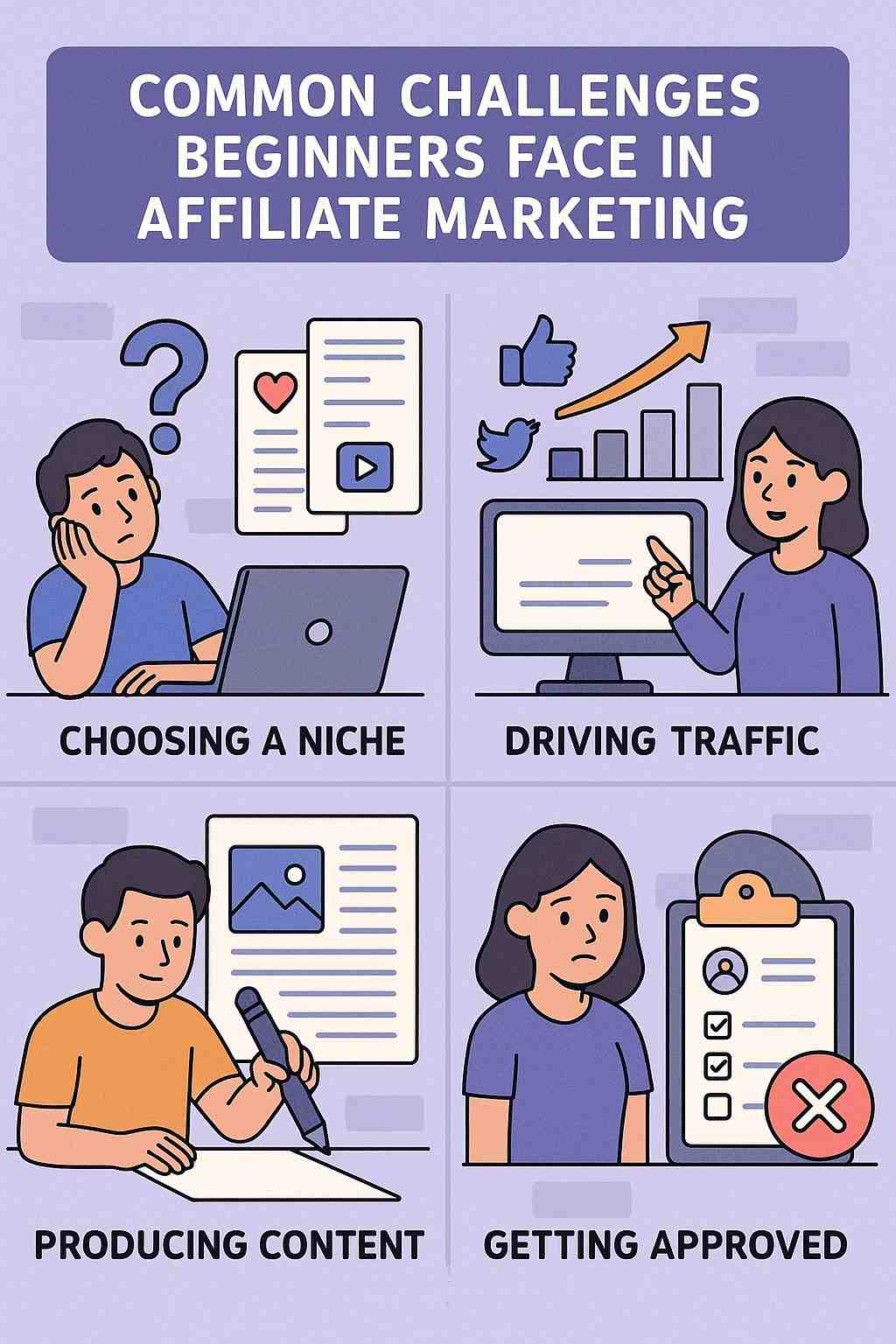
What Are the Common Challenges Beginners Face in Affiliate Marketing?

Affiliate marketing is an attractive opportunity for beginners to earn income online by promoting products or services and earning commissions for successful referrals. Its low entry barriers, minimal upfront costs, and potential for passive income make it appealing, especially for students, freelancers, or side hustlers. However, success in affiliate marketing is not guaranteed, and beginners often encounter significant challenges that can hinder progress. These obstacles stem from a lack of experience, unrealistic expectations, and the competitive nature of the industry. This essay explores the common challenges beginners face in affiliate marketing, detailing their causes, impacts, and strategies to overcome them, followed by a practical example to illustrate how a beginner can navigate these hurdles in 2025.


Common Challenges for Beginners in Affiliate Marketing

1. Lack of Knowledge and Experience

Description: Many beginners enter affiliate marketing without a clear understanding of its mechanics, such as how affiliate links work, commission structures, or promotional strategies. They may also lack skills in digital marketing disciplines like SEO, content creation, or paid advertising.

Causes:

  • Limited access to structured training or reliance on outdated or misleading online resources.
  • Overwhelm from the vast amount of information available on blogs, YouTube, or X posts.
  • Misconceptions that affiliate marketing is a “get-rich-quick” scheme, leading to skipped learning.

Impact:

  • Beginners may join unreliable programs or use ineffective strategies, wasting time and effort.
  • Poor content quality or spammy tactics can damage credibility and lead to account bans.
  • Lack of technical know-how (e.g., setting up a blog) delays progress.

Solutions:

  • Invest time in learning from reputable sources like Authority Hacker, Income School, or X accounts like @AffiliateTips.
  • Start with free resources (e.g., YouTube tutorials, Google’s SEO Starter Guide) and progress to affordable courses if needed.
  • Experiment with one platform or niche to build skills gradually.
2. Choosing the Wrong Niche or Programs

Description: Selecting an unsuitable niche or affiliate program can derail success. Beginners may choose oversaturated niches (e.g., general fitness) or programs with low commissions or poor reliability.

Causes:

  • Lack of market research, leading to niches with high competition or low demand.
  • Attraction to broad, popular niches without considering personal interest or expertise.
  • Joining programs with unfavorable terms (e.g., short cookie durations, high payout thresholds).

Impact:

  • High competition makes ranking content or gaining traction difficult, reducing traffic and earnings.
  • Low-commission programs (e.g., Amazon Associates at 1–4% for some categories) require high sales volumes to generate meaningful income.
  • Unreliable programs may delay payments or shut down, causing financial loss.

Solutions:

  • Use tools like Google Trends (free) or Ubersuggest (free) to identify niches with moderate demand and competition (e.g., “vegan fitness gear” vs. “fitness”).
  • Research programs via X posts or reviews to ensure reliability and competitive commissions (e.g., SaaS programs with 20–50% recurring commissions).
  • Align niches with personal interests to sustain motivation and authenticity.
3. Generating Consistent Traffic

Description: Driving traffic to affiliate content is a major hurdle, as beginners often lack the audience or skills to attract visitors via organic or paid channels.

Causes:

  • Slow SEO results, with content taking 3–12 months to rank on Google.
  • Limited understanding of social media algorithms or paid ad platforms.
  • Inconsistent posting or failure to engage audiences on platforms like Instagram, X, or Pinterest.

Impact:

  • Low traffic results in few affiliate link clicks, delaying earnings.
  • Reliance on a single traffic source (e.g., social media) risks income loss from algorithm changes or bans.
  • Paid ads can drain budgets without ROI if mismanaged.

Solutions:

  • Focus on SEO with long-tail keywords (e.g., “best budget headphones for students 2025”) using Google Keyword Planner (free).
  • Leverage free platforms like Pinterest or YouTube for evergreen traffic.
  • Build an email list with Mailchimp (free for 500 subscribers) to nurture leads over time.
  • Start with low-budget ads ($5/day) only after mastering organic traffic.
4. Creating High-Quality, Engaging Content

Description: Producing content that attracts, engages, and converts audiences is challenging for beginners, who may lack writing, design, or video production skills.

Causes:

  • Limited experience in creating SEO-optimized or visually appealing content.
  • Difficulty balancing value-driven content with promotional affiliate links.
  • Time constraints, especially for students or those with full-time jobs.

Impact:

  • Poor-quality content fails to rank, engage, or convert, reducing traffic and commissions.
  • Overly salesy content erodes trust, lowering click-through rates.
  • Inconsistent posting schedules hinder audience growth.

Solutions:

  • Use Grammarly (free) for polished writing and Canva (free) for visuals like blog images or social posts.
  • Follow templates from successful affiliates (e.g., product review structures: intro, features, pros/cons, CTA).
  • Batch-create content using Trello (free) to schedule posts and maintain consistency.
5. Building Trust and Credibility

Description: Beginners struggle to establish authority and trust with audiences, especially in niches requiring expertise (e.g., finance, health) under Google’s E-E-A-T (Experience, Expertise, Authoritativeness, Trustworthiness) guidelines.

Causes:

  • Lack of a personal brand or established online presence.
  • Failure to disclose affiliate relationships, risking penalties or audience distrust.
  • Promoting low-quality products to maximize short-term gains.

Impact:

  • Low trust reduces conversions, as audiences hesitate to click affiliate links.
  • Google penalizes content lacking E-E-A-T in YMYL (Your Money, Your Life) niches, lowering rankings.
  • Negative feedback or bans from affiliate programs damage reputation.

Solutions:

  • Include clear FTC-compliant disclosures (e.g., “This post contains affiliate links”).
  • Share personal experiences or honest reviews to build authenticity (e.g., “I tested these headphones for a month”).
  • Promote reputable products from trusted programs like ShareASale or CJ Affiliate.
6. Unrealistic Expectations and Lack of Patience

Description: Many beginners expect quick results, underestimating the time and effort required to earn significant income.

Causes:

  • Hype from misleading online claims (e.g., “Earn $10,000/month in 30 days”).
  • Lack of understanding that SEO, audience building, and conversions take months.
  • Discouragement from initial low or no earnings.

Impact:

  • Beginners may abandon efforts prematurely, missing long-term potential.
  • Chasing quick wins leads to spammy tactics, risking bans or penalties.
  • Frustration reduces motivation, hindering consistent effort.

Solutions:

  • Set realistic goals (e.g., $100/month in 6 months) based on niche and effort.
  • Track small wins (e.g., traffic growth, first sale) using affiliate dashboards or Google Analytics (free).
  • Join communities on X or Reddit (e.g., r/AffiliateMarketing) for support and realistic insights.
7. Compliance and Program Restrictions

Description: Beginners often struggle with affiliate program rules, platform policies, or legal requirements, such as FTC disclosure guidelines.

Causes:

  • Unfamiliarity with program terms (e.g., Amazon Associates prohibits direct ad links).
  • Failure to disclose affiliate links, violating FTC or platform rules.
  • Using restricted promotion methods (e.g., spamming forums).

Impact:

  • Account suspensions or bans result in lost earnings and effort.
  • Non-compliance damages credibility and risks legal issues.
  • Platform restrictions (e.g., Instagram’s link limits) complicate promotions.

Solutions:

  • Read program terms thoroughly before joining (e.g., cookie durations, restricted channels).
  • Use Bitly (free) to create compliant, trackable links and include disclosures in all content.
  • Check platform rules (e.g., Reddit’s anti-spam policies) before posting.
8. Tracking and Analytics Challenges

Description: Understanding and leveraging performance data to optimize campaigns is difficult for beginners unfamiliar with analytics tools.

Causes:

  • Lack of experience with tools like Google Analytics or affiliate dashboards.
  • Difficulty interpreting metrics (e.g., click-through rates, conversion rates).
  • Inconsistent tracking due to broken links or ad blockers affecting cookies.

Impact:

  • Inability to identify high-performing content or traffic sources hinders optimization.
  • Missed opportunities to scale successful strategies reduce earnings.
  • Tracking errors lead to lost commissions.

Solutions:

  • Use Google Analytics (free) for traffic insights and affiliate dashboards for commission tracking.
  • Test links regularly with Bitly to ensure functionality.
  • Learn basic analytics via free YouTube tutorials or Google’s Analytics Academy.

Benefits of Overcoming These Challenges

  • Sustainable Income: Mastering SEO, content, and compliance builds long-term, passive revenue.
  • Skill Development: Learning digital marketing skills enhances career opportunities.
  • Scalability: Overcoming initial hurdles allows affiliates to expand into new niches or channels.
  • Resilience: Navigating challenges fosters persistence and adaptability, key for success.

Example: Navigating Challenges as a Beginner in Affiliate Marketing

Scenario: Emma, a 20-year-old college student, wants to earn $150/month promoting fitness products in the “home workout gear” niche. She faces typical beginner challenges but overcomes them with strategic effort.

Step-by-Step Journey:

  1. Lack of Knowledge (Weeks 1–2):
    • Challenge: Emma knows little about affiliate marketing and feels overwhelmed by conflicting YouTube advice.
    • Solution: She follows @AffiliateTips on X and watches Income School videos, learning about niches, SEO, and compliance. She uses Notion (free) to organize insights.
    • Outcome: Emma understands affiliate links, commissions, and the importance of SEO, setting a realistic 6-month goal.
  2. Choosing a Niche (Week 3):
    • Challenge: Emma initially considers “fitness,” but research shows it’s oversaturated.
    • Solution: Using Google Trends (free), she narrows to “home workout gear,” finding demand for resistance bands and yoga mats. She joins Amazon Associates (4–8% commissions) and Rogue Fitness via ShareASale (5–10% commissions).
    • Outcome: A focused niche reduces competition and aligns with her gym interest.
  3. Building a Platform (Weeks 4–5):
    • Challenge: Emma can’t afford premium hosting but needs a platform.
    • Solution: She creates a free Wix blog, “FitHomeVibes,” with a $15/year domain and an Instagram account. She installs Google Analytics (free) for tracking.
    • Outcome: A low-cost platform allows content creation without financial strain.
  4. Creating Content (Weeks 6–12):
    • Challenge: Emma struggles with writing and design, producing initial low-quality posts.
    • Solution: She uses Grammarly (free) for polished writing and Canva (free) for visuals. She writes “Top 5 Resistance Bands for Home Workouts,” optimized for “best resistance bands 2025” using Ubersuggest (free).
    • Outcome: Improved content quality attracts 500 monthly visitors by month three via Pinterest pins.
  5. Generating Traffic (Weeks 13–16):
    • Challenge: Emma’s blog gets minimal traffic initially, and Instagram growth is slow.
    • Solution: She posts daily Instagram reels with workout tips, gaining 300 followers and 50 link clicks/month via Linktree (free). She shares pins on Pinterest, driving 1,000 visitors/month. She offers a free “7-Day Workout Plan” via Mailchimp (free), collecting 100 email subscribers.
    • Outcome: Multi-channel traffic (Pinterest, Instagram, email) boosts link clicks to 200/month.
  6. Building Trust (Weeks 17–20):
    • Challenge: Early posts lack disclosures, risking trust and compliance issues.
    • Solution: Emma adds FTC disclosures (“This post contains affiliate links”) to all content. She shares her experience using resistance bands, enhancing authenticity.
    • Outcome: Increased trust leads to a 10% click-through rate, and no compliance issues arise.
  7. Tracking and Analytics (Weeks 21–24):
    • Challenge: Emma struggles to interpret Google Analytics data and misses some commissions due to broken links.
    • Solution: She learns basic analytics via Google’s free courses and tests links with Bitly. She identifies her resistance band post as the top performer and creates a similar post, “Best Yoga Mats for Beginners.”
    • Outcome: Amazon reports 20 resistance band sales ($500 total, $25 commission at 5%), and Rogue reports 10 band sales ($1,000 total, $80 commission at 8%), totaling $105/month. The new post boosts earnings to $160/month.

Analysis: Emma overcomes beginner challenges by learning strategically, choosing a focused niche, using free tools (Wix, Canva, Grammarly, Ubersuggest, Mailchimp), and diversifying traffic sources. Her persistence through slow initial traffic and analytics struggles pays off, exceeding her $150/month goal by month six. Her experience highlights the importance of addressing challenges with research, patience, and optimization.


Best Practices for Overcoming Challenges

  • Start Small: Focus on one niche and platform to build skills without overwhelm.
  • Leverage Free Tools: Use Google Trends, Canva, and Bitly to minimize costs.
  • Be Patient: Set realistic goals and track progress to stay motivated.
  • Build Trust: Disclose links and promote quality products to foster credibility.
  • Learn Continuously: Follow X accounts, blogs, or forums for industry updates.
  • Diversify Traffic: Combine SEO, social media, and email to reduce risk.

Conclusion

Beginners in affiliate marketing face significant challenges, including lack of knowledge, poor niche selection, traffic generation struggles, content creation difficulties, trust-building hurdles, unrealistic expectations, compliance issues, and analytics complexities. These obstacles can delay success, but they are surmountable with education, strategic planning, and persistence. Benefits like skill development and scalable income make overcoming these challenges worthwhile. Emma’s example in the home workout gear niche demonstrates how a student can navigate these hurdles using free tools, focused content, and multi-channel promotion to earn $160/month. By addressing challenges proactively and leveraging affordable resources, beginners can build sustainable affiliate marketing businesses in 2025, turning initial struggles into opportunities for growth and long-term success.

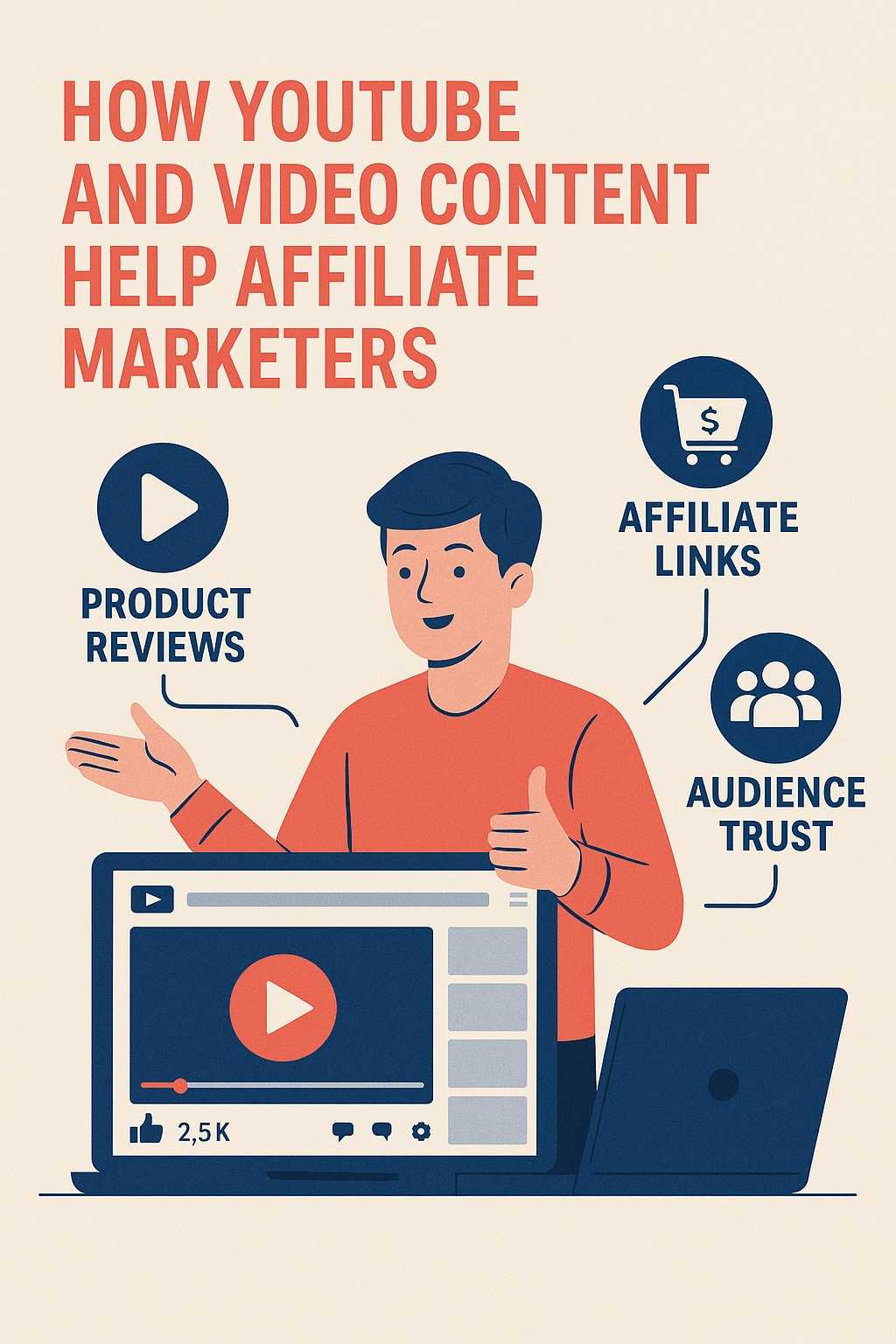
How YouTube and Video Content Help Affiliate Marketers

In the ever-evolving world of digital marketing, affiliate marketing has emerged as a highly effective and low-risk strategy for individuals and businesses alike to generate income by promoting products and earning commissions. One of the most powerful tools that affiliate marketers can leverage today is video content, particularly on platforms like YouTube. YouTube, being the second-largest search engine in the world after Google and boasting over 2 billion logged-in monthly users, provides a fertile ground for affiliate marketers to reach large and highly targeted audiences. This article delves into the multifaceted ways in which YouTube and video content bolster the efforts of affiliate marketers and offers an illustrative example to contextualize these benefits.


1. Massive and Engaged Audience Base

YouTube’s vast user base makes it a goldmine for affiliate marketers. Every minute, over 500 hours of content are uploaded to the platform, and billions of videos are viewed daily. This huge volume signifies not only immense competition but also an abundance of opportunities. When marketers create high-quality, valuable content that addresses the audience’s needs and interests, they can organically grow their following and generate affiliate income.

Video content allows for deeper engagement than text or static images. Viewers spend more time watching videos and are more likely to trust a real person’s recommendation seen on camera. This trust translates into higher conversion rates for affiliate links shared in the video descriptions or within the content itself.


2. Demonstrating Product Use and Benefits

One of the most significant advantages of video content is the ability to demonstrate how a product works. Unlike blog posts or social media captions that rely on descriptions and images, video enables the affiliate marketer to show the product in action.

Let’s take the example of a marketer promoting a skincare product. Through a YouTube video, the affiliate can:

  • Show the packaging and unboxing experience.

  • Apply the product and talk through its texture, scent, and immediate feel.

  • Provide a before-and-after comparison over time.

  • Share honest opinions and results.

This level of visual and personal interaction builds trust and allows potential buyers to feel more confident in their purchasing decision, which in turn increases the likelihood of a click-through and purchase via the affiliate link.


3. SEO and Discoverability

YouTube is owned by Google, which means videos posted on YouTube often appear in Google search results. If a marketer creates a video titled “Best Wireless Earbuds Under $100 – Honest Review,” that video can rank in both YouTube and Google search results for relevant queries.

By optimizing video titles, descriptions, and tags with relevant keywords, affiliate marketers can:

  • Increase their visibility to users actively searching for product reviews or tutorials.

  • Benefit from long-term discoverability, as good videos can continue generating traffic and income for months or even years.

  • Capture buyer intent by targeting specific product-related keywords (e.g., “how to use XYZ software,” “XYZ product review,” “best alternatives to XYZ”).

Good SEO strategies lead to organic traffic, which is free and often more trusted by users than paid advertisements.


4. Building Authority and Trust

In affiliate marketing, trust is everything. Viewers are more likely to buy a product through an affiliate link if they believe in the person recommending it. YouTube allows marketers to put a face and personality behind their recommendations.

Consistent content creation on a niche topic—whether it’s tech gadgets, beauty products, fitness gear, or financial tools—helps creators position themselves as subject matter experts. This authority:

  • Enhances brand loyalty.

  • Increases repeat viewership.

  • Improves conversion rates, as audiences are more likely to act on advice from a trusted source.

Over time, creators build a community, and loyal subscribers often support them by purchasing through their affiliate links as a token of appreciation for the free content.


5. Monetization Beyond Affiliate Links

While the primary focus may be on affiliate earnings, video content on YouTube can generate multiple revenue streams, including:

  • AdSense revenue (ads shown on videos).

  • Sponsored content (brands paying for product placement or dedicated videos).

  • Merchandise and digital product sales.

This diversified income allows affiliate marketers to reinvest in better equipment, content creation tools, and marketing, further enhancing the quality and reach of their affiliate content.


6. Evergreen Content and Passive Income

Unlike social media posts that have a short lifespan, YouTube videos can bring in passive income long after they’ve been uploaded. A well-optimized product review, tutorial, or comparison video can rank for months or years, continuously driving traffic and generating affiliate sales.

For example, a video titled “How to Set Up Your Home Office on a Budget” that includes affiliate links to desks, chairs, webcams, and lights can remain relevant and searchable over time, especially as more people look to work from home.

This evergreen nature of YouTube content makes it one of the best platforms for sustainable affiliate marketing.


7. Interactive and Trackable Engagement

YouTube offers analytical insights that help marketers refine their strategy. Some of the metrics include:

  • Watch time.

  • Viewer retention.

  • Click-through rate (CTR) on links.

  • Demographic data.

These insights allow marketers to:

  • Understand which content resonates with their audience.

  • A/B test video formats, titles, or thumbnails.

  • Focus on promoting high-performing affiliate products.

Moreover, marketers can use custom URLs or link shorteners to track exactly how many people clicked on their affiliate links, helping them measure ROI effectively.


8. Community Features and Conversion Boosters

YouTube also offers features like:

  • Cards and end screens to link to other videos or websites.

  • Community tab to interact with subscribers using polls, images, and updates.

  • Live streams for real-time Q&A sessions or product launches.

All of these tools create more touchpoints for users to engage with content, boosting the chance that viewers will click affiliate links.


9. Lower Entry Barriers

Creating video content is now easier than ever. With just a smartphone and free editing tools, marketers can begin producing affiliate videos. While production quality is important, authenticity and value matter more.

YouTube’s global accessibility means that even marketers with no budget for ads can begin earning money by sharing helpful, honest product insights. As the channel grows, so does the income potential.


10. An Example: Tech Influencer and Amazon Affiliate

Let’s look at an example: a small tech YouTuber named “TechWithRaj” creates product review videos for gadgets like wireless earbuds, power banks, and smartwatches. He includes Amazon affiliate links in his video descriptions.

One of his videos, “Best Budget Smartwatches Under ₹5000 – 2025 Review,” garners 50,000 views. Out of these:

  • 5% of viewers (2,500 people) click the affiliate link.

  • 10% of clickers (250 people) buy the recommended watch or another product on Amazon.

  • The average commission per sale is ₹150.

That single video potentially earns ₹37,500 (250 x ₹150). And it keeps earning as long as people keep watching.

Now imagine Raj uploads two such videos a week. Over time, his channel becomes a steady source of passive income.


Conclusion

In conclusion, YouTube and video content provide affiliate marketers with a powerful, scalable, and authentic medium to reach audiences, demonstrate product value, and build lasting trust. Through engaging visuals, searchable content, and direct interaction, marketers can create an ecosystem where their audience not only consumes content but also feels motivated to take action—click, purchase, and return for more.

The combination of trust, discoverability, long-term relevance, and diversified monetization makes video marketing—particularly on YouTube—an indispensable strategy for affiliate marketers in 2025 and beyond. Whether you’re just starting or are a seasoned marketer, incorporating video into your affiliate marketing plan is no longer optional—it’s essential.


Explain the Importance of SEO in Affiliate Marketing

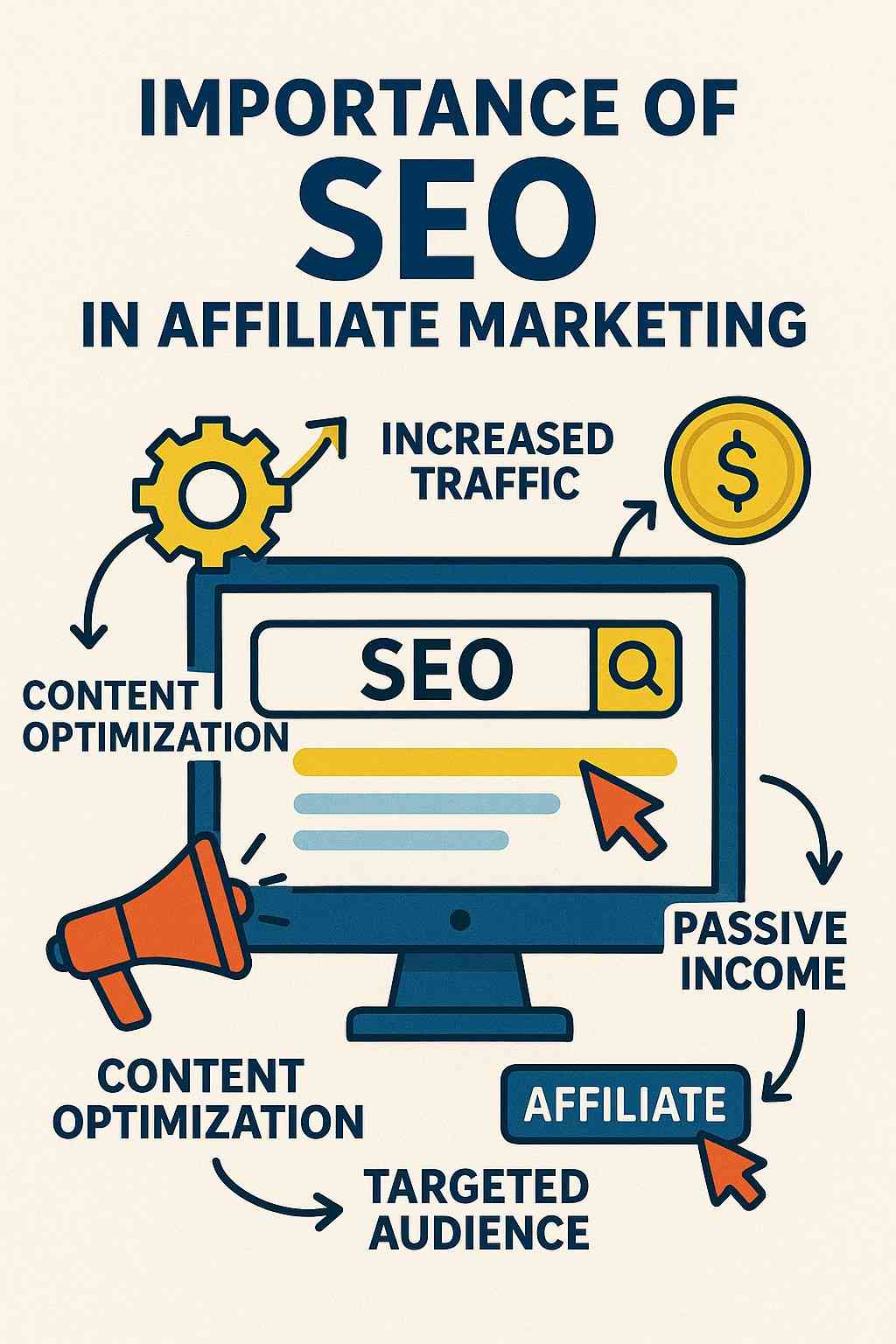
Search Engine Optimization (SEO) is a cornerstone of digital marketing, and its significance in affiliate marketing cannot be overstated. SEO involves optimizing online content to rank higher on search engines like Google, Bing, or Yahoo, thereby increasing organic (unpaid) traffic to a website or platform. For affiliate marketers, who earn commissions by promoting products or services through unique links, SEO is a critical strategy for driving targeted, high-intent traffic to their content, ultimately boosting conversions and revenue. In 2025, with search engines evolving and competition intensifying, mastering SEO is essential for affiliates to stand out in crowded niches. This essay explores the importance of SEO in affiliate marketing, detailing its benefits, strategies, challenges, and integration with affiliate campaigns, followed by a practical example to illustrate its application.


Why SEO Is Crucial in Affiliate Marketing

Affiliate marketing thrives on attracting an audience to click affiliate links and complete desired actions, such as purchases or signups. Unlike paid advertising, which requires ongoing investment, SEO offers a cost-effective, sustainable way to generate traffic over time. Its importance in affiliate marketing stems from several key factors:

  1. Drives Organic Traffic: Organic search accounts for over 50% of website traffic, per 2025 industry data, making it a primary source for affiliates. High-ranking content attracts visitors actively searching for solutions, increasing the likelihood of clicks and conversions.
  2. Targets High-Intent Audiences: SEO focuses on keywords that reflect user intent (e.g., “best budget laptops 2025”), ensuring affiliates reach people ready to buy or engage, unlike broad social media audiences.
  3. Builds Long-Term Assets: Well-optimized content, such as blog posts or YouTube videos, can rank for years, providing evergreen traffic and passive income with minimal maintenance.
  4. Enhances Credibility: High search rankings signal trust and authority to users, making them more likely to trust affiliate recommendations, especially in niches like finance or health.
  5. Cost-Effective: SEO requires time and effort but minimal financial investment compared to paid ads, making it ideal for beginners or students with limited budgets.
  6. Complements Other Channels: SEO integrates with content marketing, social media, and email strategies, amplifying overall affiliate campaign performance.

Key SEO Strategies for Affiliate Marketing

To leverage SEO effectively, affiliates must implement strategies tailored to search engine algorithms and user behavior. In 2025, Google’s emphasis on E-E-A-T (Experience, Expertise, Authoritativeness, Trustworthiness) and user experience (e.g., page speed, mobile optimization) shapes these strategies.

1. Keyword Research

Keyword research identifies terms and phrases potential customers use to find products or solutions, guiding content creation.

  • How It Works: Use tools like Google Keyword Planner (free), Ubersuggest (free), or Ahrefs (~$99/month) to find keywords with high search volume and low competition. Focus on long-tail keywords (e.g., “best wireless earbuds for running 2025”) that reflect specific intent.
  • Importance: Targets niche audiences, increasing conversion rates. For example, ranking for “best VPN for streaming” attracts users likely to sign up for NordVPN via an affiliate link.
  • Best Practice: Balance informational (e.g., “how to choose a VPN”) and commercial (e.g., “best VPN deals 2025”) keywords to capture users at different funnel stages.
2. High-Quality Content Creation

Content is the vehicle for embedding affiliate links and ranking on search engines. Quality content aligns with user intent and Google’s E-E-A-T guidelines.

  • How It Works: Create blog posts, reviews, comparisons, or guides that provide value (e.g., “Top 5 Budget Laptops for Students”). Include affiliate links naturally within product mentions or CTAs.
  • Importance: Engages users, reduces bounce rates, and signals expertise, boosting rankings. Evergreen content (e.g., “best web hosting providers”) generates traffic long-term.
  • Best Practice: Use Grammarly (free) for polished writing, Canva (free) for visuals, and optimize for readability with short paragraphs and subheadings.
3. On-Page SEO Optimization

On-page SEO involves optimizing individual pages to improve rankings and user experience.

  • How It Works:
    • Title Tags and Meta Descriptions: Include target keywords (e.g., “Best Budget Laptops 2025”) and compelling CTAs.
    • Headings (H1, H2): Structure content with keyword-rich headings.
    • URL Structure: Use clean, keyword-focused URLs (e.g., /best-budget-laptops-2025).
    • Internal and External Links: Link to related content or authoritative sources to enhance credibility.
    • Image Optimization: Use descriptive alt text and compress images for faster loading.
  • Importance: Signals relevance to search engines and improves user experience, reducing bounce rates.
  • Best Practice: Use Yoast SEO (free) for WordPress to guide on-page optimization.
4. Technical SEO

Technical SEO ensures a website is crawlable, fast, and user-friendly, critical for ranking in 2025.

  • How It Works:
    • Mobile Optimization: Ensure responsive design, as 60%+ of searches are mobile.
    • Page Speed: Optimize with tools like Google PageSpeed Insights (free) to achieve load times under 3 seconds.
    • SSL Certificate: Secure the site with HTTPS for trust and ranking benefits.
    • Sitemap and Robots.txt: Submit a sitemap via Google Search Console (free) to aid crawling.
  • Importance: Poor technical performance (e.g., slow loading) hurts rankings and user retention, reducing affiliate link clicks.
  • Best Practice: Use free hosting like Wix or affordable options like Bluehost (~$50/year) with built-in SSL.
5. Off-Page SEO and Backlinks

Off-page SEO builds a site’s authority through external signals, primarily backlinks from reputable websites.

  • How It Works: Earn backlinks by guest posting, creating shareable content, or engaging in niche communities (e.g., Reddit, X). For example, a guest post on a tech blog linking to your laptop review boosts authority.
  • Importance: Backlinks signal trust to Google, improving rankings, especially in competitive niches like tech or finance.
  • Best Practice: Use BuzzSumo (free trial) to find link-building opportunities and focus on quality over quantity.
6. Local SEO (Optional)

For affiliates promoting location-specific offers (e.g., travel deals), local SEO targets regional searches.

  • How It Works: Optimize for keywords like “best travel agencies in New York” and create Google My Business profiles if applicable.
  • Importance: Captures local audiences with high purchase intent.
  • Best Practice: Use Google Trends (free) to identify regional demand.

Benefits of SEO in Affiliate Marketing

  • Cost-Effective Traffic: Unlike paid ads, SEO delivers free traffic after initial effort, ideal for low-budget affiliates.
  • Sustainable Income: High-ranking content generates passive income for months or years.
  • Targeted Reach: Attracts users actively seeking solutions, improving conversion rates.
  • Scalability: Affiliates can create more content to target additional keywords, expanding reach.
  • Competitive Edge: Strong SEO helps overtake competitors in search results, capturing market share.
  • Trust and Authority: High rankings enhance credibility, crucial for niches under Google’s YMYL (Your Money, Your Life) scrutiny, like finance or health.

Challenges of SEO in Affiliate Marketing

  • Time-Intensive: Ranking content takes 3–12 months, requiring patience and consistency.
  • Algorithm Updates: Google’s frequent updates (e.g., core updates in 2025) can shift rankings, necessitating adaptability.
  • Competition: Popular niches like tech or health are crowded, requiring niche focus (e.g., “vegan fitness gear” vs. “fitness”).
  • Learning Curve: Mastering SEO tools and strategies demands study, though free resources abound.
  • E-E-A-T Compliance: Affiliates must demonstrate expertise and transparency, especially in YMYL niches, to avoid penalties.

Example: Using SEO in Affiliate Marketing for a Tech Niche

Scenario: Maya, a 21-year-old student, wants to earn $300/month promoting tech gadgets via affiliate marketing. She focuses on “budget tech for students” and uses SEO to drive traffic to her blog.

Step-by-Step Approach:

  1. Choose a Niche and Program (Week 1):
    • Maya selects “budget tech for students,” targeting gadgets like headphones and laptops. She joins Amazon Associates (4% commissions) and Best Buy’s affiliate program via Impact (0.5–4% commissions).
  2. Set Up a Blog (Weeks 2–3):
    • Maya creates a blog, “StudentTechHub,” using WordPress.org with Bluehost hosting ($50/year) and a free theme. She installs Yoast SEO (free) and Google Analytics (free) for optimization and tracking.
  3. Keyword Research (Week 4):
    • Using Google Keyword Planner (free) and Ubersuggest (free), Maya identifies long-tail keywords: “best budget headphones for students 2025” (500 searches/month, low competition) and “best laptops under $500” (1,000 searches/month).
    • She plans content around informational (“how to choose student headphones”) and commercial (“best budget headphones”) keywords.
  4. Create Optimized Content (Weeks 5–12):
    • Maya writes a 1,500-word post, “Top 7 Budget Headphones for Students in 2025,” optimized with:
      • Title Tag: “Best Budget Headphones for Students in 2025 [Top Picks]”
      • Meta Description: “Find the best budget headphones for students in 2025. Our top 7 picks include Sony, JBL, and more. Shop now!”
      • Headings: H2s like “Why Students Need Budget Headphones” and “Top Picks.”
      • Affiliate Links: Embedded naturally for Sony and JBL headphones (Amazon, Best Buy).
      • Images: Optimized with alt text (e.g., “Sony budget headphones”) using Canva (free).
    • She creates a second post, “Best Laptops Under $500 for Students,” with similar optimization.
    • Both posts include internal links to each other and external links to tech blogs for authority.
  5. Technical SEO (Week 13):
    • Maya uses Google PageSpeed Insights to optimize load time (under 3 seconds) by compressing images. She submits a sitemap via Google Search Console and ensures HTTPS via Bluehost’s free SSL.
  6. Off-Page SEO (Weeks 14–20):
    • Maya guest posts on a tech blog, linking to her headphones article. She shares posts on Reddit’s r/FrugalTech and X, earning 10 backlinks from niche forums.
    • She creates Pinterest pins with Canva, driving 500 monthly visitors to her blog.
  7. Track and Optimize (Weeks 21–24):
    • By month six, Maya’s headphones post ranks on Google’s page 1, attracting 2,000 visitors/month. Her laptop post ranks on page 2, adding 1,000 visitors/month.
    • Google Analytics shows a 15% click-through rate to affiliate links (450 clicks/month). Amazon reports 30 headphone sales ($1,500 total, $60 commission at 4%), and Best Buy reports 10 laptop sales ($5,000 total, $200 commission at 4%), totaling $260/month.
    • Maya updates her headphones post with 2025 trends and creates a new post, “Best Wireless Earbuds for Studying,” targeting a related keyword, pushing earnings to $310/month.

Analysis: Maya’s success hinges on SEO-driven organic traffic, leveraging free tools (Google Keyword Planner, Yoast, Canva) and affordable hosting ($50/year). Her long-tail keyword focus and E-E-A-T-compliant content (reviews, disclosures) ensure high rankings and trust. Pinterest and backlinks amplify traffic, while analytics guide optimization. Maya exceeds her $300/month goal, demonstrating SEO’s power to drive sustainable affiliate income.


Best Practices for SEO in Affiliate Marketing

  • Focus on Long-Tail Keywords: Target specific, low-competition terms to rank faster.
  • Create Evergreen Content: Prioritize topics with lasting demand (e.g., “best web hosting”).
  • Optimize for User Experience: Ensure fast, mobile-friendly pages with clear CTAs.
  • Build Authority: Use backlinks, disclosures, and expert content to meet E-E-A-T standards.
  • Track Performance: Use Google Analytics and affiliate dashboards to refine strategies.
  • Stay Updated: Follow X accounts like @SEMRush or blogs like Moz for 2025 SEO trends.

Conclusion

SEO is a vital component of affiliate marketing, offering a cost-effective, sustainable way to drive targeted, high-intent traffic to affiliate content. By optimizing for keywords, creating quality content, and addressing technical and off-page factors, affiliates can achieve high search rankings, build trust, and maximize commissions. Benefits like long-term traffic and scalability make SEO ideal for beginners and seasoned marketers alike, though challenges like time investment and competition require persistence. Maya’s example in the tech niche shows how a student can use SEO to earn $310/month with minimal costs, leveraging free tools and strategic content. In 2025, as search engines prioritize user experience and authority, mastering SEO remains essential for affiliate marketers to thrive in the competitive digital landscape, ensuring consistent, passive income through organic traffic.

How to Read and Interpret Affiliate Dashboards and Reports

Affiliate marketing is a performance-based business. That means your success depends heavily on numbers, tracking, and data. Once you’ve launched your affiliate blog, YouTube channel, or social media campaigns, your next step is to monitor your performance. That’s where the affiliate dashboard comes into play.

Most affiliate programs and networks provide a dashboard and performance reports to help you understand how your links are performing. Reading and interpreting these reports correctly helps you:

  • Understand what’s working

  • Optimize your strategies

  • Increase your commissions

  • Identify underperforming links or products

In this detailed guide, we will walk you through how to read and interpret affiliate dashboards and reports, what key metrics to focus on, and how to use them to improve your affiliate marketing strategy. We’ll also give you a real-world example to illustrate how this works in practice.


✅ What is an Affiliate Dashboard?

An affiliate dashboard is the control panel provided by an affiliate program or network. It shows you real-time data and performance reports related to your affiliate campaigns. You can view metrics like:

  • Total clicks

  • Conversions

  • Earnings

  • Refunds

  • Top-performing links

  • Traffic sources

  • Time periods (daily, weekly, monthly)

Every network — such as Amazon Associates, Impact, ShareASale, CJ Affiliate, ClickBank, or PartnerStack — has its own dashboard layout, but the core metrics are largely the same.


📊 Key Metrics in an Affiliate Dashboard and What They Mean

Let’s break down the most important metrics you’ll see and explain how to interpret them.


1. Clicks

What it is:
The number of times someone has clicked on your affiliate link.

Why it matters:
This tells you how effective your content or placement is at generating interest. A high number of clicks shows that people are engaging with your recommendations.

Things to Watch:

  • If you get many clicks but no sales, the landing page or product might be weak.

  • Low clicks may indicate poor visibility, bad headlines, or unattractive CTAs.


2. Impressions

What it is:
The number of times your affiliate links or banners were seen by users.

Why it matters:
This shows the reach of your affiliate content. If impressions are high but clicks are low, your content may need a stronger call-to-action (CTA).


3. Conversion Rate (%)

What it is:
The percentage of users who completed the desired action (e.g., purchase, signup) after clicking your affiliate link.

Formula:
Conversion Rate = (Conversions ÷ Clicks) × 100

Why it matters:
It shows how well your traffic converts into actual affiliate commissions. A high conversion rate indicates strong product-market fit and effective content.

Average Benchmarks:

  • Low: 0.5% – 1%

  • Moderate: 2% – 5%

  • Excellent: 5%+


4. Sales / Actions (Conversions)

What it is:
The number of purchases, sign-ups, downloads, or other desired actions completed by users through your affiliate link.

Why it matters:
This is the real result of your work. Without conversions, clicks alone won’t earn you money.


5. Earnings (Total/Net/Estimated)

What it is:
The amount of money you’ve earned through commissions.

Types of earnings in dashboards:

  • Gross Earnings: Total before refunds or deductions.

  • Net Earnings: After refunds and fees.

  • Pending Earnings: Still under review, not yet paid.

  • Approved Earnings: Cleared and ready for payout.

Why it matters:
This is your ultimate goal. Tracking earnings by campaign, product, or channel lets you know what’s worth investing in.


6. EPC (Earnings Per Click)

What it is:
How much money you earn on average for every click.

Formula:
EPC = Total Earnings ÷ Total Clicks

Why it matters:
A high EPC shows your traffic is highly profitable. You can compare different affiliate programs or campaigns based on EPC.


7. Refunds / Chargebacks

What it is:
The number or amount of purchases that were refunded or canceled.

Why it matters:
High refund rates may mean:

  • Poor product quality

  • Misleading promotion

  • Irrelevant traffic

Too many refunds can reduce your earnings and even get you penalized by networks.


8. Top Products or Links

Most dashboards show your top-performing:

  • Affiliate links

  • Products

  • Campaigns

  • Content pieces (blog posts, videos)

Why it matters:
You can double down on what works. Promote similar products or replicate successful content formats.


9. Traffic Source / Geo-Location

Some dashboards show:

  • Where your traffic comes from (social, search, direct, referral)

  • Which countries your traffic comes from

Why it matters:
This helps you tailor content and optimize campaigns for specific regions. Some programs have geo-specific availability or commission rates.


🧠 How to Use Dashboard Data to Improve Your Affiliate Marketing

Understanding your dashboard is just the start. You also need to act on what you learn.

✅ Improve Conversion Rates:

  • Compare high-click, low-conversion products with high-conversion ones.

  • Analyze headlines, CTAs, and product placement.

  • Improve landing pages or switch to better products.

✅ Optimize Content Strategy:

  • Promote top-performing products more often.

  • Update underperforming posts with better keywords or CTAs.

  • Create more content on high-EPC topics.

✅ Experiment with Link Placement:

  • Test affiliate links in the intro, body, and conclusion of your post.

  • Use buttons, image links, or in-text links to see what gets more clicks.

✅ Reduce Refunds:

  • Be honest in product reviews.

  • Avoid promoting poor-quality or misleading products.

  • Recommend only what you’d use yourself.


📘 Real-Life Example: Meet Riya, a Student Blogger

Background:
Riya, a 22-year-old college student, runs a blog called FitOnABudget.in where she recommends affordable health supplements and home workout gear for students.

Affiliate Programs:

  • Amazon Associates (for fitness products)

  • ClickBank (for weight loss eBooks)

  • Impact (for a subscription-based fitness app)


Here’s What Her Dashboard Shows in Amazon Associates:

  • Total Clicks (30 Days): 2,000

  • Total Orders: 120

  • Conversion Rate: 6%

  • Total Earnings: ₹4,800

  • Top Product: Resistance bands set (40 orders)

  • Refunded Items: 6

Interpretation:

  • 6% conversion rate is excellent, especially for physical products.

  • The resistance bands are her most profitable product — she decides to write more content and create a YouTube video reviewing them.

  • Only 6 refunds — low rate, meaning she is promoting trustworthy items.


In ClickBank:

  • Total Clicks: 300

  • Conversions: 5

  • Earnings: ₹3,000

  • EPC: ₹10

Interpretation:

  • Fewer clicks but higher EPC than Amazon.

  • Digital products (eBooks) earn more per sale.

  • She decides to promote ClickBank eBooks in an email sequence, not just blog posts.


In Impact (SaaS Fitness App):

  • Free Trial Signups: 60

  • Paid Conversions: 20

  • Recurring Commission Per Month: ₹150 × 20 = ₹3,000/month

  • Churn Rate: 10%

Interpretation:

  • SaaS affiliate programs give her a monthly income stream.

  • She decides to create a fitness challenge series linking to the app.


📌 How to Set Up Your Own Tracking Strategy

  1. Track Links Individually:
    Use tools like Pretty Links (WordPress) or ThirstyAffiliates to create custom trackable affiliate URLs.

  2. Use UTM Parameters:
    If allowed by the affiliate program, add UTM tags to track traffic sources in Google Analytics.

  3. Check Reports Weekly or Monthly:
    Make it a habit to review performance and note trends.

  4. Set Goals:
    Set goals like:

  • Increase EPC by 20%

  • Grow monthly clicks from 1,000 to 2,000

  • Reduce refund rate below 5%


🛠 Recommended Tools to Supplement Your Dashboard

  • Google Analytics – Track page performance and traffic

  • Google Search Console – Know what keywords are driving traffic

  • SEMrush / Ubersuggest – Find high-performing content ideas

  • Hotjar / Microsoft Clarity – See how users interact with your site

  • Canva / Grammarly – Enhance visuals and content quality


⚠️ Common Mistakes to Avoid

  • Ignoring data: Don’t rely on guesswork. Let the dashboard guide you.

  • Only tracking earnings: Earnings are important, but also focus on conversion rate, EPC, and refunds.

  • Promoting only high-ticket items: Sometimes lower-priced items convert more consistently.

  • Not optimizing top pages: If a blog post brings most sales, optimize it further.


🧾 Conclusion

Reading and interpreting your affiliate dashboard is not just a technical task — it’s a strategic advantage. It helps you uncover what’s working, what needs fixing, and how to scale your affiliate income effectively.

By understanding clicks, conversions, earnings, EPC, and refunds, and by making smart decisions based on this data, you can go from beginner affiliate to professional marketer.

Whether you’re a student, blogger, or influencer — your dashboard is your compass. Use it wisely, and it will lead you to consistent income and growth.


“What gets measured gets managed — and in affiliate marketing, what gets managed, gets monetized.”

What Is a Landing Page and How Is It Used in Affiliate Marketing?

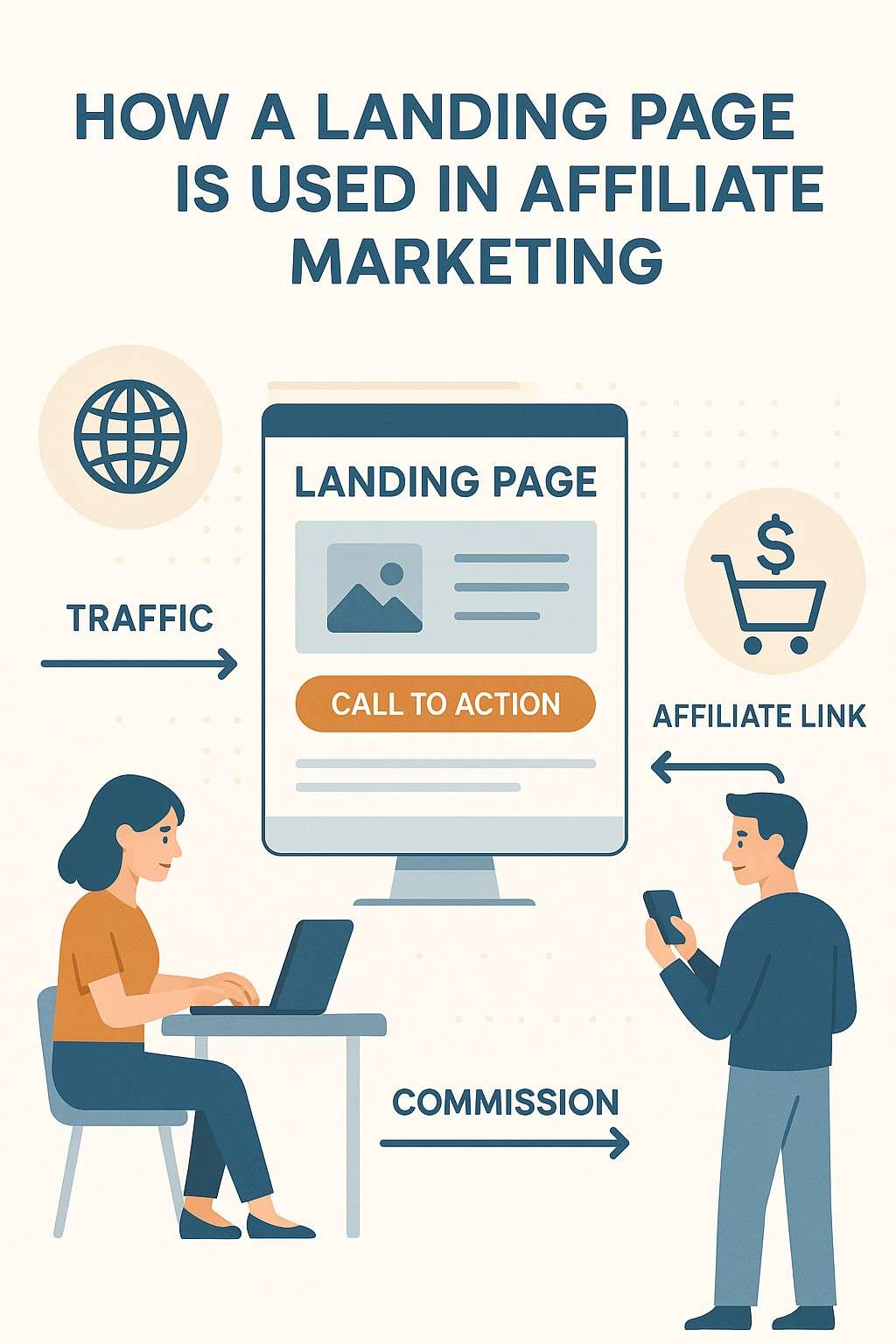
In the realm of digital marketing, a landing page is a standalone web page designed with a specific goal in mind, typically to convert visitors into leads or customers. In affiliate marketing, landing pages play a critical role in bridging the gap between promotional efforts and conversions, guiding potential customers toward taking desired actions, such as clicking an affiliate link, signing up for a service, or making a purchase. Unlike a website’s homepage, which serves multiple purposes, a landing page is laser-focused, optimized to maximize conversions for a single campaign or offer. This essay explores the concept of landing pages, their structure, their strategic use in affiliate marketing, and their benefits and challenges, followed by a practical example to illustrate their application in 2025.


Understanding Landing Pages

A landing page is a web page that visitors “land” on after clicking a link from an advertisement, social media post, email, or other promotional content. Its primary purpose is to encourage a specific action, known as a conversion, which could include:

  • Purchasing a product or service.
  • Signing up for a newsletter or free trial.
  • Filling out a form to generate a lead.
  • Clicking through to an affiliate offer.

Landing pages are distinct from other web pages due to their singular focus and minimal distractions. They typically avoid navigation menus, sidebars, or unrelated links that might divert visitors from the intended action. In affiliate marketing, landing pages are often used as an intermediary step to pre-sell or warm up visitors before directing them to a merchant’s site via an affiliate link.

Key Elements of a Landing Page

An effective landing page includes:

  1. Compelling Headline: Grabs attention and clearly states the offer’s value (e.g., “Discover the Best Budget Laptops for Students in 2025”).
  2. Engaging Content: Provides concise, persuasive copy highlighting benefits, features, or solutions to the visitor’s problem.
  3. Strong Call-to-Action (CTA): Encourages action with clear buttons or links (e.g., “Shop Now,” “Get Your Free Trial”).
  4. Visuals: Images, videos, or infographics that support the offer and enhance appeal.
  5. Trust Signals: Testimonials, reviews, or trust badges to build credibility.
  6. Form (Optional): For lead generation, capturing email addresses or contact details.
  7. Minimal Distractions: No navigation bars or unrelated links to keep focus on the CTA.
  8. Mobile Optimization: Ensures usability on smartphones, critical in 2025 with mobile traffic dominating.
Types of Landing Pages in Affiliate Marketing
  • Pre-Sell Pages: Educate or persuade visitors about a product before linking to the merchant’s site (e.g., a review of a software tool).
  • Lead Capture Pages: Collect visitor information (e.g., emails) in exchange for a lead magnet, like an eBook, before promoting affiliate offers.
  • Bridge Pages: Transition visitors from an ad or social post to an affiliate offer, adding value through content or bonuses.
  • Click-Through Pages: Direct visitors to the merchant’s site via an affiliate link with minimal content, often used in paid ad campaigns.

How Landing Pages Are Used in Affiliate Marketing

In affiliate marketing, landing pages serve as a strategic tool to increase conversions, build trust, and comply with affiliate program rules. They are particularly valuable when affiliates cannot directly link to merchant sites (e.g., in paid ads for Amazon Associates) or want to pre-qualify traffic to improve conversion rates. Here’s how landing pages are used effectively:

1. Pre-Selling the Offer

Affiliates use landing pages to warm up visitors by providing valuable information, such as product reviews, comparisons, or tutorials, before directing them to the merchant’s site. This pre-selling builds trust and increases the likelihood of a conversion.

  • Example: A landing page reviewing “The Top 5 VPNs for Streaming in 2025” might compare features, pricing, and user experiences, with affiliate links to NordVPN or Surfshark.
  • Benefit: Educated visitors are more likely to convert, boosting commissions.
  • Tool: Use page builders like Elementor (free/$59/year) or Leadpages (~$37/month) to create professional pre-sell pages.
2. Capturing Leads

Lead capture landing pages collect visitor information, typically email addresses, in exchange for a free resource (e.g., an eBook, checklist, or webinar). Affiliates then nurture these leads via email marketing, promoting affiliate products over time.

  • Example: A landing page offering a “Free Guide to Budget Travel in 2025” captures emails, allowing the affiliate to send newsletters with Booking.com affiliate links.
  • Benefit: Builds an email list for long-term promotions, increasing recurring revenue potential.
  • Tool: Mailchimp (free for 500 subscribers) integrates with landing page tools for email capture.
3. Complying with Affiliate Program Rules

Some affiliate programs (e.g., Amazon Associates) prohibit direct linking from paid ads or certain platforms. Landing pages act as compliant intermediaries, hosting content that aligns with program terms.

  • Example: An affiliate running Google Ads for a tech gadget creates a landing page with a detailed review, linking to Amazon via an affiliate link, rather than directing ads straight to Amazon.
  • Benefit: Ensures compliance, avoiding account suspensions.
  • Tool: Bitly (free) to track affiliate link clicks from the landing page.
4. Optimizing Paid Ad Campaigns

Affiliates using paid ads (e.g., Google Ads, Meta Ads) use landing pages to target specific audiences and improve ad relevance, reducing costs and increasing conversions.

  • Example: A Meta Ad targeting “budget fitness trackers” directs clicks to a landing page comparing Fitbit models, with affiliate links to purchase.
  • Benefit: Higher ad relevance improves quality scores, lowering ad costs.
  • Tool: Google Analytics (free) to track landing page performance.
5. Building Trust and Credibility

Landing pages allow affiliates to establish authority by providing value, such as expert insights or user testimonials, making visitors more likely to trust affiliate recommendations.

  • Example: A landing page for a personal finance app includes user reviews and a video demo, linking to the app’s signup page via an affiliate link.
  • Benefit: Trust increases conversion rates, especially for high-ticket or subscription-based products.
  • Tool: Canva (free) to create visuals like infographics or testimonial graphics.
6. A/B Testing and Optimization

Landing pages enable affiliates to test different elements (e.g., headlines, CTAs, layouts) to optimize conversion rates.

  • Example: An affiliate tests two versions of a landing page for a SaaS tool—one with a “Free Trial” CTA and another with “Learn More”—to see which drives more clicks.
  • Benefit: Data-driven improvements maximize earnings.
  • Tool: Google Optimize (free) for A/B testing.

Benefits of Landing Pages in Affiliate Marketing

  • Higher Conversions: Focused design and persuasive content increase click-through and conversion rates compared to direct linking.
  • Audience Segmentation: Tailored landing pages target specific audiences (e.g., students vs. professionals), improving relevance.
  • Email List Growth: Lead capture pages build valuable email lists for ongoing promotions.
  • Compliance: Ensures adherence to affiliate program rules, protecting accounts.
  • Analytics: Provides insights into visitor behavior, enabling optimization.
  • Scalability: Multiple landing pages can support diverse campaigns or niches.

Challenges of Using Landing Pages

  • Cost: Building landing pages may involve expenses for tools (e.g., Leadpages, ~$37/month) or hosting (~$50/year).
  • Time Investment: Designing and optimizing pages requires effort, especially for beginners.
  • Technical Skills: Some tools (e.g., WordPress with Elementor) have a learning curve, though drag-and-drop builders simplify the process.
  • Maintenance: Pages need regular updates to reflect current offers or trends.
  • Traffic Generation: Landing pages require effective promotion via ads, social media, or email to drive traffic.

Tools for Creating Landing Pages

  • Elementor: Free WordPress plugin (Pro: $59/year) for customizable, mobile-optimized pages.
  • Leadpages: Drag-and-drop builder (~$37/month) with templates for affiliate campaigns.
  • Carrd: Affordable (~$19/year) for simple, one-page landing pages.
  • Wix: Free plan for basic landing pages, with paid plans (~$16/month) for advanced features.
  • Canva: Free for designing visuals to enhance landing pages.
  • Google Analytics and Optimize: Free for tracking and testing performance.

Cost: $0–$59/year for most students or beginners using free or low-cost tools.


Best Practices for Landing Pages in Affiliate Marketing

  • Keep It Simple: Focus on one goal (e.g., clicking an affiliate link) and remove distractions.
  • Optimize for Mobile: Ensure fast loading and responsive design, as 60%+ of traffic is mobile in 2025.
  • Use Strong CTAs: Make buttons or links prominent and action-oriented.
  • Build Trust: Include testimonials, reviews, or trust badges to reassure visitors.
  • Test Continuously: A/B test headlines, CTAs, or visuals to improve conversions.
  • Stay Compliant: Disclose affiliate relationships (e.g., “This page contains affiliate links”) per FTC guidelines.
  • Drive Targeted Traffic: Use niche-specific ads, social posts, or emails to attract relevant visitors.

Example: Using a Landing Page in Affiliate Marketing for a SaaS Product

Scenario: Alex, a 22-year-old student, wants to earn $200/month by promoting affiliate marketing tools in the SaaS niche. He creates a landing page to promote ConvertKit, an email marketing tool offering a 30% recurring commission on subscriptions starting at $29/month.

Step-by-Step Approach:

  1. Choose a Niche and Program (Week 1):
    • Alex selects “email marketing tools for small businesses” after using Google Trends to confirm demand. He joins ConvertKit’s affiliate program via ShareASale, earning ~$8.70/month per referral.
  2. Create a Landing Page (Weeks 2–3):
    • Alex uses Carrd ($19/year) to build a landing page titled “Why ConvertKit Is the Best Email Marketing Tool for Beginners.”
    • Elements:
      • Headline: “Grow Your Business with ConvertKit’s Easy Email Marketing.”
      • Content: A 300-word section explaining ConvertKit’s features (e.g., automation, templates), benefits (e.g., user-friendly), and a testimonial from a small business owner.
      • Visuals: An infographic created with Canva (free) comparing ConvertKit to Mailchimp.
      • CTA: A “Start Your Free Trial” button linking to ConvertKit via an affiliate link (tracked with Bitly, free).
      • Trust Signals: A trust badge (“Trusted by 100,000+ Creators”) and Alex’s FTC disclosure.
    • The page is mobile-optimized and distraction-free, with no navigation menu.
  3. Drive Traffic (Weeks 4–12):
    • Instagram: Alex posts daily reels about email marketing tips, gaining 1,000 followers and driving 150 clicks/month to his Linktree (free), which links to the landing page.
    • YouTube: He uploads a video, “How to Set Up Email Marketing with ConvertKit,” optimized for “SEO email marketing 2025,” with the landing page link in the description, attracting 500 views and 100 clicks/month.
    • Pinterest: Alex creates pins with Canva visuals (e.g., “Top Email Tools for 2025”), driving 300 landing page visits/month.
    • Email: Using Mailchimp (free), Alex offers a free “Email Marketing Checklist” on his landing page, collecting 200 subscribers and sending weekly newsletters with the ConvertKit link.
  4. Track and Optimize (Weeks 13–20):
    • Google Analytics (free) shows 2,000 monthly landing page visitors, with a 20% click-through rate to ConvertKit (400 affiliate link clicks). ShareASale reports 25 trial signups, with 10 converting to paid plans, earning $87/month ($8.7 x 10).
    • Alex tests two CTAs with Google Optimize (free): “Start Free Trial” vs. “Learn More,” finding the former increases clicks by 15%. He updates the page accordingly.
    • He adds a video testimonial to the landing page, boosting conversions to 15 paid plans, earning $130.50/month.
  5. Scale (Weeks 21–24):
    • Alex runs a $5/day Meta Ad targeting small business owners, driving 500 additional landing page visits/month and 5 more conversions, pushing earnings to $174/month.
    • He creates a second landing page for GetResponse (40% commission) to diversify, reaching $210/month by month six.

Analysis: Alex’s landing page pre-sells ConvertKit effectively, using Carrd’s simplicity and Canva’s visuals to create a professional, trustworthy page. His multi-channel traffic strategy (Instagram, YouTube, Pinterest, email, ads) maximizes reach, while Google Analytics and Optimize guide improvements. The $19/year cost for Carrd and $5/day ad budget (optional) keep expenses low, proving landing pages are affordable for students. Alex exceeds his $200/month goal, demonstrating the power of landing pages in affiliate marketing.


Conclusion

A landing page is a focused, conversion-driven web page that plays a pivotal role in affiliate marketing by pre-selling offers, capturing leads, ensuring compliance, and optimizing campaigns. In affiliate marketing, landing pages bridge promotional content and merchant sites, increasing trust, engagement, and conversion rates. They are particularly valuable for warming up traffic, building email lists, and adhering to program rules. Challenges like costs and technical skills can be mitigated with affordable tools like Carrd, Wix, or Elementor. Alex’s example shows how a student can use a landing page to promote a SaaS product, leveraging free tools and targeted traffic to earn $210/month. By following best practices—keeping pages simple, mobile-optimized, and data-driven—affiliates can harness landing pages to succeed in the competitive affiliate marketing landscape of 2025, even with limited resources.

What Is Affiliate Disclosure and Why Is It Legally Required?

In today’s digital world, affiliate marketing is a widely used method for individuals and businesses to earn income online. Whether you’re a blogger, YouTuber, influencer, or content creator, you might be earning commissions through promoting products and services via affiliate links. But there’s one aspect of affiliate marketing that is not only essential for building trust with your audience — it’s also legally required: affiliate disclosure.

This detailed guide explains what affiliate disclosure is, why it’s legally important, how to write one correctly, and provides practical examples to help you stay compliant and ethical in your affiliate marketing journey.


What Is Affiliate Disclosure?

An affiliate disclosure is a clear and honest statement made by a content creator or publisher informing their audience that they may earn a commission or receive compensation if someone purchases a product or service through a provided link.

In simple terms, it’s telling your audience:

“If you buy something through a link I share, I might earn a small commission — at no extra cost to you.”

This disclosure is placed in blog posts, videos, social media captions, or anywhere affiliate links are used.


Why Is Affiliate Disclosure Legally Required?

Affiliate disclosure isn’t just a best practice — it’s a legal requirement in many countries, especially under advertising, consumer protection, and e-commerce laws. The primary purpose is to protect consumers by ensuring they are aware of any potential bias in promotional content.

✅ 1. Consumer Transparency and Trust

Consumers have a right to know if the content they are consuming is influenced by monetary gain. Disclosures prevent misleading advertising and ensure buyers are making informed decisions.

Imagine you’re reading a blog that recommends a particular laptop. If you don’t know the writer is being paid to promote it, you might trust their opinion more than you should. Disclosures clarify that the recommendation might have financial motivation behind it.


✅ 2. Legal Compliance (FTC, ASCI, GDPR, etc.)

🏛 United States – FTC Guidelines

The Federal Trade Commission (FTC) requires anyone endorsing a product or using affiliate links to disclose their relationship with the brand. This applies to:

  • Bloggers

  • YouTubers

  • Instagram influencers

  • Email marketers

According to the FTC:

“If you endorse a product through social media, your audience must know if there’s a material connection — like if you’re being paid or receiving a commission.”

Violating FTC rules can result in fines, legal action, and even bans from affiliate programs.

🇮🇳 India – ASCI Guidelines

The Advertising Standards Council of India (ASCI) introduced influencer and affiliate marketing guidelines. All paid promotions must carry clear, unmissable disclosure labels such as:

  • #ad

  • #sponsored

  • #affiliate

Failure to do so can lead to penalties, take-down requests, and credibility loss.

🇬🇧 United Kingdom – CMA Regulations

The UK’s Competition and Markets Authority (CMA) enforces similar disclosure standards under the Consumer Protection from Unfair Trading Regulations.

🇪🇺 Europe – GDPR and E-Commerce Regulations

Although GDPR is primarily about data privacy, EU countries also require affiliate disclosures under e-commerce and advertising laws, ensuring consumers are not misled.


Consequences of Not Using Affiliate Disclosure

Failing to disclose your affiliate relationship can have serious consequences:

❌ Legal Risks:

  • FTC fines can go up to $43,792 per violation

  • ASCI complaints can result in public warnings or account suspensions

  • Affiliate networks may ban or suspend your account

❌ Loss of Trust:

  • Your audience may feel deceived

  • Readers may stop following or recommending you

  • Your brand reputation can be damaged permanently

❌ SEO Impact:

Search engines like Google prioritize honest and helpful content. Not disclosing affiliate links can reduce trust signals, impacting rankings and visibility.


What Makes a Good Affiliate Disclosure?

A good affiliate disclosure is:

  • Clear and concise

  • Placed where users can see it easily

  • Written in plain language

  • Specific about the relationship

It should not be buried in footers or privacy policies, or written in legal jargon that normal readers don’t understand.


Where Should You Place Affiliate Disclosures?

✅ Blog Posts:

  • At the top of the post, before the affiliate links appear

  • Repeat within the content if it’s a long article

  • Example:

    “This post contains affiliate links. If you click and buy, I may earn a small commission at no extra cost to you.”

✅ YouTube Videos:

  • Verbal disclosure at the beginning

  • Text in the video description

  • Example:

    “Some of the links below are affiliate links. That means I may earn a small commission if you purchase through them.”

✅ Instagram and Facebook:

  • Disclosure should appear within the first two lines of the caption

  • Use hashtags like #ad, #sponsored, or #affiliate

  • Avoid hiding it in comments or in a chain of hashtags

✅ Email Newsletters:

  • Place it near the beginning or next to the link

  • Example:

    “This email includes affiliate links. If you buy something, I may earn a commission.”


Real-World Example: How a Student Blogger Uses Affiliate Disclosure

Let’s say Ravi, a 21-year-old commerce student in Delhi, starts a blog called StudySmartIndia.com. He writes guides on:

  • Affordable student laptops

  • Best online learning platforms

  • Budget tech gadgets

Ravi joins:

  • Amazon Associates (for gadgets and laptops)

  • Skillshare affiliate program (for online courses)

  • Bluehost (for blog hosting guides)

✅ Here’s how Ravi uses affiliate disclosure:

Blog Post Title:

“Top 5 Budget Laptops for Indian Students in 2025”

Disclosure (at the top):

Disclosure: This post contains affiliate links. If you make a purchase through these links, I may earn a small commission at no extra cost to you. Thank you for supporting this blog.

Within the content:
He links to Amazon products like “HP 15s Laptop” with affiliate links. Occasionally, he reminds readers:

“I personally use this laptop for online classes, and I’ve had a great experience. (affiliate link)”

In Footer or About Page:
Ravi also includes a general disclaimer:

“Some of the links on this blog are affiliate links. I may receive a commission if you purchase through them. This does not affect the price you pay.”

This approach keeps Ravi compliant, honest, and builds trust with his readers — many of whom are fellow students.


Common Mistakes to Avoid

❌ Vague Language:

Bad:

“Some links may earn me something.”

Better:

“This post contains affiliate links. I may earn a commission if you buy through them.”

❌ Burying the Disclosure:

Never hide it in the footer, or only in your privacy policy. It should appear where the reader is actively engaging with affiliate content.

❌ Using Only Hashtags:

Using just #ad or #affiliate is not enough — give a clear explanation in plain English.

❌ Misleading Content:

Don’t claim a product is “free” if it costs money, even with a discount. Disclose any sponsorships, free samples, or gifts.


Affiliate Disclosure Template Examples

✅ Short and Clear:

“This post may contain affiliate links. If you click and buy, I may receive a small commission — at no extra cost to you.”

✅ Detailed Version:

“This page contains affiliate links. That means I may earn a small commission if you purchase through my links. It helps support the blog and allows me to continue sharing helpful content. I only recommend products I truly believe in.”


Conclusion

Affiliate disclosure is not just about legal compliance — it’s a core part of ethical affiliate marketing. Whether you’re a student blogger, influencer, or experienced digital marketer, clear disclosure builds trust, enhances credibility, and protects you legally.

✅ Final Key Takeaways:

  • Always disclose affiliate relationships wherever links are used.

  • Be honest and transparent with your audience.

  • Use plain language, and place disclosures at the top or near affiliate content.

  • Follow laws and guidelines (FTC, ASCI, CMA, etc.).

  • Build long-term trust by putting your readers first.

Your honesty can be the biggest asset in affiliate marketing. By following proper affiliate disclosure practices, you’re not only staying within the law—you’re showing your audience that you value their trust more than a quick commission.


“Trust is the currency of online business — and disclosure is the receipt.”

How Can You Promote Affiliate Products Without a Website?

Affiliate marketing is a popular way to earn income by promoting products or services and earning commissions for successful referrals. Traditionally, many affiliates use websites to host content and embed affiliate links, but a website isn’t a requirement to succeed. For beginners, students, or those with limited resources, promoting affiliate products without a website is not only feasible but also highly effective when leveraging alternative platforms like social media, email, video content, and online communities. This essay outlines the strategies, tools, and best practices for promoting affiliate products without a website, detailing their benefits, challenges, and practical applications. A real-world example illustrates how these methods can be combined to build a successful affiliate marketing campaign in 2025.


Why Promote Affiliate Products Without a Website?

Promoting affiliate products without a website offers several advantages, especially for those new to affiliate marketing:

  • Low Cost: Eliminates expenses like domain names (~$15/year), hosting (~$50/year), or website builders.
  • Quick Start: Platforms like social media or YouTube allow immediate content creation, bypassing website setup time.
  • Flexibility: Affiliates can experiment with multiple channels (e.g., Instagram, email) to find what works best.
  • Accessibility: Requires only a smartphone or laptop, ideal for students or beginners with limited resources.

However, success without a website demands strategic use of alternative platforms, compelling content, and adherence to affiliate program rules. Below, we explore the key methods for promoting affiliate products without a website, supported by tools and tactics tailored for 2025.


Strategies for Promoting Affiliate Products Without a Website

1. Leverage Social Media Platforms

Social media platforms like Instagram, TikTok, X, and Pinterest are powerful for affiliate marketing due to their massive audiences and engagement potential. They allow affiliates to share affiliate links directly or drive traffic to link-in-bio pages.

  • How It Works:
    • Instagram: Post product demos, reviews, or lifestyle content with affiliate links in your bio using tools like Linktree (free) to manage multiple links. Stories with swipe-up links (for accounts with 10,000+ followers) can also drive clicks.
    • TikTok: Create short, engaging videos showcasing products (e.g., a tech gadget unboxing) with links in your bio. TikTok’s algorithm favors new creators, offering quick visibility.
    • X: Share tips, reviews, or deals with shortened affiliate links (using Bitly, free). Engage in niche conversations to build credibility.
    • Pinterest: Create pins linking to affiliate product pages or blog posts (if you guest post). Pins drive long-term traffic due to their evergreen nature.
  • Tools Needed:
    • Canva (free): Design eye-catching posts or pins.
    • Bitly (free): Shorten and track affiliate links.
    • Linktree (free): Create a landing page for multiple links.
  • Best Practices:
    • Post consistently (e.g., 3–5 times/week) to build an audience.
    • Use hashtags and trends to increase discoverability (e.g., #TechGadgets2025).
    • Disclose affiliate relationships per FTC guidelines (e.g., “#ad” or “affiliate link”).
  • Benefits: Free, high engagement, and accessible via smartphones.
  • Challenges: Platform restrictions (e.g., Instagram’s link-in-bio limit) and algorithm changes require adaptability.
2. Utilize Video Content Platforms

YouTube and TikTok are ideal for video-based affiliate marketing, allowing affiliates to create tutorials, reviews, or unboxings with affiliate links in descriptions or bios.

  • How It Works:
    • YouTube: Upload in-depth product reviews or how-to videos (e.g., “How to Use a Smart Speaker for Students”) with affiliate links in the description. Monetization isn’t required to include links.
    • TikTok: Share quick demos or tips (e.g., a 15-second clip showing a fitness tracker’s features) with links in your bio.
  • Tools Needed:
    • DaVinci Resolve (free): Edit videos for professional quality.
    • Canva (free): Create thumbnails to attract clicks.
    • Smartphone camera: Sufficient for basic video recording.
  • Best Practices:
    • Optimize video titles and descriptions with keywords (e.g., “best budget headphones 2025”).
    • Include clear CTAs (e.g., “Link in description to buy!”).
    • Build a subscriber base for long-term traffic.
  • Benefits: Videos build trust through visual demos, and YouTube content is evergreen.
  • Challenges: Video production is time-intensive, and ranking on YouTube takes effort.
3. Build an Email List

Email marketing allows affiliates to nurture leads and promote affiliate products directly to subscribers, offering high conversion rates.

  • How It Works:
    • Create a lead magnet (e.g., a free eBook or checklist) to attract subscribers.
    • Use an email service provider to send newsletters with affiliate links.
    • Promote products through value-driven content (e.g., a “Top 5 Study Tools” email).
  • Tools Needed:
    • Mailchimp (free for up to 500 subscribers): Create and send email campaigns.
    • Google Docs (free): Write lead magnets or email drafts.
    • Linktree (free): Host lead magnet signup links on social media.
  • Best Practices:
    • Offer a niche-specific lead magnet (e.g., “10 Budget-Friendly Tech Hacks for Students”).
    • Send regular emails (e.g., weekly) with a mix of value and promotions.
    • Segment lists to target specific interests (e.g., tech vs. fitness products).
  • Benefits: High ROI, direct audience connection, and control over promotions.
  • Challenges: Building a list takes time, and email providers may charge as lists grow.
4. Engage in Online Communities

Forums, groups, and communities like Reddit, Quora, or niche-specific platforms allow affiliates to share expertise and subtly promote affiliate products.

  • How It Works:
    • Reddit: Participate in subreddits (e.g., r/FrugalTech) by answering questions and including affiliate links where allowed (check rules).
    • Quora: Answer niche-related questions (e.g., “What’s the best budget laptop for students?”) with affiliate links in responses.
    • Facebook Groups: Join niche groups (e.g., “Student Tech Deals”) and share recommendations with disclosures.
  • Tools Needed:
    • Bitly (free): Track link clicks in community posts.
    • Grammarly (free): Ensure professional, clear responses.
  • Best Practices:
    • Provide genuine value before linking (e.g., detailed advice with a link as a resource).
    • Respect community rules to avoid bans.
    • Build a reputation as a helpful member to gain trust.
  • Benefits: Free, targeted audiences, and high trust for recommendations.
  • Challenges: Strict rules against self-promotion require tactful link placement.
5. Use Paid Advertising (Optional)

While not essential, paid ads on platforms like Google Ads or Meta Ads can amplify affiliate promotions for students with a small budget.

  • How It Works:
    • Create ads targeting niche keywords (e.g., “budget fitness tracker”) or audiences (e.g., students aged 18–24).
    • Direct clicks to affiliate links or a Linktree page.
  • Tools Needed:
    • Google Ads or Meta Ads: Start with a $5–$10/day budget.
    • Canva (free): Design ad visuals.
  • Best Practices:
    • Check affiliate program rules (e.g., Amazon Associates prohibits direct ad links).
    • Use low-budget campaigns to test ROI.
    • Target high-intent audiences to maximize conversions.
  • Benefits: Fast traffic generation and precise targeting.
  • Challenges: Requires budget and expertise to avoid losses.

Additional Tools and Best Practices

  • Link Management:
    • Bitly (free): Shorten and track affiliate links for social media or email.
    • Linktree (free): Create a single landing page for multiple affiliate links.
  • Analytics:
    • Affiliate Network Dashboards: Track clicks and commissions via networks like Amazon Associates or ShareASale.
    • Google Analytics (free): Monitor traffic if using a Linktree page.
  • Productivity:
    • Trello (free): Organize content schedules and campaign plans.
    • Notion (free): Track affiliate programs and link performance.
  • Compliance:
    • Always disclose affiliate relationships (e.g., “This post contains affiliate links”) to comply with FTC guidelines.
    • Use Grammarly (free) to ensure clear, professional disclosures.

Total Cost: $0–$10/day (if using paid ads; most tools are free).


Challenges of Promoting Without a Website

  • Platform Dependence: Relying on social media or third-party platforms risks algorithm changes or account bans.
  • Link Restrictions: Some platforms (e.g., Instagram) limit link placement, requiring workarounds like Linktree.
  • Building Trust: Without a website, affiliates must work harder to establish credibility through content quality.
  • Tracking Limitations: Non-website platforms offer less granular analytics than Google Analytics on a blog.

Best Practices for Success

  • Start with One Platform: Focus on a single channel (e.g., YouTube or Instagram) to master it before expanding.
  • Create Authentic Content: Share personal experiences or honest reviews to build trust.
  • Engage Actively: Respond to comments or questions to foster community and loyalty.
  • Stay Compliant: Adhere to platform rules and disclose affiliate links transparently.
  • Learn Continuously: Follow X accounts like @AffiliateTips or YouTube channels for strategies.

Example: Promoting Tech Gadgets Without a Website

Scenario: Liam, a 19-year-old student, wants to earn $200/month promoting tech gadgets (e.g., headphones, smart speakers) using affiliate marketing. He has a smartphone, laptop, and no budget for a website.

Step-by-Step Approach:

  1. Learn the Basics (Week 1):
    • Liam watches YouTube tutorials and follows @AffiliateSummit on X to understand affiliate marketing. He uses Notion (free) to organize program details.
  2. Choose a Niche (Week 2):
    • Liam selects “tech gadgets for students,” focusing on budget-friendly items like earbuds and smart plugs, validated by Google Trends showing high demand.
  3. Join Affiliate Programs (Week 3):
    • Liam joins Amazon Associates (4% commissions on tech) and Best Buy’s program via Impact (0.5–4% commissions). He uses Bitly (free) to shorten links.
  4. Set Up Platforms (Weeks 4–5):
    • Liam creates a YouTube channel, “TechForStudents,” and an Instagram account with the same name. He sets up a Linktree (free) page to host affiliate links for both platforms.
    • He adds an affiliate disclosure to his Instagram bio and YouTube descriptions.
  5. Create Content (Weeks 6–12):
    • YouTube: Liam records a video, “Top 5 Budget Earbuds for Students in 2025,” using his smartphone and DaVinci Resolve (free) for editing. He includes Amazon and Best Buy links in the description, optimized for keywords like “best student earbuds.”
    • Instagram: He posts daily reels showing gadget features (e.g., a 15-second clip testing a smart plug) with a CTA to “Link in bio.” He designs thumbnails with Canva (free).
    • TikTok: Liam cross-posts YouTube clips, gaining traction with #TechGadgets2025.
  6. Drive Traffic (Weeks 13–20):
    • Liam shares YouTube videos on X, engaging in tech discussions and gaining 150 link clicks/month. His videos attract 500 views/month, with 50 clicks to links.
    • On Instagram, he gains 400 followers, driving 100 Linktree clicks/month via reels and stories.
    • Using Mailchimp (free), Liam offers a “Student Tech Deals Guide” eBook, collecting 120 email subscribers and sending weekly newsletters with links.
    • He answers questions on Reddit’s r/FrugalTech, subtly including links where allowed, driving 30 clicks/month.
  7. Track and Optimize (Weeks 21–24):
    • Amazon’s dashboard shows 15 earbud sales ($750 total, $30 commission at 4%) and Best Buy shows 5 smart speaker sales ($1,000 total, $40 commission at 4%), totaling $70/month.
    • Liam notices his earbud video performs best, so he creates “Best Wireless Earbuds Under $50” on YouTube and TikTok, boosting earnings to $210/month with 30 total sales.
    • He uses Bitly to track Instagram link clicks, optimizing posts with higher-performing CTAs.

Analysis: Liam uses free tools (YouTube, Instagram, TikTok, Canva, Mailchimp, Bitly) and platforms to promote tech gadgets, staying within his $0 budget. His multi-channel approach maximizes traffic, while video and social content build trust. Optimization based on analytics helps him exceed his $200/month goal by month six, proving website-free affiliate marketing is viable for students.


Conclusion

Promoting affiliate products without a website is an accessible and effective strategy for beginners, leveraging platforms like social media (Instagram, TikTok, X, Pinterest), video content (YouTube), email marketing (Mailchimp), and online communities (Reddit, Quora). Free tools like Canva, Bitly, and Linktree streamline content creation and link management, while analytics from affiliate networks guide optimization. Challenges like platform restrictions and trust-building can be overcome with authentic content and compliance. Liam’s example in the tech gadgets niche demonstrates how a student can combine YouTube, Instagram, TikTok, and email to earn $210/month, using only free resources. By focusing on engaging content, targeted promotion, and consistent effort, anyone can succeed in affiliate marketing without a website in 2025, making it an ideal side hustle for students or those with limited budgets.

How to Become a Digital Marketing Specialist

Digital marketing is one of the fastest-growing fields today. Many people are interested in building a career in digital marketing, and becoming a digital...

What is SMM in Digital Marketing

SMM, or Social Media Marketing, is one of the most important parts of digital marketing. In simple words, SMM is the process of using...

What is Google Analytics in Digital Marketing

Google Analytics is one of the most important tools in digital marketing. It helps businesses understand how people interact with their websites and online...

What is Google AdWords in Digital Marketing

Google AdWords is one of the most important tools in digital marketing. Many businesses use AdWords to reach their target audience online and increase...

What Is CPM in Digital Marketing

In digital marketing, understanding how your ads are priced and measured is very important. Different advertising models help marketers track performance and control spending....