Home Blog Page 53

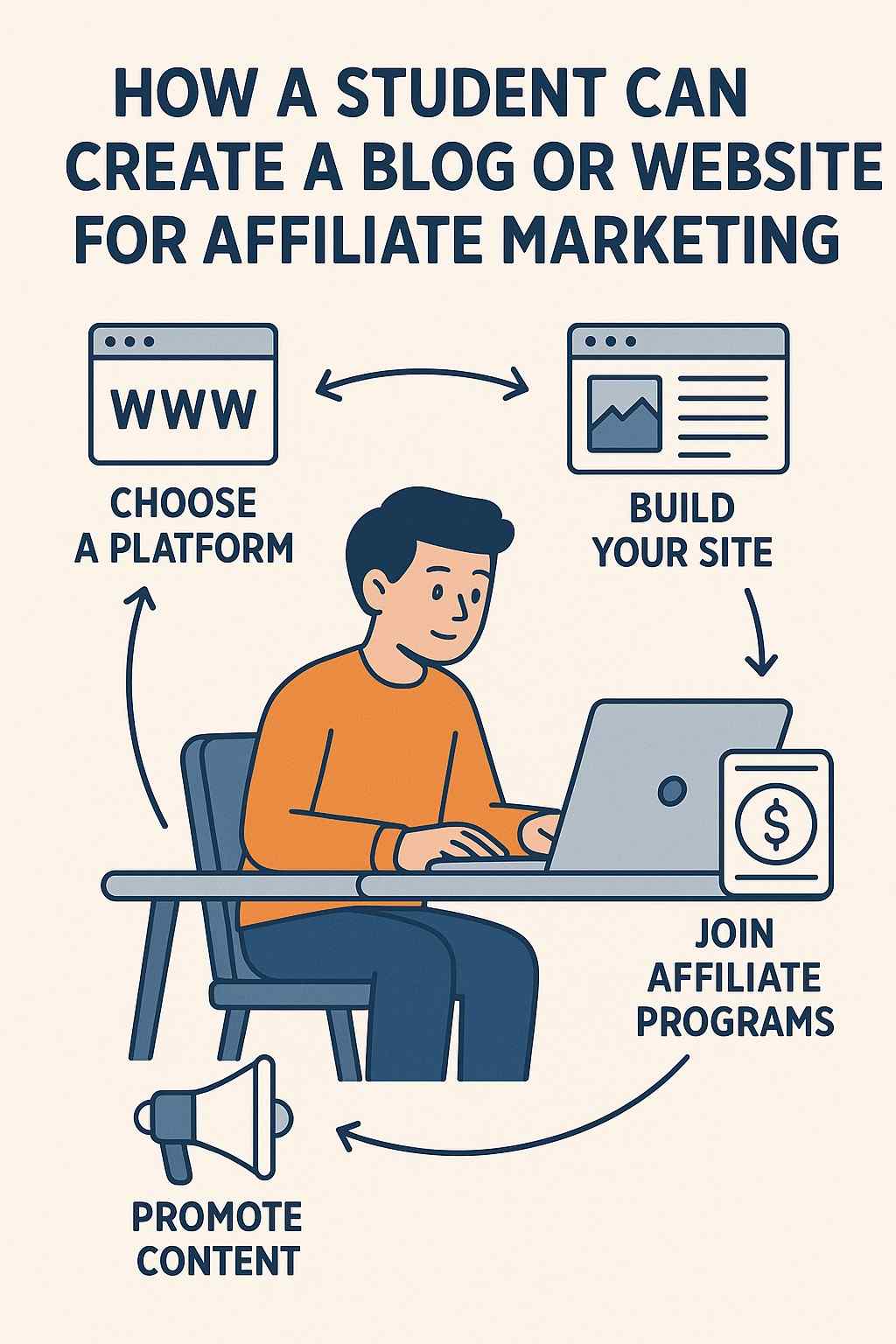
How Can a Student Create a Blog or Website for Affiliate Marketing?

Affiliate marketing is one of the most powerful and accessible ways for students to earn passive income online. With limited time and often limited resources, students can still create a blog or website that generates affiliate commissions by promoting useful products or services. This strategy not only builds a side income but also helps students develop valuable digital skills like writing, SEO, design, and online business management.

In this in-depth guide, we will walk through how a student can create a successful affiliate marketing blog or website step-by-step — even without technical skills or much money. We’ll also provide a real-world example to show how students can implement this strategy effectively.


Why Should Students Consider Affiliate Marketing Through Blogging?

Before diving into the “how,” let’s understand why this is a great option for students.

✅ Benefits:

  • Low startup cost: You can start with as little as ₹1,000–₹3,000 per year.

  • Passive income: Earn money even while focusing on studies.

  • Skill development: Learn content creation, SEO, web design, and marketing.

  • Flexible schedule: Work on your blog when time permits.

  • Long-term asset: Your website continues to grow and earn over time.


Step-by-Step Guide for Students to Start a Blog for Affiliate Marketing


Step 1: Choose a Profitable Niche

Your niche is the specific topic or category your blog will focus on. A well-defined niche helps you attract a loyal audience and find relevant affiliate products to promote.

📌 Tips for Choosing a Niche:

  • Pick something you’re interested in or good at.

  • Ensure there are affiliate products in that niche.

  • Check if people are actively searching for content in that area.

🔍 Popular Student-Friendly Niches:

  • Tech gadgets and apps

  • Fitness and wellness

  • Study tips and productivity

  • Budget travel

  • Fashion and lifestyle

  • Online learning and eBooks

  • Gaming and game accessories

🎯 Example:

A student passionate about budget travel chooses to create a blog called “The Broke Backpacker’s Guide”, focused on affordable travel tips for students and young adults.


Step 2: Buy a Domain and Hosting

A blog needs a domain name (your web address) and hosting (where your site’s files live).

✅ Domain Name Tips:

  • Keep it short, memorable, and niche-related

  • Use .com, .in, or .net extensions

  • Examples: StudentFitTips.com, TravelOnPocket.com

✅ Hosting Providers for Beginners:

  • Bluehost (comes with free domain, beginner-friendly)

  • Hostinger

  • Namecheap

  • SiteGround

Budget: ₹2,000–₹4,000/year (includes domain + hosting)


Step 3: Install WordPress

Most hosting providers offer 1-click WordPress installation, which lets you build your blog without coding.

✅ Why WordPress?

  • Beginner-friendly

  • 1000s of free themes and plugins

  • SEO optimized

  • Flexible for all content types

Once installed, you’ll get access to the WordPress dashboard where you can customize your website, create pages, and write blog posts.


Step 4: Choose a Theme and Customize Your Blog

Choose a responsive, fast-loading, and clean theme that fits your niche.

Free WordPress Themes:

  • Astra

  • GeneratePress

  • OceanWP

  • Neve

Customize your blog to include:

  • Homepage

  • About Page

  • Contact Page

  • Blog Page

  • Privacy Policy and Disclaimer

Install plugins like:

  • Yoast SEO – for search engine optimization

  • Pretty Links – to manage affiliate links

  • WP Forms – to create contact forms


Step 5: Sign Up for Affiliate Programs

Find affiliate programs relevant to your niche. You can sign up directly on brand websites or through affiliate networks.

🔗 Popular Affiliate Networks:

  • Amazon Associates (for physical products)

  • ShareASale (lifestyle, fashion, tools)

  • Impact (SaaS and digital tools)

  • ClickBank (digital courses, eBooks)

  • Hostinger/Bluehost (for tech/hosting-related blogs)

Once approved, you’ll get a unique affiliate link to insert into your blog posts.

🎯 Example:

The student travel blogger signs up for:

  • Amazon Associates to promote travel gear

  • Booking.com Affiliate Program for hotel recommendations

  • SafetyWing for student travel insurance


Step 6: Write High-Quality, SEO-Friendly Blog Posts

Now that your site is set up, it’s time to publish valuable content that attracts readers and encourages affiliate clicks.

📝 Blog Post Ideas:

  • “Top 5 Budget Hostels in Goa for Students”

  • “10 Travel Essentials Under ₹1,000 on Amazon”

  • “How I Traveled to Manali for ₹5,000 – Complete Guide”

  • “Best Student Travel Insurance for 2025 (Compared)”

Use keyword research tools like:

  • Google Keyword Planner

  • Ubersuggest

  • AnswerThePublic

✍ Content Writing Tips:

  • Start with a catchy title

  • Use subheadings (H2/H3)

  • Add images and product links

  • Be honest in reviews — list pros and cons

  • Insert your affiliate links naturally


Step 7: Promote Your Blog

Writing isn’t enough — you need to drive traffic to your blog.

Free Promotion Strategies:

  • Share posts on WhatsApp, Facebook groups, and student forums

  • Create Pinterest pins for blog posts

  • Join Quora and answer relevant questions with links

  • Use Instagram Reels or Stories to promote new content

  • Collaborate with other student bloggers

Long-Term Promotion:

  • Focus on SEO to get Google traffic

  • Build an email list using tools like MailerLite

  • Start a YouTube channel that links back to your blog


Step 8: Build Trust with Your Audience

People will only buy through your affiliate links if they trust your recommendations.

How to Build Trust:

  • Disclose affiliate links transparently

  • Write honest, experience-based reviews

  • Share both positive and negative aspects

  • Show proof of using the product (images or videos)

  • Don’t spam — focus on helping, not just selling

Add a line like: “This post contains affiliate links. If you make a purchase, I may earn a small commission at no extra cost to you.”


Step 9: Track Your Performance and Optimize

Use tracking tools to monitor how your blog is performing.

Tools to Use:

  • Google Analytics – for traffic insights

  • Google Search Console – for SEO monitoring

  • Affiliate Dashboards – to track clicks and sales

Analyze which posts get traffic and which links convert. Then:

  • Update and improve popular posts

  • Write more content on similar topics

  • Test different affiliate products


Step 10: Be Consistent and Patient

Affiliate marketing is not a get-rich-quick scheme. It may take 3–6 months to start earning consistent commissions.

Stay Consistent:

  • Post 1–2 quality blogs per week

  • Promote each post across channels

  • Respond to comments and emails

  • Keep learning from other bloggers or courses


✅ Real-Life Student Blog Example

Student Name: Priya Sharma
Niche: Budget Travel for Indian Students
Blog Name: WanderOnABudget.in

Setup:

  • Hosting: Hostinger

  • Platform: WordPress with Astra theme

  • Affiliate Programs:

    • Amazon Associates (travel gear)

    • Booking.com (hotels)

    • ClickBank (travel eBooks)

    • SafetyWing (travel insurance)

Popular Posts:

  • “Best Travel Backpacks Under ₹2,000 – Reviewed”

  • “Student Guide to Cheap Flights in India”

  • “Top Hostels in Rishikesh for Solo Travelers”

Monetization:

  • Average monthly traffic: 5,000

  • Monthly income (after 6 months): ₹6,500–₹10,000

Priya also began receiving collaboration requests from hostel owners and brands offering free stays and reviews.


Conclusion

Starting a blog for affiliate marketing is one of the smartest ways for students to earn online while building long-term digital skills. With minimal investment and a bit of creativity, students can create a niche website that serves others and earns money through affiliate commissions.

Final Takeaways:

  • Choose a niche that matches your passion and audience interest

  • Set up a professional-looking WordPress site

  • Join affiliate programs relevant to your niche

  • Write helpful, keyword-rich content with your affiliate links

  • Promote consistently and build trust with your readers

  • Track performance and optimize based on results

Success won’t come overnight, but with consistency, ethical practices, and smart promotion, students can build a blog that not only makes money but opens doors to career opportunities in digital marketing, content creation, and entrepreneurship.


Your blog is not just a website — it’s a personal brand and a potential future business. Start building it today!

What Tools Are Required to Start Affiliate Marketing as a Student?

Affiliate marketing is an accessible and low-cost way for students to earn income online by promoting products or services and earning commissions for successful referrals. For students, who often have limited budgets and time, the right tools can streamline the process, enhance efficiency, and maximize earnings potential. These tools range from platforms for content creation and promotion to analytics and research tools for optimizing campaigns. This essay outlines the essential tools required for students to start affiliate marketing, detailing their purpose, cost, and benefits, with a practical example to illustrate how a student can use them effectively.


Why Tools Matter for Students in Affiliate Marketing

Students face unique constraints, including limited financial resources, time pressures from academic commitments, and often a lack of prior marketing experience. The right tools help overcome these challenges by:

  • Reducing Costs: Many tools offer free or student-discounted versions, making affiliate marketing viable on a tight budget.
  • Saving Time: Automation and user-friendly interfaces streamline tasks like content creation and tracking.
  • Leveling the Playing Field: Tools provide beginners with professional capabilities to compete in competitive niches.
  • Enhancing Learning: Many tools include educational resources, helping students build skills while earning.

Below, we explore the essential tools across key categories: platform-building, content creation, research and SEO, traffic generation, tracking and analytics, and productivity. Each category addresses a critical aspect of affiliate marketing, ensuring students can start and scale effectively.


Essential Tools for Affiliate Marketing

1. Platform-Building Tools

A platform (e.g., blog, YouTube channel, or social media account) is the foundation for promoting affiliate links. Students need affordable, user-friendly tools to establish their online presence.

  • Website Builders:
    • Wix or WordPress.com: Free or low-cost website builders for creating blogs. Wix offers a free plan with basic features, while WordPress.com’s free tier suits simple sites. WordPress.org (self-hosted) costs ~$50/year for hosting (e.g., Bluehost) and a domain (~$15/year).
    • Purpose: Host blog posts, reviews, or guides with embedded affiliate links.
    • Why for Students: Free plans minimize costs, and drag-and-drop interfaces require no coding skills.
  • YouTube or TikTok: Free platforms for video content creation. Students can upload reviews or tutorials with affiliate links in descriptions.
    • Purpose: Reach audiences preferring video content, ideal for niches like tech or beauty.
    • Why for Students: No cost, accessible via smartphones, and high engagement potential.
  • Social Media Accounts (e.g., Instagram, X): Free platforms for sharing affiliate links via posts or bios.
    • Purpose: Drive traffic through short-form content or community engagement.
    • Why for Students: Familiar platforms for students, requiring minimal setup.

Cost: $0–$65/year (for WordPress.org hosting/domain; free for Wix, YouTube, or social media).


2. Content Creation Tools

High-quality content is crucial for attracting audiences and driving clicks to affiliate links. Students need tools to create compelling text, visuals, or videos.

  • Canva:
    • Description: A free graphic design tool for creating blog images, social media posts, or YouTube thumbnails. Pro version (~$15/month) offers advanced features like templates.
    • Purpose: Design visually appealing content to enhance engagement (e.g., Pinterest pins for product reviews).
    • Why for Students: Free plan is sufficient, and student discounts are available for Pro.
  • Grammarly:
    • Description: A free writing assistant to improve grammar, clarity, and tone in blog posts or emails. Premium version (~$12/month) offers advanced suggestions.
    • Purpose: Ensure professional, error-free content to build credibility.
    • Why for Students: Free plan meets basic needs, and student discounts reduce costs.
  • DaVinci Resolve:
    • Description: A free video editing software for creating YouTube or TikTok videos. Paid version (~$295 one-time) is optional.
    • Purpose: Edit product demos or tutorials with affiliate links.
    • Why for Students: Free version is robust, requiring only a basic laptop.
  • Google Docs: Free for writing blog posts, scripts, or email drafts.
    • Purpose: Organize and draft content before publishing.
    • Why for Students: Free and accessible on any device.

Cost: $0–$27/month (if using premium Canva or Grammarly; free versions suffice).


3. Research and SEO Tools

Keyword research and market analysis help students create content that ranks on search engines and targets high-intent audiences.

  • Google Keyword Planner:
    • Description: A free tool within Google Ads for finding keywords with high search volume and low competition (e.g., “best budget headphones 2025”).
    • Purpose: Identify keywords to optimize blog posts or videos for SEO.
    • Why for Students: Free and beginner-friendly, requiring only a Google account.
  • Ubersuggest:
    • Description: A free SEO tool for keyword research, competitor analysis, and site audits. Premium version (~$29/month) offers more features.
    • Purpose: Discover niche-specific keywords and analyze competitor strategies.
    • Why for Students: Free plan provides sufficient data for beginners.
  • Google Trends:
    • Description: A free tool to identify trending topics and seasonal demand (e.g., “back-to-school tech”).
    • Purpose: Validate niche profitability and plan timely content.
    • Why for Students: Free and easy to use for market research.

Cost: $0 (free tools meet most needs).


4. Traffic Generation Tools

Driving traffic to affiliate content is essential for earning commissions. Students can use free or low-cost tools to attract visitors.

  • Pinterest:
    • Description: A free visual platform for sharing blog posts or product images via pins, driving significant traffic.
    • Purpose: Promote content like “Top 10 Student Gadgets” with affiliate links.
    • Why for Students: Free and effective for visual niches like tech or lifestyle.
  • Mailchimp:
    • Description: A free email marketing tool for up to 500 subscribers, allowing students to build and nurture an email list.
    • Purpose: Send newsletters with affiliate links or lead magnets (e.g., a free study guide).
    • Why for Students: Free plan supports small lists, ideal for beginners.
  • Buffer:
    • Description: A free social media scheduling tool for posting on X, Instagram, or LinkedIn.
    • Purpose: Schedule promotional posts to maintain consistency.
    • Why for Students: Free plan allows up to 10 scheduled posts, fitting busy schedules.

Cost: $0 (free plans sufficient; paid plans optional for scaling).


5. Tracking and Analytics Tools

Monitoring performance helps students optimize content and maximize earnings.

  • Google Analytics:
    • Description: A free tool for tracking website or blog traffic, user behavior, and conversions.
    • Purpose: Identify high-performing content and traffic sources.
    • Why for Students: Free and integrates with most platforms.
  • Affiliate Network Dashboards:
    • Description: Built-in dashboards from networks like Amazon Associates or ShareASale, tracking clicks, conversions, and commissions.
    • Purpose: Monitor affiliate link performance and earnings.
    • Why for Students: Free with network membership, providing essential metrics.
  • Bitly:
    • Description: A free link-shortening tool to create trackable, user-friendly affiliate links.
    • Purpose: Track clicks on social media or email campaigns.
    • Why for Students: Free and simplifies link management.

Cost: $0 (all tools are free).


6. Productivity and Learning Tools

Students need tools to manage time and learn affiliate marketing effectively.

  • Trello:
    • Description: A free project management tool for organizing content schedules, campaign plans, and deadlines.
    • Purpose: Plan blog posts or video uploads to stay consistent.
    • Why for Students: Free and helps balance marketing with studies.
  • YouTube and Blogs:
    • Description: Free educational resources like YouTube channels (e.g., Income School) or blogs (e.g., Authority Hacker).
    • Purpose: Learn SEO, content creation, and affiliate strategies.
    • Why for Students: Free and accessible for self-paced learning.
  • Notion:
    • Description: A free productivity tool for note-taking, planning, and tracking affiliate program details.
    • Purpose: Organize affiliate links, program terms, and content ideas.
    • Why for Students: Free plan is robust, with student discounts for premium features.

Cost: $0 (free tools meet most needs).


Total Cost and Accessibility

  • Minimum Cost: $0 (using free plans for Wix, YouTube, Pinterest, Google tools, etc.).
  • Optional Costs: ~$65/year for WordPress.org hosting/domain, ~$27/month for premium Canva/Grammarly.
  • Student Benefits: Many tools offer student discounts (e.g., Canva Pro, Grammarly), and free plans are sufficient for beginners. Smartphones and laptops students already own are adequate for most tasks.

Example: A Student Starting Affiliate Marketing in the Tech Gadgets Niche

Scenario: Maya, a 20-year-old college student, wants to earn $150/month through affiliate marketing by promoting tech gadgets for students (e.g., headphones, laptops). She has a laptop, smartphone, and a $50 budget.

Step-by-Step Approach:

  1. Learn the Basics (Week 1):
    • Maya watches YouTube videos from Income School and reads posts on X from @AffiliateTips to understand affiliate marketing. She uses Notion (free) to organize notes on niches and programs.
  2. Choose a Niche (Week 2):
    • Maya selects “tech gadgets for students” after using Google Trends to confirm high demand for “budget laptops” and “wireless headphones.” She validates profitability with Amazon Associates’ 4% tech commissions.
  3. Join Affiliate Programs (Week 3):
    • Maya joins Amazon Associates (free, 4% commissions) and Best Buy’s affiliate program (via Impact, 0.5–4% commissions). She uses Bitly (free) to shorten and track links.
  4. Build a Platform (Weeks 4–5):
    • Maya creates a free Wix blog, “StudentTechFinds,” with a domain ($15/year). She adds an affiliate disclosure and pages for reviews.
    • She sets up an Instagram account to share gadget tips and a YouTube channel for unboxing videos.
  5. Create Content (Weeks 6–12):
    • Maya writes blog posts like “Best Budget Headphones for Students in 2025” and “Top 5 Laptops Under $500,” embedding Amazon and Best Buy links. She uses Google Keyword Planner (free) to target keywords like “best student headphones.”
    • She designs blog images and Instagram posts with Canva (free) and edits a YouTube unboxing video of Sony headphones using DaVinci Resolve (free).
    • Maya uses Grammarly (free) to polish her posts for professionalism.
  6. Drive Traffic (Weeks 13–20):
    • Maya shares blog posts on Pinterest, creating pins that drive 800 monthly visitors. She posts daily on Instagram, gaining 300 followers and 50 link clicks/month.
    • Using Mailchimp (free), she offers a “Student Tech Buying Guide” eBook, collecting 100 email subscribers and sending bi-weekly newsletters with links.
    • She schedules X posts with Buffer (free) to share gadget tips, driving 100 monthly clicks.
  7. Track and Optimize (Weeks 21–24):
    • Google Analytics (free) shows 1,000 monthly blog visitors, with 50% from Pinterest. Amazon’s dashboard reports 20 headphone sales ($1,000 total, $40 commission at 4%) and Best Buy reports 5 laptop sales ($2,500 total, $100 commission at 4%), totaling $140/month.
    • Maya notices her headphone post performs best, so she writes “Best Wireless Earbuds for Studying” and creates a YouTube comparison video, boosting conversions to $160/month.

Analysis: Maya uses free tools (Wix, Canva, Google tools, etc.) and a $15 domain to stay within her $50 budget. Her multi-channel approach (blog, YouTube, Instagram, Pinterest, email) maximizes traffic, while analytics guide optimization. She exceeds her $150/month goal by month six, proving students can succeed with minimal resources.


Challenges for Students

  • Time Constraints: Balancing studies with content creation requires efficient tools like Trello or Buffer.
  • Limited Budget: Free tools mitigate costs, but scaling may require paid upgrades.
  • Learning Curve: Mastering SEO or analytics takes time, though free resources help.
  • Compliance: Students must include affiliate disclosures to avoid penalties, using Grammarly to ensure clarity.

Best Practices for Students

  • Leverage Free Tools: Start with free versions of Wix, Canva, and Google tools to minimize costs.
  • Focus on One Platform: Begin with a blog or YouTube to build expertise before expanding.
  • Learn Continuously: Use YouTube, X posts, or blogs to stay updated on strategies.
  • Prioritize Time Management: Use Trello or Notion to schedule tasks around studies.
  • Build Trust: Create authentic content and disclose affiliate links to gain audience trust.

Conclusion

Students can start affiliate marketing with minimal investment by leveraging free or low-cost tools for platform-building (Wix, YouTube), content creation (Canva, Grammarly), research (Google Keyword Planner, Ubersuggest), traffic generation (Pinterest, Mailchimp), tracking (Google Analytics, Bitly), and productivity (Trello, Notion). These tools are accessible, beginner-friendly, and often offer student discounts, making them ideal for those with limited resources. Maya’s example in the tech gadgets niche shows how a student can use these tools to build a blog, create content, drive traffic, and earn $160/month within six months, all within a $50 budget. By choosing the right tools and staying consistent, students can tap into affiliate marketing’s potential, balancing it with academic commitments to build a sustainable side income in 2025.

What is a keyword in Google Ads?

A keyword in Google Ads is a specific word or phrase that advertisers choose to target when setting up their ad campaigns. These keywords help Google determine when and where to show your ad to users who are searching for relevant products, services, or information.

In simple terms, keywords are the bridge between what people are searching for and the ads you show them.

🧠 Why Are Keywords Important?

When someone types a query into Google Search, Google scans through the ads in its system to find the most relevant matches based on:

  • The user’s search intent

  • The advertiser’s selected keywords

  • The quality and relevance of the ads

  • The bidding strategy

If your ad contains keywords that match or relate to the user’s search, your ad is eligible to appear in the results.

📘 Example:

Let’s say you’re running a business called Lazoro, which sells handcrafted metal wall art.

You might target keywords like:

  • "buy metal wall art"

  • "anime wall decor"

  • "custom wall hangings online"

  • "handmade home decoration"

If someone searches “anime wall decor India”, and you’ve included that or a similar keyword in your campaign, your ad can appear in the Google Search results, Google Shopping, or Display Network (if using contextual targeting).

Example: Google Ads Keyword Strategy for SKECHERS

🏢 Brand Overview:

SKECHERS is a global footwear brand known for its comfortable, stylish, and sporty shoes for men, women, and children. Their product categories include walking shoes, running shoes, slip-ons, sandals, and more.

🎯 Goal of the Campaign:

Drive online sales and store traffic for SKECHERS’ new collection of arch-fit walking shoes.

🛠️ Campaign Type:

Search Campaign – To target high-intent users actively searching for shoes.


🔑 Keyword Strategy for SKECHERS

Match Type Keyword Purpose
Exact Match [Skechers Arch Fit walking shoes] Target users searching for a specific product model
Phrase Match "Skechers walking shoes for men" Show for searches like “best Skechers walking shoes for men”
Broad Match comfortable walking shoes Capture a wide range of similar, relevant search queries
Broad Match Skechers sneakers Reach users exploring the brand or browsing footwear
Negative Match -cheap Exclude low-intent searches like “cheap Skechers shoes”

📝 Sample Text Ad:

Headline 1: Shop Skechers Arch Fit Today
Headline 2: Superior Comfort for Every Step
Headline 3: Free Shipping Available

Description:
Explore the all-new Arch Fit collection – scientifically designed for all-day comfort. Available for men & women. Order now from the official Skechers store!

Display URL:
www.skechers.in/arch-fit

🎯 Types of Keywords in Google Ads:

Match Type Description Example Keyword Triggers Ads For…
Broad Match Default type. Shows ads for searches that are related to your keyword. metal wall decor “iron wall art”, “home metal decorations”
Phrase Match Ads show for searches that include the keyword phrase in order. "metal wall art" “best metal wall art for living room”
Exact Match Ads show only when the search exactly matches your keyword (or close variant) [anime wall decor] “anime wall decor”
Negative Keywords Prevents ads from showing for searches with these words -cheap Prevents your ad from showing on “cheap art”

🧾 Key Factors When Choosing Keywords:

  1. Relevance – Choose keywords closely aligned with your product/service.

  2. Search Volume – Pick keywords people are actually searching for.

  3. Competition – Balance between low competition and high relevance.

  4. Cost-Per-Click (CPC) – Higher-value keywords often cost more.

  5. Intent – Prioritize keywords that show buying intent (e.g., “buy,” “order,” “price”).

🛠️ How Keywords Fit Into a Google Ads Campaign Structure:

vbnet
Google Ads Campaign
└── Ad Group 1: “Anime Art”
├── Keywords: "anime wall art", [Goku metal decor], "Dragon Ball Z poster"
└── Ads: Image/Text ads related to anime wall art
└── Ad Group 2: “Modern Home Decor”
├── Keywords: “modern wall decor”, “custom wall hanging”
└── Ads: Product ads for home decoration

Each ad group has a set of keywords and matching ads, which Google uses to match user searches to your business.

Benefits of Effective Keyword Targeting:

  • Better Quality Score

  • Lower CPC

  • Higher Ad Rank

  • Better ROI

  • More Conversions

🔚 Conclusion:

A keyword in Google Ads is more than just a word—it’s the core of your targeting strategy. Choosing the right keywords means your ads appear in front of the right people at the right time. Whether you’re promoting art, groceries, software, or services, keyword strategy determines the success of your Google Ads campaigns.

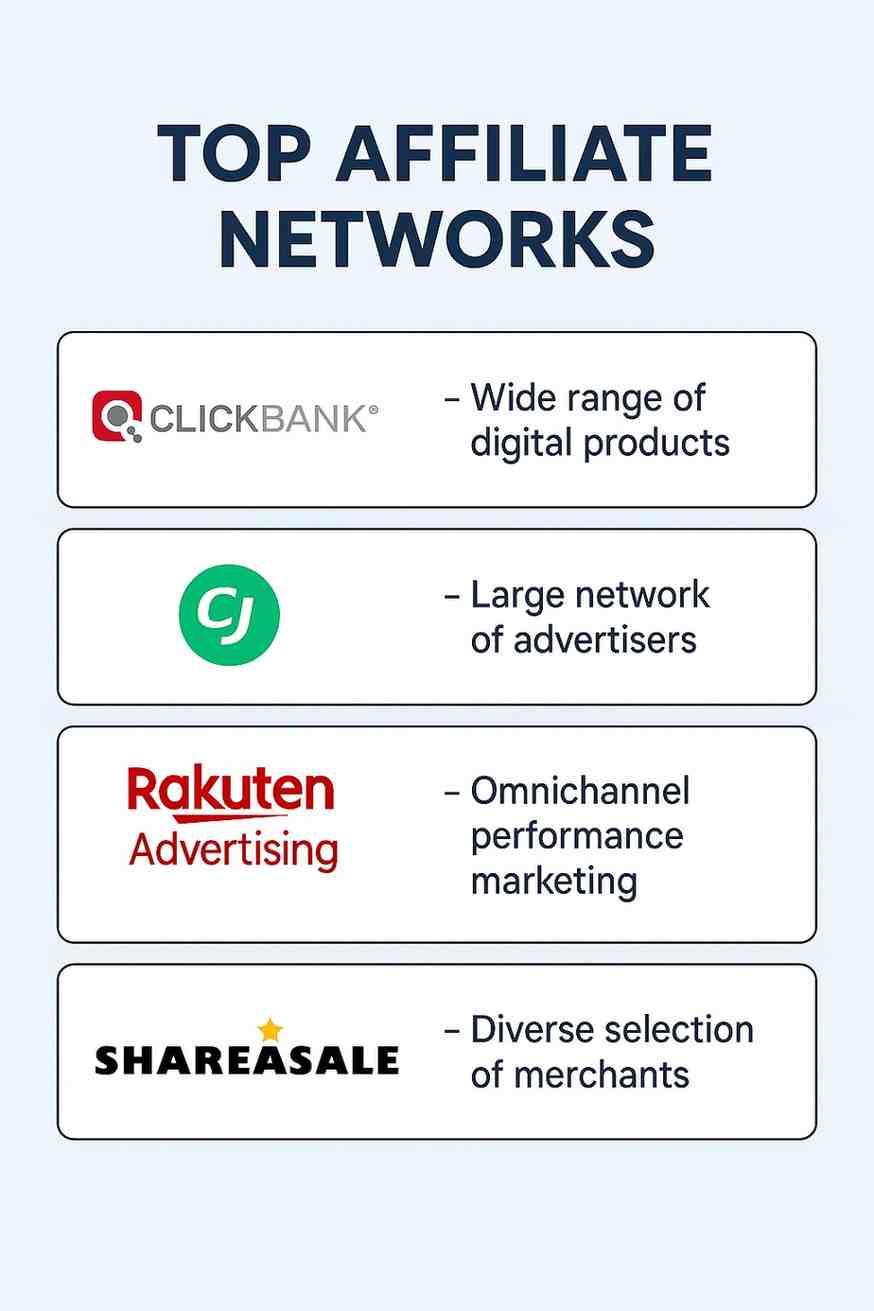
What Are the Top Affiliate Networks and What Do They Offer?

Affiliate marketing is a powerful strategy for both merchants and affiliate marketers, enabling brands to expand their reach and marketers to earn commissions by promoting products or services. Affiliate networks act as intermediaries, connecting merchants with affiliates and streamlining processes like tracking, payments, and campaign management. In 2025, the affiliate marketing landscape is thriving, with networks offering robust tools, diverse merchant portfolios, and competitive commission structures. This essay explores the top affiliate networks for 2025, detailing their features, benefits, and offerings, and provides a practical example of how an affiliate can leverage one of these networks to build a successful campaign.


Understanding Affiliate Networks

Affiliate networks serve as marketplaces where merchants list their affiliate programs, and publishers (affiliates) select programs to promote. They handle critical tasks such as:

  • Tracking: Using cookies or server-side tracking to attribute clicks, leads, or sales to affiliates.
  • Payments: Managing commission payouts, ensuring timely and accurate payments.
  • Merchant Discovery: Providing access to thousands of brands across various niches.
  • Support and Tools: Offering dashboards, analytics, and promotional materials to optimize campaigns.

Choosing the right network depends on factors like niche alignment, commission rates, ease of use, and support quality. Below, we explore the top affiliate networks for 2025, based on their reputation, merchant base, and features, drawing from recent industry insights.


Top Affiliate Networks for 2025

1. ShareASale

Overview: ShareASale, owned by Awin since 2017, is one of the most popular affiliate networks, with over 25,000 merchants across diverse niches like fashion, home goods, and software. It’s known for its user-friendly interface and extensive merchant directory.

What It Offers:

  • Merchant Diversity: Access to major brands like Wayfair and Reebok, as well as niche merchants, covering physical and digital products.
  • Commission Rates: Vary by merchant, typically 5–20%, with some offering up to 50% for digital products.
  • Cookie Duration: Varies, often 30–90 days, depending on the merchant.
  • Payment Terms: Monthly payouts via direct deposit, check, or wire transfer, with a $50 minimum threshold.
  • Tools and Support: Real-time reporting, invalid link detection, and a dedicated support team. Affiliates receive training webinars and promotional materials like banners and product feeds.
  • Ease of Access: Requires a $5 refundable deposit to join, accepting websites and social media accounts.

Best For: Beginners and established affiliates seeking a wide range of merchants and reliable support.

Challenges: High competition due to its large affiliate base (over one million members) requires strategic content to stand out.

2. CJ Affiliate (Formerly Commission Junction)

Overview: Founded in 1998, CJ Affiliate is a leading network with over 3,800 merchants, including major brands like Barnes & Noble and NordVPN. It’s favored for its advanced tracking and enterprise-level capabilities.

What It Offers:

  • Merchant Portfolio: Includes retailers, travel, and SaaS brands, catering to diverse niches.
  • Commission Rates: Vary by merchant, typically 3–20%, with some high-ticket programs offering more.
  • Cookie Duration: Merchant-specific, often 30–60 days.
  • Payment Terms: Payouts on the 20th or 28th of each month via direct deposit or Payoneer, with a $50 minimum.
  • Tools and Support: Advanced tools like API access, omnichannel tracking, and personalized offer creation. Offers a developer portal for technical customization and robust analytics.
  • Reputation: Known for reliability but criticized for complex onboarding and less priority for smaller affiliates.

Best For: Experienced affiliates with steady traffic, particularly in retail, travel, and tech niches.

Challenges: Strict approval processes and a complex interface can be daunting for beginners.

3. Rakuten Advertising

Overview: Rakuten, one of the oldest networks, is known for high-caliber merchants like SephExpressionless, Macy’s, and Nvidia. It offers a professional platform but has a smaller merchant base (~1,000) compared to competitors.

What It Offers:

  • Merchant Quality: Focuses on premium brands, ensuring high conversion rates due to trusted names.
  • Commission Rates: Vary, typically 3–15%, with some high-ticket items offering more.
  • Cookie Duration: Merchant-specific, often 30 days.
  • Payment Terms: Net-60 payouts via bank transfer or PayPal, with a $50 minimum.
  • Tools and Support: Ad rotation features, detailed reporting, and responsive customer support. The interface is dated but functional.
  • Unique Features: Strong focus on brand trust and ad customization.

Best For: Affiliates targeting premium retail and lifestyle brands.

Challenges: Smaller merchant pool and a clunky interface may limit options for some niches.

4. ClickBank

Overview: ClickBank, founded in 1999, specializes in digital products like eBooks and online courses, with over 4,000 vetted items. It’s known for high commission rates but has some lower-quality products.

What It Offers:

  • Merchant Focus: Primarily digital products (e.g., courses, software) but includes physical products in niches like health and fitness.
  • Commission Rates: High, often 10–90%, with some products offering over 50%.
  • Cookie Duration: Typically 30–60 days, merchant-dependent.
  • Payment Terms: Weekly or bi-weekly payouts via check, direct deposit, wire transfer, or Payoneer, with a $10 minimum.
  • Tools and Support: Real-time reporting, a resource center with guides, and upsell opportunities to boost revenue.
  • Accessibility: Open to beginners, with no website required for some programs.

Best For: Affiliates in digital niches like education or health, seeking high commissions.

Challenges: Variable product quality requires careful selection to maintain audience trust.

5. Impact

Overview: Impact is a top-tier network, voted #1 by Blue Book in 2024, known for its advanced technology and 4,300+ merchants, including Adidas and Lenovo.

What It Offers:

  • Merchant Diversity: Covers fitness, retail, finance, gaming, and more, with instant-approval programs for beginners.
  • Commission Rates: Typically 3–20%, with some programs offering higher rates.
  • Cookie Duration: Often 30 days, with some up to 90 days.
  • Payment Terms: Monthly payouts via PayPal or Stripe, with a $5 minimum threshold.
  • Tools and Support: Advanced tracking, influencer tools, and a user-friendly interface with features like instant-approval brand lists.
  • Unique Features: Flexible commissioning (e.g., 20% for listicles, 0% for coupon pages) and fraud prevention tools.

Best For: Affiliates seeking cutting-edge technology and diverse niches.

Challenges: Some merchants require separate applications, which can be time-consuming.

6. PartnerStack

Overview: PartnerStack specializes in B2B SaaS, offering programs for brands like Notion and Monday.com. It’s ideal for affiliates targeting business audiences.

What It Offers:

  • Merchant Focus: Over 200 SaaS programs, focusing on marketing tools, CRMs, and subscriptions.
  • Commission Rates: High, often 20–50% recurring or up to $2,000 per sale.
  • Cookie Duration: Up to 90 days, longer than most networks.
  • Payment Terms: Monthly payouts via PayPal or Stripe, with a $5 minimum.
  • Tools and Support: In-app engagement features (e.g., challenges, messaging), learning materials, and a user-friendly dashboard.
  • Unique Features: Tailored for recurring revenue models, ideal for passive income.

Best For: Affiliates in B2B SaaS niches with business-oriented audiences.

Challenges: Limited to SaaS, excluding affiliates in physical product niches.

7. FlexOffers

Overview: FlexOffers connects affiliates with over 12,000 merchants, including MAC Cosmetics and Nintendo Penalized, and integrates with networks like Rakuten and ClickBank.

What It Offers:

  • Merchant Diversity: Covers 25+ categories, including retail, beauty, and tech, with 500 premium merchants.
  • Commission Rates: Vary by merchant, typically 5–15%.
  • Cookie Duration: Often 30 days, with some up to 90 days.
  • Payment Terms: Net-60 payouts (net-7 for top earners) via PayPal, check, or bank transfer, with a $50 minimum ($100 internationally).
  • Tools and Support: Dedicated affiliate managers, quick payment schedules, and a centralized dashboard for managing links.
  • Unique Features: Offers a 50% commission on referred affiliate earnings.

Best For: Beginners and affiliates seeking a broad merchant base and fast payouts.

Challenges: Basic interface may feel less intuitive for advanced users.

8. Awin

Overview: Awin, a global leader, offers access to over 25,000 merchants, including Etsy and AliExpress, with a strong presence in Europe and the US.

What It Offers:

  • Merchant Portfolio: Covers travel, fashion, tech, finance, and more.
  • Commission Rates: Average 5%, varying by merchant.
  • Cookie Duration: Typically 30–90 days.
  • Payment Terms: Fortnightly payouts (1st and 15th) via bank transfer or ACH, with a $20 minimum.
  • Tools and Support: Opportunity Marketplace for visibility, robust tracking, and fast payment schedules.
  • Unique Features: Accelerated payments, even before merchant payout, and a $5 refundable deposit.

Best For: Affiliates targeting global brands, especially in the UK and Europe.

Challenges: Per-program applications and a $5 deposit may deter some beginners.

9. Amazon Associates

Overview: Amazon Associates, launched in 1996, is the largest affiliate network, offering access to millions of products across all categories.

What It Offers:

  • Merchant Focus: Vast catalog of physical and digital products, from electronics to books.
  • Commission Rates: 1–10%, varying by category (e.g., 4% for electronics, 10% for Amazon fashion).
  • Cookie Duration: 24 hours, with a 90-day extension for cart additions.
  • Payment Terms: Net-60 payouts via direct deposit, gift cards, or checks ($10 minimum, $15 fee for checks).
  • Tools and Support: Easy-to-use link creation, detailed performance metrics, and a trusted brand for high conversions.
  • Unique Features: Commissions on any product purchased within 24 hours, not just promoted items.

Best For: Beginners and affiliates with broad audiences due to Amazon’s extensive catalog.

Challenges: Low commission rates and short cookie duration limit earnings for high-ticket niches.

10. MaxBounty

Overview: MaxBounty, a Canadian network, focuses on CPA (cost-per-action) offers, paying for actions like form submissions or software installs rather than sales.

What It Offers:

  • Merchant Focus: Nutra, beauty, gaming, and e-commerce offers, with a focus on Asia, Africa, LATAM, and Europe.
  • Commission Rates: Vary, often $1–$50 per action, with some up to $500 CPA.
  • Cookie Duration: Varies, typically 30 days.
  • Payment Terms: Weekly or bi-weekly via PayPal, wire transfer, or check.
  • Tools and Support: In-house tracking and anti-fraud systems, custom landing pages, 24/7 support, and SMS notifications for earnings.
  • Unique Features: Focus on low-competition GEOs and high CPA rates.

Best For: Affiliates comfortable with CPA models and targeting less competitive markets.

Challenges: Performance-based earnings can be unpredictable, and training may be complex for beginners.


Example: Leveraging ShareASale for a Fitness Niche Campaign

Scenario: Sarah, a fitness blogger, wants to monetize her blog, “FitLifeJourney,” by promoting home gym equipment. She aims to earn $500/month within six months.

Step-by-Step Approach:

  1. Join ShareASale (Week 1):
    • Sarah signs up for ShareASale, paying the $5 deposit, and gets approved using her blog’s URL. She selects merchants like Rogue Fitness (5–10% commissions) and Bowflex (7% commissions).
  2. Research Merchants (Week 2):
    • Using ShareASale’s merchant search, Sarah identifies high-demand products like resistance bands and treadmills. She notes Rogue Fitness’s 60-day cookie duration and Bowflex’s promotional banners.
  3. Create Content (Weeks 3–8):
    • Sarah writes blog posts like “Top 5 Home Gym Essentials for 2025” and “Bowflex Treadmill Review,” embedding ShareASale affiliate links. She optimizes for keywords like “best home treadmill 2025” using a tool like Ahrefs.
    • She creates a YouTube video demonstrating Rogue Fitness resistance bands, including links in the description.
  4. Drive Traffic (Weeks 9–16):
    • Sarah shares posts on Pinterest, driving 1,500 monthly visitors. She posts workout tips on X, gaining 200 link clicks/month.
    • She builds an email list with a free “10-Minute Home Workout Guide,” collecting 300 subscribers and sending bi-weekly newsletters with links.
  5. Track and Optimize (Weeks 17–24):
    • ShareASale’s dashboard shows 15 Rogue Fitness sales ($1,500 total, $120 commission at 8%) and 10 Bowflex treadmill sales ($5,000 total, $350 commission at 7%), totaling $470/month.
    • Sarah notices the treadmill post performs best, so she writes “Best Treadmills for Small Spaces” and adds a comparison video, boosting conversions.
    • She uses ShareASale’s invalid link tool to fix broken links, ensuring accurate tracking.
  6. Scale (Months 6–12):
    • By month six, Sarah earns $520/month from 30 total sales, exceeding her goal. She joins additional ShareASale merchants like Fitbit (7% commission) and creates content for wearable tech.
    • She expands to Instagram, posting workout reels with affiliate links, increasing traffic by 20%.

Analysis: Sarah’s success stems from leveraging ShareASale’s diverse merchant base, user-friendly tools, and reliable tracking. Her multi-channel approach (blog, YouTube, Pinterest, email) maximizes traffic, while optimization based on ShareASale’s analytics drives higher conversions. The network’s support and resources help her scale efficiently.


Benefits of Affiliate Networks

  • Access to Multiple Programs: Connect with thousands of merchants without managing individual partnerships.
  • Streamlined Payments: Networks handle payouts, ensuring timely and accurate commissions.
  • Advanced Tools: Provide tracking, analytics, and promotional materials to optimize campaigns.
  • Scalability: Allow affiliates to diversify across niches and merchants for stable income.

Challenges of Affiliate Networks

  • Fees and Deposits: Some networks charge signup fees (e.g., Awin’s $5 deposit) or take a percentage of commissions.
  • Competition: Large affiliate bases increase competition, requiring unique content strategies.
  • Approval Processes: Strict merchant approvals (e.g., CJ Affiliate) can delay campaigns.
  • Variable Terms: Differing commission rates, cookie durations, and payout schedules require careful program selection.

Conclusion

The top affiliate networks for 2025—ShareASale, CJ Affiliate, Rakuten Advertising, ClickBank, Impact, PartnerStack, FlexOffers, Awin, Amazon Associates, and MaxBounty—offer diverse merchants, competitive commissions, and robust tools to support affiliates. Each network caters to different needs, from ShareASale’s beginner-friendly interface to PartnerStack’s high-paying SaaS programs. Sarah’s example illustrates how ShareASale’s resources and merchant variety can drive success in a fitness niche through targeted content and multi-channel promotion. By selecting a network aligned with their niche, audience, and skill level, affiliates can leverage advanced tracking, reliable payments, and extensive support to build sustainable income streams in the dynamic affiliate marketing landscape of 2025.

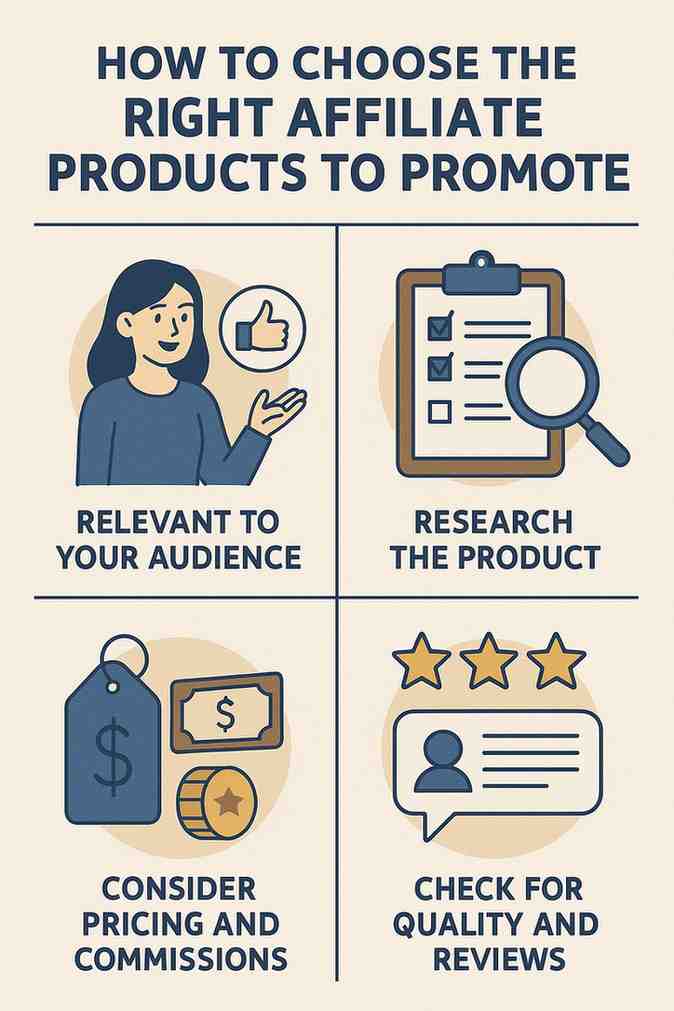
How Do You Choose the Right Affiliate Products to Promote?

Affiliate marketing has emerged as one of the most accessible and profitable online income opportunities in the digital era. However, your success as an affiliate doesn’t just depend on how well you market products—it starts with choosing the right affiliate products to promote. This decision can make or break your affiliate business, especially if you’re a beginner or trying to scale your affiliate income.

In this comprehensive guide, we will explore how to choose the best affiliate products step-by-step, what factors to consider, common mistakes to avoid, and how to align your choices with your audience’s needs. We’ll also provide a detailed, real-world example to demonstrate how it works in practice.


Why Choosing the Right Product Matters

Affiliate marketing is performance-based. That means you only earn when someone takes action—usually a purchase—through your unique affiliate link. If the product you’re promoting is irrelevant, overpriced, low-quality, or lacks trust, even the best marketing efforts won’t help.

Key reasons why the right product matters:

  • Builds trust with your audience

  • Improves conversion rates

  • Generates long-term passive income

  • Enhances your personal brand or content authority

  • Reduces refund and complaint rates

In contrast, promoting bad or irrelevant products can ruin your credibility and even get you banned from affiliate programs.


Step-by-Step Guide to Choosing the Right Affiliate Products


Step 1: Understand Your Niche and Audience

You must first understand your niche and the specific needs of your target audience. Without knowing who you’re speaking to, you can’t recommend the right solutions.

🔍 Ask Yourself:

  • What is my niche (e.g., fitness, beauty, tech, travel)?

  • Who is my audience (age, gender, location, profession)?

  • What problems or desires do they have?

  • What kind of products do they already buy?

🎯 Example:

If your blog focuses on home workouts for busy moms, don’t promote bodybuilding supplements or advanced gym gear. Instead, promote yoga mats, quick workout apps, or home-friendly fitness gear.


Step 2: Ensure Product Relevance and Usefulness

Relevance is key. The product should solve a real problem or satisfy a real need for your audience.

✅ A good affiliate product:

  • Aligns with your niche

  • Offers clear value or benefits

  • Matches your audience’s goals or pain points

Irrelevant promotions feel forced, reduce conversions, and may hurt trust.

❌ Poor Example:

A tech blogger promoting kitchen cookware just because the commission is high.

✅ Better Example:

A tech blogger promoting noise-cancelling headphones or a VPN service.


Step 3: Evaluate Product Quality

Don’t just chase commissions. Promote products you’ve used, tested, or researched deeply. Always prioritize quality over profit.

🔍 What to Check:

  • Ratings and reviews on platforms like Amazon, Google, or Trustpilot

  • Return and refund policies

  • Support and warranty services

  • Overall brand reputation

You can even buy or request a trial version of a product before promoting it.

🎯 Example:

You test three fitness apps for beginners and only promote the one with the best UX, workout library, and pricing.


Step 4: Analyze the Commission Structure

The right affiliate product must balance value for your audience and earning potential for you. Commissions vary widely based on product type and network.

🔢 Types of Commissions:

  • CPS (Cost Per Sale): % of sale amount (e.g., 10%-50%)

  • CPA (Cost Per Action): Fixed payout for actions (signups, trials)

  • Recurring Commissions: Monthly commissions on subscription renewals (common in SaaS)

📈 Choose Based on:

  • Product price (higher-priced items yield higher commission but may sell less)

  • Commission rate

  • Cookie duration (how long after the click you still get credit for the sale)

  • Payout threshold and schedule

✅ Ideal Scenario:

Promote a ₹2,000 product with 30% commission = ₹600 per sale.
If it’s a SaaS product offering 30% recurring, that income compounds over time.


Step 5: Join Trustworthy Affiliate Programs or Networks

Always choose affiliate programs with strong reputations. You need a platform that offers transparency, proper tracking, timely payouts, and robust support.

🔒 Reliable Networks:

  • Amazon Associates – Great for physical products, but low commission.

  • ShareASale, CJ Affiliate, Impact – Offer products across categories.

  • ClickBank – Great for digital info products and courses.

  • PartnerStack – Ideal for SaaS and software tools.

⚠️ Watch Out For:

  • Delayed or missing commissions

  • Unclear or changing terms

  • Fake products or programs

  • No support or customer service


Step 6: Check the Product’s Conversion Potential

Even if a product is relevant and high quality, it needs to convert — otherwise, you won’t earn.

📌 Indicators of High Conversion Potential:

  • Well-designed landing page

  • Strong call-to-action

  • Money-back guarantee

  • Positive testimonials

  • Mobile optimization

  • Easy checkout process

You can also look for EPC (Earnings Per Click) or conversion rates in some affiliate networks to gauge effectiveness.


Step 7: Consider the Brand’s Reputation

Your reputation is tied to the product you recommend. If your audience has a bad experience, they’ll likely blame you — not the seller.

⭐️ Evaluate:

  • Social media presence

  • Reviews and feedback

  • Customer support responsiveness

  • Market standing (is it well-known?)

Promoting a reputable brand also improves trust, which directly impacts your conversions.


Step 8: Test and Compare Products

Before committing to promoting one product long-term, test a few. Compare how each performs in terms of clicks, engagement, and sales.

🧪 A/B Testing Options:

  • Promote two similar products in two different blog posts

  • Compare in a “Product A vs Product B” article

  • Use tracking links to monitor performance

Choose the one that gives the best combination of conversions and feedback.


Step 9: Check Legal and Ethical Guidelines

As an affiliate, you must follow:

  • Disclosure rules (FTC guidelines: disclose affiliate links)

  • Data protection laws (GDPR, CCPA, etc.)

  • No spam policies (don’t mass-send affiliate links without permission)

Also, avoid promoting:

  • Fake reviews or testimonials

  • Scammy or misleading products

  • Health products with unverified claims

Being ethical earns long-term trust and prevents bans from affiliate platforms.


✅ Real-Life Example: Riya, the Wellness Blogger

Background:
Riya runs a blog called WellnessWithRiya, where she writes about mindfulness, home workouts, and natural remedies.

1. Niche & Audience:

  • Niche: Holistic wellness and fitness for women

  • Audience: Women aged 25–45, mostly working professionals

2. Research:

  • Through surveys and analytics, Riya learns her readers are interested in stress management and fitness at home.

3. Affiliate Product Options:

  • Online yoga classes (ClickBank)

  • Meditation apps (PartnerStack)

  • Natural supplements (Amazon)

  • Resistance bands (Amazon Associates)

4. Final Choice:

  • Calm App: A meditation and mindfulness app with a strong reputation, recurring commission, and high customer retention.

  • Commission: 40% per sale + 30% monthly recurring.

5. Promotion Strategy:

  • Writes a blog: “5 Ways Meditation Changed My Life”

  • Includes affiliate link with disclosure

  • Shares snippets on Instagram and Pinterest

  • Sends a short email sequence recommending Calm with a coupon

6. Results (After 3 Months):

  • 2,000 readers/month on her blog post

  • 75 users signed up via her link

  • 50 retained after first month = consistent recurring income


Common Mistakes to Avoid

  • Promoting products just for high commissions without audience fit

  • Skipping product research or reviews

  • Not disclosing affiliate relationships (can be illegal)

  • Linking to low-quality or spammy products

  • Ignoring feedback from your readers/subscribers


Conclusion

Choosing the right affiliate products is one of the most important steps in affiliate marketing. It requires more than just signing up and dropping links—it’s a strategic process that involves understanding your audience, researching product quality, evaluating commissions, and staying ethical.

Start small, test what works, and focus on creating genuine value for your readers. The right product can turn a blog post or video into a consistent stream of passive income. But the wrong product can harm your reputation.

By following the steps above and learning from real examples, beginners and intermediate affiliate marketers alike can build a sustainable and trustworthy affiliate business—based on smart product choices, transparency, and meaningful content.

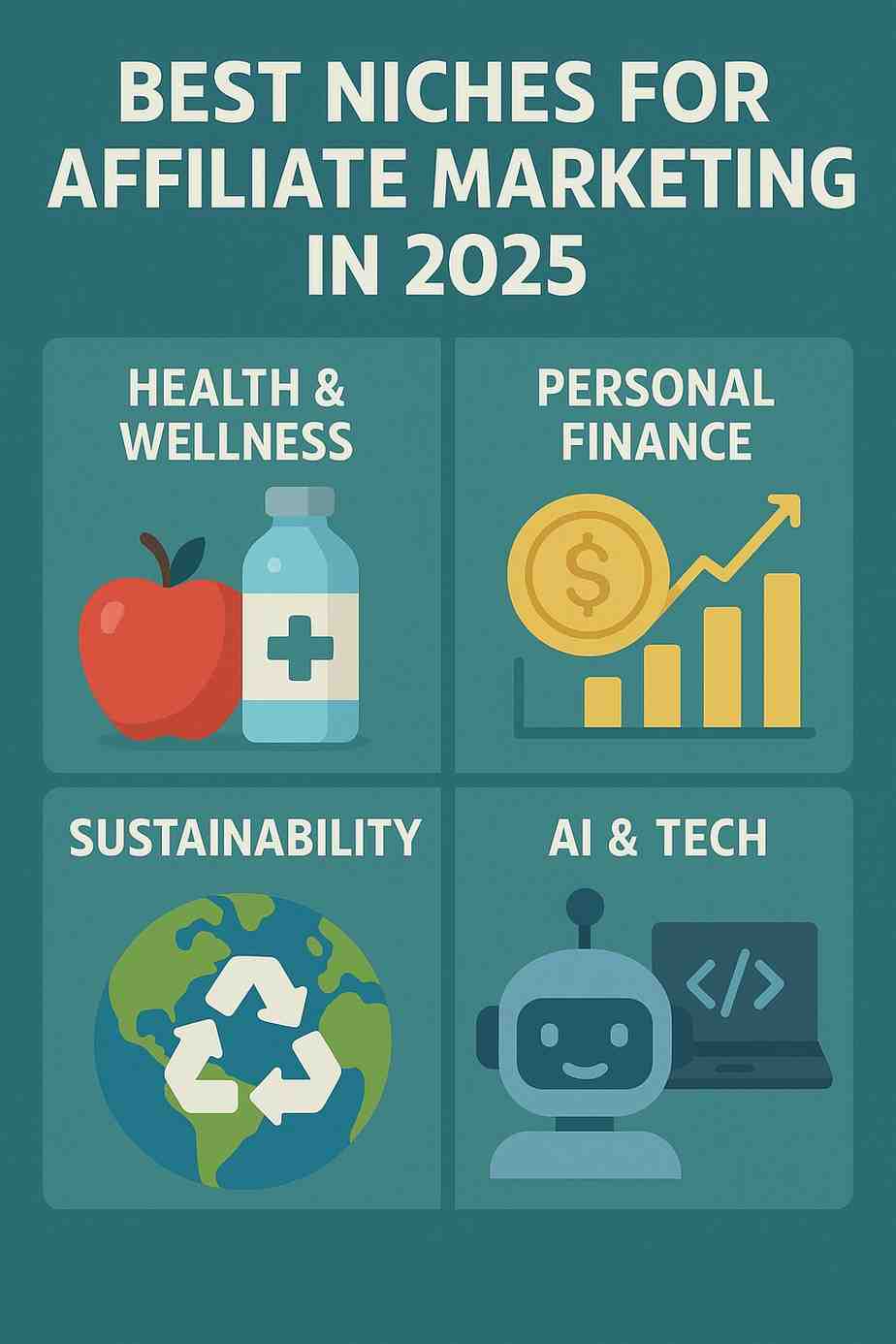
What Are the Best Niches for Affiliate Marketing in 2025?

What Are the Best Niches for Affiliate Marketing in 2025?

Affiliate marketing continues to be a lucrative opportunity for individuals and businesses looking to monetize their online presence by promoting products or services in exchange for commissions. Choosing the right niche is critical for success, as it determines the audience you’ll target, the products you’ll promote, and your potential earnings. In 2025, the best niches for affiliate marketing are those that combine high consumer demand, profitable commission structures, and alignment with emerging trends. This essay explores the top affiliate marketing niches for 2025, detailing their profitability, audience appeal, and strategies for success, supported by recent industry insights. It also provides a practical example of how to approach one of these niches as a beginner.


Why Choosing the Right Niche Matters

A niche is a specific segment of a market that allows affiliates to focus their content and promotions on a targeted audience. Selecting a profitable niche ensures access to engaged consumers, viable affiliate programs, and sustainable revenue streams. Key factors for choosing a niche include:

  • Market Demand: High search volume and consumer interest, as indicated by tools like Google Trends or keyword planners.
  • Commission Potential: Access to programs with competitive payouts, such as high-ticket items or recurring commissions.
  • Competition Level: Moderate competition allows beginners to rank content and gain traction.
  • Evergreen vs. Trending: Evergreen niches (e.g., health, finance) offer consistent demand, while trending niches (e.g., AI tools) capitalize on emerging markets.
  • Personal Interest: Passion or expertise in the niche enhances content authenticity and long-term commitment.

In 2025, certain niches stand out due to market growth, technological advancements, and shifting consumer behaviors. Below are the top niches, their characteristics, and strategies for success, based on recent industry data and trends.


Top Affiliate Marketing Niches for 2025

1. Software and SaaS (Software as a Service)

Why It’s Profitable: The Software and SaaS niche is booming due to the increasing reliance on digital tools for business and personal use. The global SaaS market is projected to grow significantly, with businesses and individuals seeking solutions for project management, marketing, and productivity. SaaS affiliate programs often offer recurring commissions, providing passive income as long as referred customers remain subscribed. For example, programs like GetResponse offer 40–60% recurring commissions for the first 12 months, while Coupler.io provides 25% recurring commissions for analytics tools.

Sub-Niches:

  • CRM systems (e.g., HubSpot, Salesforce)
  • Email marketing tools (e.g., Mailchimp, ConvertKit)
  • Web hosting (e.g., Bluehost, SiteGround)
  • VPN and cybersecurity software

Strategies:

  • Create in-depth tutorials or comparison guides (e.g., “HubSpot vs. Salesforce: Which CRM Is Best for Small Businesses?”).
  • Target entrepreneurs and marketers through blog posts or YouTube videos.
  • Leverage SEO for keywords like “best project management software 2025.”

Challenges: High competition requires strong content and SEO skills to stand out.

2. Personal Finance and Investment

Why It’s Profitable: Personal finance remains an evergreen niche due to universal interest in money management, especially among younger generations facing inflation and financial uncertainty. The personal finance software market is expected to grow from $8.91 billion in 2025 to $14.81 billion by 2034. High-ticket programs like American Express (up to $200 per approved credit card application) and SoFi (up to $1,000 per investment product referral) offer substantial payouts.

Sub-Niches:

  • Budgeting apps (e.g., YNAB, Mint)
  • Investment platforms (e.g., Robinhood, Webull)
  • Cryptocurrency and money transfer services (e.g., Wise)

Strategies:

  • Write detailed reviews or guides (e.g., “How to Start Investing with Robinhood in 2025”).
  • Create content around seasonal trends, like tax season or New Year financial planning.
  • Demonstrate expertise to meet Google’s E-A-T (Expertise, Authoritativeness, Trustworthiness) standards for YMYL (Your Money, Your Life) content.

Challenges: YMYL content faces strict Google scrutiny, requiring credible, transparent content.

3. Health and Wellness

Why It’s Profitable: The global health and wellness market is projected to exceed $6 trillion by 2025, driven by increased focus on physical and mental well-being post-COVID. Consumers are willing to invest in premium products like supplements, fitness gear, and wearable technology, with sub-niches like mental health and telehealth gaining traction. Average monthly revenue in this niche is around $2,054.75, per Diggity Marketing.

Sub-Niches:

  • Fitness equipment and apps
  • Nutrition and supplements
  • Mental health resources
  • Alternative medicine

Strategies:

  • Produce video content, such as workout routines or supplement reviews, for platforms like YouTube or TikTok.
  • Partner with brands offering high commissions, like wearable fitness tech providers.
  • Share personal stories to build trust and engagement.

Challenges: Intense competition requires differentiation through unique content or micro-niches (e.g., vegan fitness).

4. eLearning and Online Education

Why It’s Profitable: The eLearning market is forecasted to reach $53.13 billion by 2027, fueled by demand for upskilling and remote learning. Programs like Rocket Languages offer high payouts ($80–$120 per sale), and the niche appeals to a broad audience, from students to professionals.

Sub-Niches:

  • Language learning platforms
  • Career development courses
  • Self-improvement and life coaching
  • Coding bootcamps

Strategies:

  • Create content tied to personal growth stories (e.g., “How I Learned Spanish in 3 Months with Rocket Languages”).
  • Promote courses via blog posts, webinars, or social media.
  • Target professionals via LinkedIn or X with career-focused content.

Challenges: Requires understanding the audience’s learning goals to recommend relevant courses.

5. Travel and Tourism

Why It’s Profitable: The travel industry, representing 9.1% of global GDP ($9.9 trillion), is rebounding strongly in 2025, with millennials and Gen Z prioritizing experiential travel. High-ticket items like cruises (projected $44.39 billion by 2025) and booking platforms (e.g., Booking.com, Airbnb) offer attractive commissions.

Sub-Niches:

  • Budget travel gear
  • Travel insurance
  • Guided tours and cruises
  • Accommodation booking

Strategies:

  • Create visually appealing content on Instagram or Pinterest (e.g., “Top 10 Budget Travel Destinations for 2025”).
  • Share packing guides or travel tips with embedded affiliate links.
  • Focus on experiential travel trends, like cultural immersion or eco-tourism.

Challenges: Seasonal fluctuations require timely content updates.

6. Beauty and Personal Care

Why It’s Profitable: The global beauty market is expected to reach $716 billion by 2025, with skincare and cosmetics driving growth. Programs like Yves Rocher (15% commission) and Olive Young (13% for K-Beauty) offer high payouts, and the “lipstick effect” ensures demand during economic downturns.

Sub-Niches:

  • Skincare and cosmetics
  • Sustainable beauty products
  • Men’s grooming
  • Haircare

Strategies:

  • Leverage Instagram or TikTok for tutorials and product demos.
  • Write in-depth reviews or comparison posts (e.g., “Best Organic Skincare Brands for 2025”).
  • Target digitally savvy audiences aged 18–45 with influencer collaborations.

Challenges: High competition requires unique angles, like focusing on sustainable or niche brands.

7. Home and Lifestyle

Why It’s Profitable: The home decor market is projected to reach $556.20 billion by 2028, driven by increased interest in home improvement. Affiliates can promote furniture, smart home devices, and decor, with opportunities for repeat purchases.

Sub-Niches:

  • Home decor and furniture
  • Smart home technology
  • Gardening and outdoor living
  • Sustainable home products

Strategies:

  • Create content like “How to Style Your Living Room on a Budget” with affiliate links to decor items.
  • Use Pinterest for visual inspiration boards.
  • Promote seasonal trends, like holiday decor.

Challenges: Broad niche requires focusing on specific sub-niches to avoid dilution.

8. Pet Care

Why It’s Profitable: The pet market is expected to grow to $350.3 billion by 2027, with millennials treating pets as family members. Tech-savvy products like smart feeders and pet cameras are trending, offering high commissions.

Sub-Niches:

  • Pet tech (e.g., smart feeders, GPS trackers)
  • Pet nutrition and supplements
  • Pet grooming products
  • Breed-specific accessories

Strategies:

  • Share personal pet care stories to connect with audiences.
  • Create video reviews of pet tech on YouTube.
  • Target pet owners via niche blogs or Instagram.

Challenges: Competitive niche requires specialization (e.g., focusing on dog training tools).

9. Gaming and Esports

Why It’s Profitable: The gaming industry, valued at $203.12 billion, is projected to reach $546 billion by 2028. High-ticket items like gaming PCs (e.g., Alienware, up to 6% commission on $3,000–$9,000 products) yield significant earnings.

Sub-Niches:

  • Gaming hardware (e.g., Razer, Alienware)
  • Gaming subscriptions and apps
  • Esports betting
  • AR/VR gaming

Strategies:

  • Produce unboxing videos or game reviews on YouTube.
  • Target younger audiences on Twitch or TikTok.
  • Promote accessories like gaming chairs alongside hardware.

Challenges: Rapid product cycles require staying updated on trends.

10. Sustainable Living

Why It’s Profitable: Growing environmental awareness drives demand for eco-friendly products, with sustainable living gaining traction in 2025. Niches like eco-friendly home goods or renewable energy solutions offer moderate competition and engaged audiences.

Sub-Niches:

  • Eco-friendly products (e.g., reusable straws, solar chargers)
  • Sustainable fashion
  • Zero-waste lifestyle
  • Green tech

Strategies:

  • Create content around sustainable lifestyle tips (e.g., “10 Ways to Reduce Your Carbon Footprint”).
  • Use Instagram or Pinterest for visually appealing eco-product promotions.
  • Partner with brands like Printify for sustainable print-on-demand products.

Challenges: Lower commission rates may require higher sales volumes.


How to Choose the Best Niche for You

To select a niche for 2025, consider:

  • Passion and Expertise: Choose a niche you enjoy or know well to create authentic content.
  • Market Research: Use tools like Google Trends, Ahrefs, or Domain Hunter Gatherer to validate demand and competition.
  • Affiliate Program Availability: Ensure multiple programs exist (e.g., Amazon Associates for broad niches, niche-specific programs for higher commissions).
  • Audience Engagement: Focus on niches with passionate audiences, like hobbyists or pet owners, for higher conversions.
  • Platform Fit: Match the niche to your platform (e.g., visual niches like beauty for Instagram, tech for YouTube).

Recent X posts highlight trending niches like skincare, finance, and pets, reflecting current sentiment among marketers.


Example: Starting in the Health and Wellness Niche

Scenario: Alex, a fitness enthusiast, wants to start affiliate marketing in the health and wellness niche, aiming to earn $300/month within six months.

Step-by-Step Approach:

  1. Niche Selection (Week 1):
    • Alex chooses the “fitness equipment” sub-niche, focusing on home gym tools like resistance bands and yoga mats, due to high demand and personal interest.
  2. Research and Programs (Weeks 2–3):
    • Alex joins Amazon Associates (4–8% commissions on fitness gear) and a niche program like Rogue Fitness (5–10% commissions). He uses Google Trends to confirm rising searches for “home workout equipment.”
  3. Build a Platform (Weeks 4–5):
    • Alex starts a blog, “FitHomeHub,” using WordPress ($50/year for hosting via Bluehost). He adds an affiliate disclosure and pages for reviews and guides.
    • He creates an Instagram account to share workout tips and product photos.
  4. Create Content (Weeks 6–12):
    • Alex writes posts like “Top 10 Resistance Bands for Home Workouts” and “Best Yoga Mats for Beginners,” embedding affiliate links.
    • He posts a YouTube video reviewing a Rogue Fitness kettlebell, linking to Amazon and Rogue in the description.
    • Content is optimized for keywords like “best home gym equipment 2025.”
  5. Drive Traffic (Weeks 13–20):
    • Alex shares blog posts on Pinterest, creating pins that drive 1,000 monthly visitors.
    • On Instagram, he posts daily workout tips, gaining 500 followers and 100 link clicks/month.
    • He builds an email list with a free “7-Day Home Workout Plan,” collecting 200 subscribers and sending weekly newsletters with links.
  6. Track and Optimize (Weeks 21–24):
    • Alex’s Amazon dashboard shows 20 resistance band sales ($500 total, $25 commission at 5%) and 10 Rogue kettlebell sales ($1,000 total, $80 commission at 8%), totaling $105/month.
    • He notices the kettlebell video performs best, so he creates more video reviews and joins Fitbit’s affiliate program for wearable tech.
    • Alex optimizes posts for SEO, improving rankings and increasing traffic to 2,000 visitors/month.
  7. Scale (Months 6–12):
    • By month six, Alex earns $320/month from 40 total sales, exceeding his goal. He expands to TikTok, posting short workout demos, and joins a supplement affiliate program to diversify.

Analysis: Alex’s success comes from choosing a high-demand sub-niche, leveraging multiple platforms (blog, YouTube, Instagram, Pinterest), and optimizing content based on performance. His focus on evergreen fitness products ensures consistent earnings, while adding trending products like wearables boosts growth.


Challenges in Choosing a Niche

  • High Competition: Popular niches like health and finance require strong SEO and content strategies.
  • Low Commissions in Broad Programs: Amazon Associates offers lower rates, necessitating high sales volumes.
  • Market Saturation: Overcrowded niches demand unique angles or micro-niches (e.g., “vegan fitness” vs. general fitness).
  • Keeping Up with Trends: Rapidly evolving niches like tech or gaming require staying updated on new products.

Best Practices for 2025

  • Focus on Micro-Niches: Target specific segments (e.g., “sustainable pet products” instead of “pet care”) to reduce competition.
  • Leverage Multiple Platforms: Combine blogs, YouTube, Instagram, and email for broader reach.
  • Build Trust: Use personal stories, expertise, and transparent disclosures to meet E-A-T standards and engage audiences.
  • Monitor Trends: Use Google Trends and X posts to stay ahead of emerging niches like AI or sustainable living.
  • Diversify Programs: Join multiple affiliate programs to spread risk and maximize earnings.

Conclusion

The best affiliate marketing niches for 2025—Software and SaaS, Personal Finance, Health and Wellness, eLearning, Travel, Beauty, Home and Lifestyle, Pet Care, Gaming, and Sustainable Living—offer a mix of evergreen stability and trending opportunities. Each niche has unique advantages, from recurring commissions in SaaS to high-ticket payouts in travel and gaming. Success requires aligning your niche with your interests, researching market demand, and creating valuable, targeted content. Alex’s example in the health and wellness niche demonstrates how beginners can leverage multiple channels and optimize strategies to achieve sustainable earnings. By focusing on high-demand niches, staying adaptable to trends, and building trust with audiences, affiliate marketers can thrive in the dynamic digital landscape of 2025.

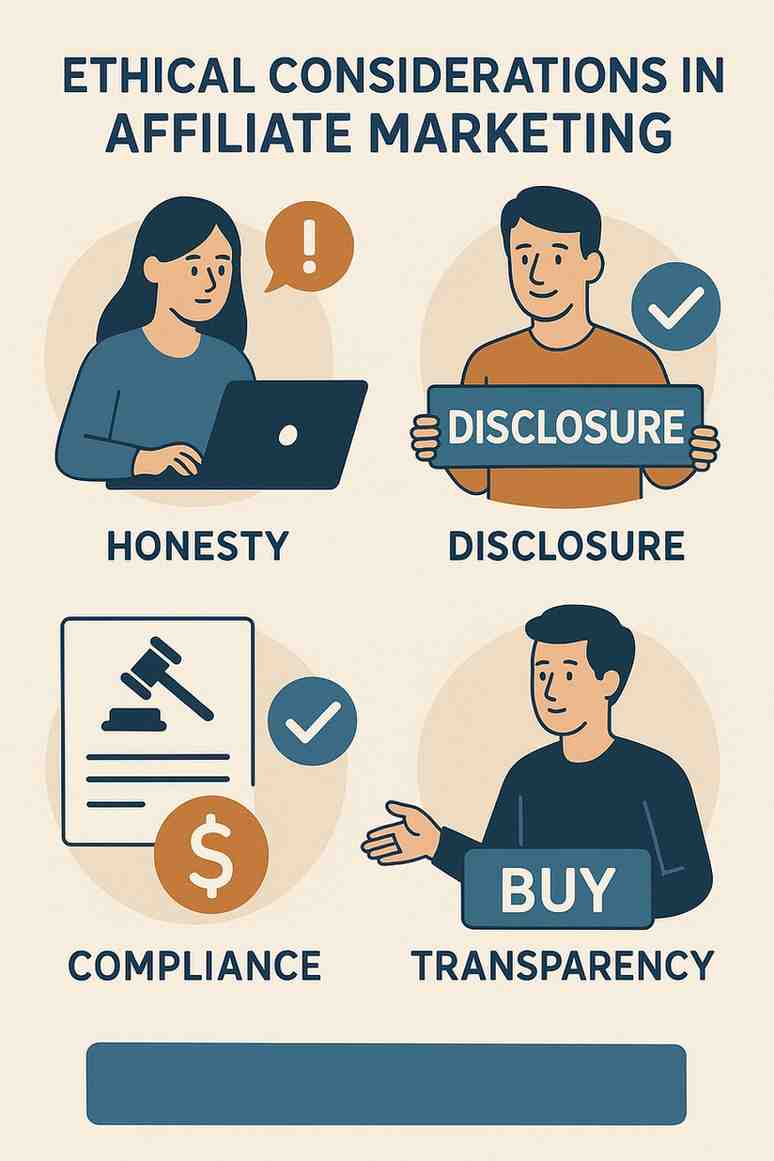
Discuss the ethical considerations in affiliate marketing.

Ethical Considerations in Affiliate Marketing

Affiliate marketing is one of the most powerful and widely used strategies in the digital marketing world. It enables businesses to expand their reach through third-party partners (affiliates) who promote products or services in exchange for commissions. While the model is cost-effective and performance-based, it also opens the door to numerous ethical challenges. If not properly addressed, these issues can damage consumer trust, brand reputation, and the credibility of the affiliate marketing industry as a whole.

In this detailed discussion, we will explore the key ethical considerations in affiliate marketing, why they matter, how unethical practices can harm stakeholders, and how marketers can build ethical, trustworthy programs. We will also include real-world examples to illustrate both positive and negative ethical practices.


1. What Is Ethics in Affiliate Marketing?

In the context of affiliate marketing, ethics refers to the principles and standards that guide affiliates and merchants in conducting honest, fair, and transparent promotional activities. This includes how products are advertised, how commissions are disclosed, how data is handled, and how consumers are treated.

Ethical affiliate marketing ensures that:

  • Consumers are not misled

  • Affiliates disclose relationships

  • Honest reviews are shared

  • User privacy is respected

  • All parties act with integrity


2. Why Are Ethics Important in Affiliate Marketing?

Affiliate marketing is built on trust — trust between the consumer and the affiliate, between the affiliate and the merchant, and between the consumer and the brand. If any of these trust bonds are broken due to unethical behavior, the entire marketing ecosystem suffers.

Consequences of Unethical Affiliate Marketing:

  • Loss of customer trust

  • Damage to brand reputation

  • Affiliate bans from programs or networks

  • Legal actions and regulatory fines

  • Decrease in conversion and engagement rates

Therefore, ethical practices are not just about “doing the right thing”; they are also essential for long-term sustainability and business success.


3. Major Ethical Considerations in Affiliate Marketing

a. Full Disclosure and Transparency

One of the most fundamental ethical principles in affiliate marketing is disclosing affiliate relationships. When an affiliate promotes a product and earns a commission on purchases, they are ethically (and legally) required to inform their audience.

Why It Matters:

Consumers deserve to know when a recommendation might be influenced by compensation. Transparency builds trust.

What Ethical Disclosure Looks Like:

  • “This post contains affiliate links. If you purchase through them, I may earn a commission at no extra cost to you.”

  • Including a visible disclosure at the beginning of blogs, videos, or emails.

Regulatory Guidelines:

The Federal Trade Commission (FTC) in the U.S. mandates clear and conspicuous disclosure of affiliate relationships. Violations can lead to fines and penalties.

Ethical Example:

A tech YouTuber promoting a laptop includes this statement in their video and description:
“This video contains affiliate links. I may earn a small commission if you buy through them, which helps support my channel.”


b. Honest and Accurate Product Representation

Affiliates should provide genuine and accurate information about the products they promote. Making false claims or exaggerating product benefits to drive sales is unethical.

Unethical Examples:

  • Claiming a weight-loss supplement is “clinically proven” when it’s not

  • Promoting a software as “free forever” when it’s only free for 7 days

Ethical Practice:

  • Using the product before reviewing it

  • Highlighting both pros and cons

  • Avoiding hype and deception

Example:

An affiliate marketer who reviews a course writes:
“This course has great content for beginners, but if you’re an advanced learner, it might be too basic.”


c. Spamming and Deceptive Practices

Using spammy tactics like mass unsolicited emails, fake landing pages, or clickbait headlines is not only unethical but also illegal in many jurisdictions.

Common Unethical Tactics:

  • Sending affiliate links to random people via WhatsApp or email without consent

  • Redirecting users to unrelated pages just to earn a click

  • Faking scarcity (“Only 1 item left!”) when it’s not true

Ethical Approach:

  • Using permission-based marketing (opt-in emails, respectful popups)

  • Creating value-driven content that naturally includes affiliate links

  • Maintaining transparency about promotions


d. Cookie Stuffing

Cookie stuffing is a black-hat technique where affiliates secretly drop tracking cookies on users’ browsers without their knowledge or consent. This makes it appear as if the affiliate referred the user when they didn’t, stealing commission unfairly.

Example of Unethical Cookie Stuffing:

An affiliate embeds invisible code on their website that sets cookies for multiple products even when the user didn’t click any links.

Ethical Solution:

Ensure cookies are only set when a user intentionally clicks on a clearly labeled affiliate link.

❌ Legal Risk:

Many affiliate programs and networks have strict policies against cookie stuffing. Violators are banned and may face legal consequences.


e. Respect for User Privacy

Affiliates and merchants must respect data privacy laws like GDPR (EU) and CCPA (California). This includes getting consent before collecting user data and being transparent about how it’s used.

Unethical Behaviors Include:

  • Collecting emails without user permission

  • Using affiliate pixels to track users without consent

Ethical Standards:

  • Display clear cookie consent banners

  • Provide privacy policies

  • Avoid unnecessary data collection


f. Fair Attribution and Commission Sharing

Sometimes, dishonest affiliates use unethical methods to steal credit from other affiliates. This is known as affiliate hijacking or commission theft.

Example:

Affiliate A refers a customer to a product, but Affiliate B uses a coupon code popup or last-minute redirect to overwrite the tracking cookie.

Ethical Practices:

  • Allowing fair commission attribution

  • Avoiding aggressive last-click strategies

  • Respecting other affiliates’ promotional efforts


g. Promoting Relevant and Valuable Products

Affiliates should only promote products that are relevant to their audience and genuinely valuable. Promoting unrelated or low-quality products for quick commissions can harm both the affiliate’s credibility and the user experience.

Ethical Example:

A parenting blogger promotes eco-friendly baby products they use personally.

Unethical Example:

The same blogger promotes gambling apps just for high commission payouts.


4. Case Study: Amazon Associates Ethical Controversy

In 2021, some affiliates of Amazon Associates were penalized or banned due to unethical behavior:

  • They used fake reviews to boost sales.

  • Some embedded affiliate links in ads without proper disclosure.

  • A few used coupon sites to overwrite cookies, stealing commissions.

Amazon tightened its affiliate guidelines and removed thousands of accounts, illustrating the importance of compliance and ethical practices.


5. Best Practices for Ethical Affiliate Marketing

To maintain credibility and long-term success, affiliates and merchants should follow these best practices:

✅ For Affiliates:

  • Always disclose affiliate links clearly

  • Promote products you believe in or have used

  • Avoid overhyping or misleading claims

  • Use honest reviews and comparisons

  • Respect your audience’s privacy

  • Use legal and compliant tracking tools

✅ For Merchants:

  • Vet affiliates carefully

  • Provide ethical guidelines and training

  • Use anti-fraud tracking systems

  • Reward transparency and honesty

  • Monitor affiliate activity regularly


6. Benefits of Ethical Affiliate Marketing

When affiliates and merchants operate ethically, everyone benefits:

a. Builds Long-Term Trust

Trustworthy content leads to loyal followers, better engagement, and sustainable commissions.

b. Protects Brand Reputation

Ethical marketing reflects well on both the affiliate and the brand, attracting more customers and partners.

c. Reduces Legal Risk

Compliance with regulations like the FTC’s guidelines or GDPR helps avoid costly penalties.

d. Attracts Quality Partnerships

Ethical affiliates attract reputable merchants, and ethical merchants attract professional affiliates.


Conclusion

Ethical considerations in affiliate marketing are not optional — they are essential for maintaining a trustworthy and sustainable ecosystem. As the digital landscape grows more competitive and consumers become more informed, transparency, honesty, and respect for privacy are vital.

Whether you’re an affiliate promoting a product or a merchant managing a program, your long-term success will depend on your ethical integrity. The industry thrives when everyone plays fairly. Ethical affiliate marketing builds a better internet — one that rewards effort, honesty, and trust.


Final Example Recap:

Ethical Affiliate Marketer (Riya):

  • Runs a food blog

  • Reviews cooking appliances she’s tested

  • Clearly discloses affiliate links

  • Offers both pros and cons

  • Collects emails only via opt-in forms

  • Promotes only products relevant to her audience

Result:
Her audience trusts her, brands value her professionalism, and she earns sustainable income.

By focusing on ethical practices, affiliates like Riya become not only successful marketers but also respected voices in the digital community.


You said:
Explain in not less than 1200 words” Explain in not less than 1200 words” “and give an appropriate example. “and give an appropriate example.
ChatGPT said:

It seems your message was accidentally repeated or incomplete:

“Explain in not less than 1200 words” “and give an appropriate example. “and give an appropriate example.

Could you please clarify the topic or question you’d like me to explain in detail? For example, are you looking for an explanation on a topic related to affiliate marketing, digital marketing, SEO, e-commerce, or something else entirely?

Once I have the correct topic, I’ll be happy to provide a complete, 1200+ word explanation with examples.


You said:
Explain in not less than 1200 words” How can a beginner start affiliate marketing step-by-step? “and give an appropriate example.
ChatGPT said:

How Can a Beginner Start Affiliate Marketing Step-by-Step?
With a Practical Example


Affiliate marketing is one of the most accessible and profitable ways to make money online, even if you’re a complete beginner. With minimal startup costs and a wide range of niches to choose from, it offers an excellent opportunity to earn passive income by promoting other people’s products. However, while it’s easy to enter, succeeding in affiliate marketing requires planning, patience, consistency, and the right strategies.

In this comprehensive guide, we’ll walk through step-by-step instructions for beginners to start affiliate marketing from scratch — along with a real-world example to illustrate how it works in practice.


What Is Affiliate Marketing? (Quick Recap)

Affiliate marketing is a performance-based marketing model where a person (the affiliate) earns a commission by promoting a product or service and encouraging others to purchase it through their unique affiliate link.

You don’t have to create your own product. Instead, you earn money every time someone clicks your link and performs a specific action — usually a purchase or a signup.


Step-by-Step Guide for Beginners


Step 1: Choose a Niche

Your niche is the specific topic or category you’ll focus on. Picking the right niche is crucial because it determines your audience, your content, and the products you’ll promote.

✅ How to Choose a Good Niche:

  • Interest or passion – Choose something you enjoy (e.g., fitness, cooking, gaming).

  • Profitability – Make sure there are affiliate products with decent commissions.

  • Search demand – Use tools like Google Trends or Ubersuggest to see if people are interested in your niche.

  • Low-to-moderate competition – Avoid overly saturated markets unless you have a unique angle.

🎯 Example:

Suppose you’re passionate about home fitness — that can be your niche. You can promote home gym equipment, workout apps, or nutrition supplements.


Step 2: Research and Join Affiliate Programs

Once you’ve chosen your niche, the next step is to find relevant affiliate programs to join.

🔍 Where to Find Affiliate Programs:

  • Affiliate networks (like ShareASale, CJ Affiliate, Impact, ClickBank)

  • Individual brand websites (e.g., Nike, Amazon, Bluehost)

  • Google search: Just type “Your niche + affiliate program” (e.g., “home fitness affiliate program”)

🔗 What to Look For in a Program:

  • Good commission rates (20%+ is great; some offer recurring commissions)

  • Reliable tracking and reporting

  • Reasonable payment threshold and payment methods

  • Product quality and reputation

🎯 Example:

In the home fitness niche, you might join:

  • Amazon Associates to promote home gym gear

  • ClickBank for fitness courses or apps

  • MyProtein or Onnit for supplements


Step 3: Choose a Platform to Promote Products

You need a platform to share your affiliate links and reach your audience. Beginners can choose from several free or low-cost platforms:

🌐 Options Include:

  • Blog or Website – Great for long-term content like reviews, guides, and comparisons.

  • YouTube Channel – Ideal for product demos, tutorials, and visual content.

  • Instagram or TikTok – Good for lifestyle niches (fitness, fashion, food).

  • Email Newsletter – Build an email list and promote directly to subscribers.

You don’t have to be on all platforms — start with one where your target audience is most active.

🎯 Example:

You start a blog called FitHomeNow.com, where you review workout gear, post exercise tips, and link to affiliate products.


Step 4: Create Valuable, SEO-Friendly Content

Now that you have a niche, affiliate programs, and a platform, it’s time to create content that educates, entertains, or solves problems — and includes your affiliate links.

📝 Types of Content:

  • Product reviews

  • “Best of” or comparison lists (e.g., “Top 5 Treadmills for Small Spaces”)

  • Tutorials or how-tos (e.g., “How to Set Up a Home Gym Under ₹15,000”)

  • Informational posts (e.g., “Benefits of Resistance Training at Home”)

Use SEO (Search Engine Optimization) techniques to help your content rank in Google:

  • Target relevant keywords (use tools like Ubersuggest or SEMrush)

  • Use catchy titles

  • Add value with detailed, helpful information

  • Include internal and external links

🎯 Example:

You write a blog post: “Best Adjustable Dumbbells for Home Workouts (2025 Buyer’s Guide)” and include your Amazon affiliate links to products like Bowflex or PowerBlock dumbbells.


Step 5: Drive Traffic to Your Content

Even the best content won’t earn commissions unless people see it. You need to drive targeted traffic to your affiliate links.

🔄 Free Traffic Strategies:

  • SEO (Google search traffic)

  • Social media (Instagram reels, Pinterest pins, Facebook groups)

  • YouTube videos

  • Quora or Reddit answers

  • Guest blogging

🚀 Paid Traffic Options (Advanced):

  • Facebook/Instagram ads

  • Google search ads

  • Pinterest promoted pins

Start with organic traffic if you’re a beginner. Focus on building content that ranks on Google and attracts visitors over time.

🎯 Example:

You optimize your article for the keyword “best dumbbells for home gym India” and it starts appearing on the first page of Google, bringing in 100 visitors a day.


Step 6: Build Trust with Your Audience

People only buy from affiliates they trust. Building that trust takes time, but it’s essential for long-term success.

🤝 How to Build Trust:

  • Be honest in reviews (include pros and cons)

  • Disclose affiliate relationships (e.g., “This post contains affiliate links…”)

  • Share your personal experience with products

  • Provide free value before asking for sales

  • Engage with your audience through comments, emails, or DMs

🎯 Example:

You create a video demo of resistance bands you personally use, show how they work, and offer your honest opinion. Viewers appreciate the transparency and are more likely to buy through your link.


Step 7: Track Results and Optimize

To grow your affiliate income, track what’s working and optimize your strategy.

📊 Tools to Use:

  • Google Analytics – See which content is driving traffic

  • Affiliate dashboards – Check clicks, conversions, and commissions

  • Heatmaps (like Hotjar) – Understand where users click

🔄 What to Optimize:

  • High-traffic pages → add better calls-to-action

  • Low-converting content → improve or replace

  • Best-performing products → promote more often

🎯 Example:

You notice your blog post about home gym setups is getting lots of traffic but few sales. You add a comparison table with affiliate links and a call-to-action button — and your conversions improve.


Step 8: Scale Your Affiliate Business

Once you’re getting traffic and earning consistent commissions, you can start scaling:

🔼 How to Scale:

  • Create more content around proven keywords

  • Add email marketing and build a newsletter

  • Repurpose blog content into videos or reels

  • Invest in paid traffic (ads)

  • Hire a writer or designer to help you grow faster

  • Expand into new but related niches

🎯 Example:

Your “home fitness” blog becomes successful. You launch a YouTube channel to reach more viewers and start reviewing fitness apps — adding even more affiliate opportunities.


✅ Recap: Beginner’s Step-by-Step Plan

Step Description
1 Choose a profitable niche
2 Find and join affiliate programs
3 Choose a platform (blog, YouTube, social media)
4 Create valuable, SEO-optimized content
5 Drive targeted traffic organically
6 Build trust through transparency
7 Track performance and optimize content
8 Scale with more content, traffic, and platforms

🔍 Final Example: The Beginner Affiliate Marketer – Ananya

  • Niche: Home fitness for women

  • Platform: WordPress blog and Instagram

  • Affiliate Programs: Amazon, ClickBank (for fitness eBooks), MyProtein

  • Strategy: Posts weekly blogs like “Top 5 Yoga Mats for Small Spaces”, shares workout reels on Instagram, includes affiliate links in both.

  • Disclosure: “This post contains affiliate links. If you buy through them, I earn a small commission — at no extra cost to you!”

  • Result in 6 months: Ananya starts earning ₹8,000–₹15,000/month from passive affiliate sales, with steady growth.


Conclusion

Starting affiliate marketing as a beginner is absolutely achievable — and can lead to substantial income over time. However, it’s not a get-rich-quick scheme. You’ll need patience, consistency, content creation skills, and an understanding of your audience’s needs.

By following the step-by-step approach outlined above, beginners can build a solid foundation and start seeing results — first small, then steadily increasing with effort and refinement.

Whether you’re a student, content creator, working professional, or someone looking to earn from home, affiliate marketing can be your gateway to financial freedom — as long as you approach it ethically, strategically, and persistently.

What is the Google Display Network?

Definition:

The Google Display Network (GDN) is a vast collection of over 2 million websites, apps, videos, and Google-owned platforms (like YouTube, Blogger, and Gmail) where businesses can place visual, text, or interactive ads to reach users across the internet.

Unlike the Google Search Network, which shows ads to users actively searching for something, the Display Network focuses on passive discovery—showing ads to users based on their behavior, interests, demographics, and past website visits, even when they’re not actively searching.

This difference is critical: GDN is ideal for brand awareness, retargeting, and reaching audiences early in the buying funnel, while the Search Network captures high-intent, bottom-of-the-funnel traffic.


🧠 How Does the Google Display Network Work?

The GDN allows advertisers to create image, text, rich media, or video ads and target them to users across websites and mobile apps that allow Google ads. The platform gives advertisers full control over:

  • Audience targeting (who sees your ad)

  • Ad placements (where it appears)

  • Ad formats (how it looks)

  • Bidding and budgets (how much you pay)

The core of GDN lies in audience segmentation—you can show your ads to users based on demographics, browsing behavior, specific websites they visit, or topics they’re interested in.

🧩 Main Components of the Google Display Network

🔹 1. Ad Formats:

  • Responsive Display Ads (automatically adjust size, appearance, and format to fit available ad space)

  • Uploaded Image Ads (custom-made graphics in various dimensions)

  • Video Ads (usually appear on YouTube or within video content)

  • Text Ads (less common but still allowed)

  • Interactive Ads (HTML5 or animated elements)

🔹 2. Targeting Options:

Targeting Type Description
Contextual Targeting Ads placed based on website content related to keywords/themes.
Audience Targeting Show ads based on user behavior, interests, demographics, or intent.
Placement Targeting Choose specific websites, YouTube channels, or apps to show your ads.
Topic Targeting Show ads on websites related to selected topics (e.g., fitness, travel).
Remarketing Show ads to users who previously visited your website or used your app.
Custom Segments Build your own audience profiles based on search behavior or site visits.

🎯 Use Cases for Google Display Network

  1. Brand Awareness:
    Reach millions of users and increase exposure to your products or brand.

  2. Lead Generation:
    Use visually attractive ads to drive users to landing pages.

  3. Retargeting:
    Remind people about your products after they leave your site.

  4. Product Promotions:
    Use banners to promote new collections, sales, or events.

  5. App Promotion:
    Show ads to encourage downloads or in-app purchases.


🛍️ Example: Lazoro – Handcrafted Wall Art Business

Let’s imagine Lazoro, a brand selling handcrafted metal wall art through its website www.lazoro.in, wants to reach a broader audience using the Google Display Network.

🎯 Objective:

Raise brand awareness and drive traffic to the website to promote their latest collection of anime-themed wall decor.

🛠️ Step-by-Step GDN Campaign for Lazoro

1. Campaign Type:

  • Display Campaign

2. Ad Format:

  • Responsive Display Ads (to scale automatically across all placements)

  • Ad creatives include:

    • Product images (Akame, Goku-ChiChi wall art)

    • Brand colors and logo

    • Catchy CTA: “Discover Custom Anime Wall Art – Shop Now”


3. Targeting Strategy:

Targeting Type Details
Interest-Based Targeting Anime Fans, Otaku Lifestyle, Home Decor Enthusiasts
Affinity Audiences Interior Design Lovers, Online Shoppers
Demographics Age 18–35, India, Tech-savvy & Creative Professionals
Remarketing Users who visited Lazoro.in but didn’t purchase
Custom Segment Users who searched “anime posters,” “wall decor for bedroom,” or visited competitor websites

4. Placements:

  • Blogs and websites focused on:

    • Anime

    • Interior design

    • Pop culture

    • Art and creativity

  • YouTube channels reviewing anime

  • Gmail promotions tab

5. Bidding Strategy:

  • Target CPA: ₹150 per conversion

  • Daily Budget: ₹2,000

6. Ad Sample:

🖼️ Visual Elements:

  • An image of Akame Ga Kill wall art

  • Minimalist bedroom in the background

  • CTA button: “Get Yours Today”

Headline: “Anime-Inspired Metal Wall Art – Only at Lazoro”
Description: “Bring your wall to life with custom-designed metal anime decor. Free shipping across India. Shop now!”


7. Landing Page Optimization:

  • Fast loading

  • Mobile-optimized

  • Clear “Buy Now” buttons

  • Testimonials & trust signals

8. Expected Results (Hypothetical):

Metric Value
Impressions/Day 50,000+
Clicks/Day 400
Average CPC ₹5.00
Conversions/Day 20
Cost/Conversion ₹100
ROI Positive (if product sells at ₹1,000–₹3,000)

The campaign is effective for introducing new users to Lazoro and recapturing past visitors via remarketing.

📊 Google Display Network vs. Google Search Network

Feature Google Display Network Google Search Network
Audience Intent Passive (browsing, interest) Active (searching specific intent)
Ad Format Image, video, banner, interactive Text only
Click-Through Rate (CTR) Lower Higher
Reach Broader Limited to keyword searches
Cost Per Click Usually lower Usually higher
Best For Awareness, branding, remarketing Conversions, lead generation

📈 Advantages of the Google Display Network

✅ 1. Massive Reach

With over 2 million websites, apps, and Google platforms, your ads can reach up to 90% of global internet users.

✅ 2. Cost-Effective

Lower Cost-Per-Click (CPC) than Search ads. Great for businesses with limited ad budgets.

✅ 3. Visual Appeal

Image and video ads help you tell a story, build emotional connection, and show off your products.

✅ 4. Advanced Targeting

Use Google’s AI and your own data (remarketing lists) to show ads to the right people at the right time.

✅ 5. Brand Recall

Even if users don’t click immediately, repeated exposure increases brand recognition and future consideration.

Challenges of the Google Display Network

1. Lower Conversion Rates

Users aren’t actively searching for your product, so conversions may be slower.

 2. Ad Blindness

Many people ignore banner ads (known as banner fatigue).

 3. Ad Placements on Irrelevant Sites

Without careful targeting, your ads might appear on unrelated websites.

 4. Click Fraud Risk

Some low-quality sites may generate non-genuine clicks to boost revenue.

🧠 Tips for a Successful GDN Campaign

  1. Use High-Quality Visuals: Your ad image or video must stand out.

  2. Add a Strong Call-to-Action (CTA): e.g., “Shop Now”, “Get 10% Off”.

  3. Test Multiple Ad Versions: Use Google’s A/B testing tools to see what performs best.

  4. Leverage Remarketing: Show ads to visitors who didn’t convert.

  5. Monitor Placement Reports: Exclude poor-performing sites or apps.

  6. Limit Frequency: Avoid annoying users by capping ad impressions per user.

🔚 Conclusion

The Google Display Network is a powerful digital advertising tool that allows businesses to reach users across the web using visually engaging ads. Whether your goal is to raise awareness, promote a sale, retarget past website visitors, or drive mobile app installs, GDN provides the flexibility and reach to achieve it.

Businesses like Lazoro can use the Display Network to visually showcase their handcrafted wall art across design blogs, mobile apps, and even YouTube—expanding brand visibility and driving targeted traffic. With the right combination of visuals, targeting, and bidding, GDN can become a cost-effective, high-performing part of any digital marketing strategy.

How to Become a Digital Marketing Specialist

Digital marketing is one of the fastest-growing fields today. Many people are interested in building a career in digital marketing, and becoming a digital...

What is SMM in Digital Marketing

SMM, or Social Media Marketing, is one of the most important parts of digital marketing. In simple words, SMM is the process of using...

What is Google Analytics in Digital Marketing

Google Analytics is one of the most important tools in digital marketing. It helps businesses understand how people interact with their websites and online...

What is Google AdWords in Digital Marketing

Google AdWords is one of the most important tools in digital marketing. Many businesses use AdWords to reach their target audience online and increase...

What Is CPM in Digital Marketing

In digital marketing, understanding how your ads are priced and measured is very important. Different advertising models help marketers track performance and control spending....