Home Blog Page 54

How Does a Merchant Set Up an Affiliate Marketing Program?

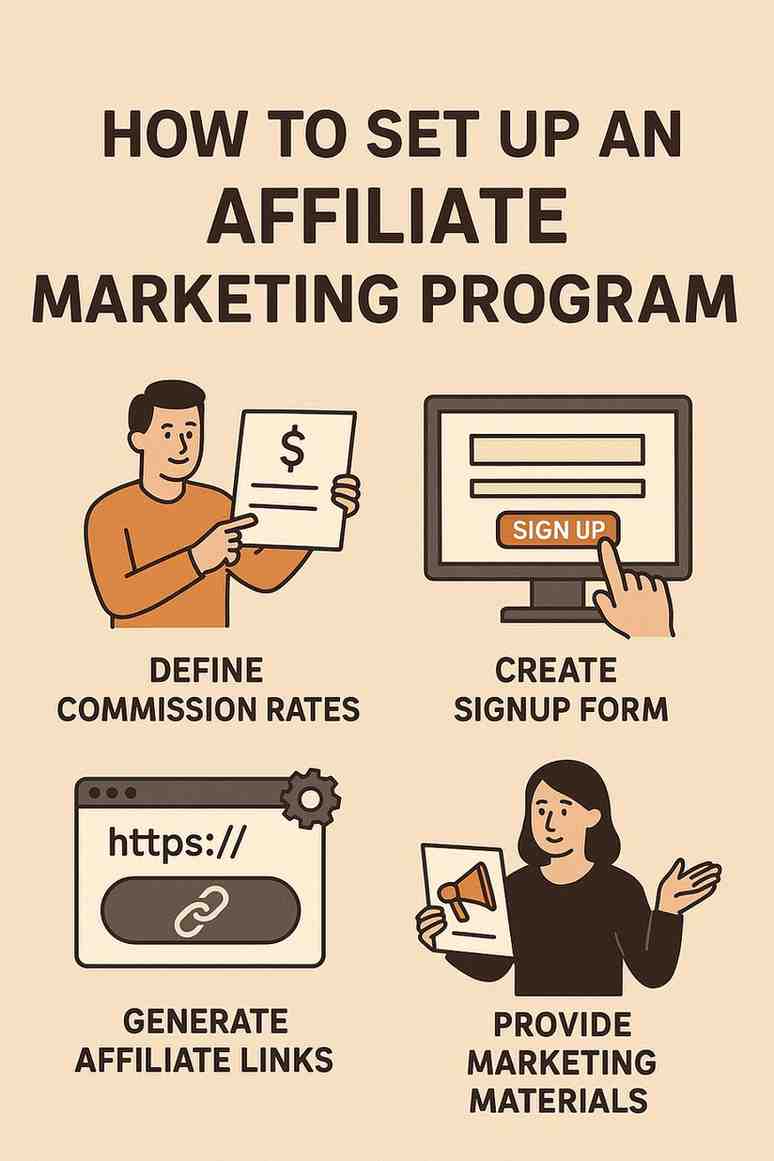
Affiliate marketing is a powerful strategy that allows merchants to expand their reach, drive sales, and build brand awareness by partnering with affiliates who promote their products or services in exchange for commissions. For merchants, setting up an affiliate marketing program involves careful planning, technical implementation, and ongoing management to ensure success. This process requires defining goals, selecting the right platform, recruiting affiliates, establishing commission structures, and providing support to maximize results. This essay explores the step-by-step process of setting up an affiliate marketing program, its benefits, challenges, and best practices, followed by a practical example to illustrate its implementation.


Step 1: Define Goals and Objectives

The first step in setting up an affiliate marketing program is to establish clear goals and objectives. These guide the program’s structure and help measure its success.

Key Actions:

  • Identify Desired Outcomes: Merchants should determine whether the program aims to increase sales, generate leads, boost brand awareness, or acquire subscribers for a recurring revenue model (e.g., SaaS subscriptions).
  • Set Key Performance Indicators (KPIs): Common KPIs include the number of affiliate-driven sales, conversion rates, cost per acquisition (CPA), or return on investment (ROI). For example, a merchant might aim for a 10% increase in monthly sales through affiliates.
  • Define Target Audience: Understand the customer demographic (e.g., age, interests, location) to recruit affiliates who can effectively reach them.
  • Budget Planning: Allocate funds for commissions, software platforms, and promotional materials. Ensure the budget aligns with expected revenue from affiliate sales.

Significance: Clear goals align the program with the merchant’s broader business objectives and provide a framework for evaluating performance.

Challenges: Misaligned goals (e.g., focusing solely on sales volume without considering profitability) can lead to inefficient spending or poor affiliate partnerships.


Step 2: Choose an Affiliate Program Structure

Merchants must decide whether to run an in-house affiliate program or use an affiliate network, as this choice impacts costs, control, and scalability.

Key Actions:

  • In-House Program: Develop a proprietary affiliate system using software like AffiliateWP or Post Affiliate Pro. This offers full control over tracking, commissions, and affiliate relationships but requires technical expertise and higher upfront costs.
  • Affiliate Network: Partner with established networks like ShareASale, CJ Affiliate, or Rakuten Advertising. These platforms handle tracking, payments, and affiliate recruitment for a fee (e.g., setup costs or a percentage of commissions).
  • Hybrid Approach: Combine an in-house program for key affiliates with a network for broader reach.
  • Tracking Technology: Implement tracking solutions (e.g., cookies, server-side tracking) to attribute sales accurately. Ensure compliance with privacy regulations like GDPR or CCPA.

Significance: The structure determines the program’s scalability, ease of management, and ability to attract quality affiliates.

Challenges: In-house programs require significant technical resources, while networks charge fees that reduce profitability. Merchants must balance control with convenience.


Step 3: Set Commission Structures and Policies

A compelling commission structure attracts affiliates and incentivizes performance, while clear policies ensure transparency and fairness.

Key Actions:

  • Determine Commission Rates: Offer competitive rates based on industry standards (e.g., 5–20% for e-commerce, 20–50% for digital products or subscriptions). For recurring services, consider recurring commissions (e.g., 30% of monthly fees).
  • Tiered Commissions: Encourage higher performance by offering increased rates for top-performing affiliates (e.g., 10% for 1–10 sales, 15% for 11+ sales per month).
  • Set Cookie Duration: Decide how long tracking cookies remain active (e.g., 30, 60, or 90 days). Longer durations increase affiliate earnings potential but may raise costs.
  • Establish Policies: Define terms for commission eligibility (e.g., excluding discounted items), payment schedules (e.g., monthly), minimum payout thresholds (e.g., $50), and anti-fraud measures.
  • Compliance Requirements: Mandate affiliates to disclose their affiliate status per FTC guidelines and prohibit unethical practices like cookie stuffing.

Significance: Attractive commissions and clear policies build trust and motivate affiliates to prioritize the merchant’s products.

Challenges: Overly generous commissions can erode profits, while low rates may deter affiliates. Merchants must also monitor for fraudulent activities that inflate commissions.


Step 4: Develop Affiliate Resources and Support

Providing affiliates with the tools and support they need is crucial for driving effective promotions and fostering long-term partnerships.

Key Actions:

  • Create Marketing Materials: Supply banners, product images, email templates, and sample social media posts to simplify affiliate promotions. For example, a merchant selling fitness equipment might provide high-quality images of treadmills and pre-written tweets.
  • Build an Affiliate Dashboard: Offer a user-friendly interface where affiliates can access links, track performance, and view earnings. Networks like ShareASale provide this, but in-house programs require custom development.
  • Provide Training and Guidance: Offer webinars, guides, or one-on-one support to educate affiliates on the product and best promotional practices.
  • Offer Incentives: Introduce bonuses for top performers (e.g., $100 for 50 sales in a month) or exclusive discounts for affiliates to share with their audiences.

Significance: Robust resources empower affiliates to promote effectively, increasing conversions and program success.

Challenges: Creating high-quality materials requires time and investment. Merchants must also balance support without overwhelming their team.


Step 5: Recruit and Onboard Affiliates

Recruiting the right affiliates—those with relevant audiences and strong promotional skills—is critical to the program’s success.

Key Actions:

  • Identify Potential Affiliates: Target bloggers, influencers, YouTubers, or niche websites aligned with the merchant’s audience. Use tools like BuzzSumo or X searches to find creators in the niche.
  • Outreach and Recruitment: Contact potential affiliates via email, social media, or affiliate networks, highlighting commission rates, product benefits, and support offered.
  • Streamline Onboarding: Create a simple signup process with clear instructions on accessing links, tracking, and program terms. Approve affiliates manually or automatically based on criteria (e.g., website quality, audience size).
  • Build Relationships: Engage with affiliates through newsletters, exclusive offers, or affiliate events to foster loyalty.

Significance: Quality affiliates drive targeted traffic and conversions, amplifying the program’s reach and effectiveness.

Challenges: Attracting high-performing affiliates in competitive niches can be difficult. Merchants may also receive low-quality applications, requiring careful vetting.


Step 6: Launch and Promote the Program

Once the program is set up, launching and promoting it ensures affiliates are aware and motivated to join.

Key Actions:

  • Announce the Program: Share the launch via the merchant’s website, social media, email lists, and industry forums. For example, a post on X might read, “Join our new affiliate program and earn 20% commissions on every sale! Sign up at [link].”
  • Leverage Existing Channels: Promote the program to existing customers or partners who may become affiliates.
  • Collaborate with Networks: If using an affiliate network, leverage their marketplace to attract affiliates.
  • Run Promotions: Offer limited-time bonuses or increased commissions to incentivize early signups.

Significance: A strong launch generates momentum and attracts initial affiliates, setting the program up for success.

Challenges: Low initial interest can slow growth, especially for lesser-known brands. Merchants must invest in marketing to gain traction.


Step 7: Monitor, Optimize, and Scale

Ongoing management and optimization ensure the program remains effective and profitable over time.

Key Actions:

  • Track Performance: Use affiliate software or network dashboards to monitor clicks, conversions, and commissions. Identify top-performing affiliates and content types.
  • Optimize Strategies: Adjust commission rates, cookie durations, or promotional materials based on performance data. For example, increase commissions for high-ticket items if conversions are low.
  • Engage Affiliates: Regularly communicate with affiliates via newsletters or one-on-one check-ins to share updates, new products, or incentives.
  • Scale the Program: Recruit more affiliates, expand into new niches, or introduce new products to increase revenue. For example, a SaaS merchant might add a new tool to their affiliate offerings.
  • Prevent Fraud: Monitor for suspicious activity (e.g., unusually high click rates) and implement fraud detection tools.

Significance: Continuous optimization maximizes ROI and sustains long-term growth, while strong affiliate relationships drive loyalty.

Challenges: Managing a growing affiliate base can be resource-intensive. Fraud or underperforming affiliates may require corrective action.


Benefits of an Affiliate Marketing Program

  • Cost-Effective Growth: Merchants pay only for results, minimizing financial risk.
  • Expanded Reach: Affiliates tap into new audiences, increasing brand visibility.
  • Scalability: Programs can grow with minimal additional investment, leveraging affiliates’ efforts.
  • Performance-Driven: Aligns with digital marketing’s focus on measurable outcomes.

Challenges of Setting Up an Affiliate Program

  • Initial Investment: Building or joining a program requires upfront costs for software, networks, or marketing.
  • Affiliate Quality: Poor-quality affiliates (e.g., spammers) can harm brand reputation.
  • Technical Complexity: In-house programs require robust tracking and payment systems.
  • Competition: Standing out in crowded niches requires competitive commissions and strong branding.

Example of Setting Up an Affiliate Marketing Program

Scenario: “FitGear,” a company selling home fitness equipment, wants to launch an affiliate program to boost sales of its $500 treadmills and $200 resistance bands. The company aims to increase monthly revenue by 15% through affiliate-driven sales.

Step-by-Step Implementation:

  1. Define Goals:
    • FitGear sets a goal to generate $10,000 in monthly affiliate sales, targeting fitness enthusiasts and home gym builders. KPIs include 20 monthly sales and a 5% conversion rate from affiliate clicks.
  2. Choose Program Structure:
    • FitGear joins ShareASale to leverage its affiliate network, avoiding the complexity of an in-house system. The setup fee is $500, with a 10% commission fee to ShareASale.
  3. Set Commission Structure:
    • FitGear offers a 10% commission on all sales (e.g., $50 per treadmill, $20 per resistance band) with a 60-day cookie duration. Payments are monthly, with a $50 minimum threshold.
    • Policies prohibit affiliates from using paid ads to bid on FitGear’s brand name to avoid competition with their own campaigns.
  4. Develop Resources:
    • FitGear creates banners, product images, and a video showcasing treadmill features. They provide a guide on “How to Promote Fitness Equipment” and a ShareASale dashboard for tracking.
    • They offer a $100 bonus for affiliates who drive 10 sales in the first month.
  5. Recruit Affiliates:
    • FitGear identifies fitness bloggers, YouTubers, and Instagram influencers via BuzzSumo and X searches. They email 50 potential affiliates, offering a 12% commission for the first three months as an incentive.
    • The onboarding process includes a simple ShareASale signup and a welcome email with resources.
  6. Launch and Promote:
    • FitGear announces the program on their website, X account, and email list, sharing, “Earn 10% commissions with FitGear’s new affiliate program! Join now at ShareASale.”
    • They offer a 20% discount code for affiliates to share, increasing conversions.
  7. Monitor and Optimize:
    • After three months, FitGear tracks 15 affiliates driving 30 treadmill sales ($15,000) and 50 resistance band sales ($10,000), generating $25,000 in revenue and paying $2,500 in commissions.
    • Top-performing affiliates receive personalized emails with additional bonuses, while underperformers are offered training. FitGear adjusts commissions to 12% for treadmills to boost sales.

Analysis: FitGear’s program leverages ShareASale’s infrastructure to minimize setup complexity, while targeted recruitment and resources drive results. The program exceeds the $10,000 revenue goal, demonstrating the power of a well-executed affiliate strategy.

Affiliate Program Setup Guide for FitGear.md
markdown


Conclusion

Setting up an affiliate marketing program requires strategic planning, from defining goals to recruiting affiliates and optimizing performance. By choosing the right structure, offering competitive commissions, and providing robust support, merchants can build a program that drives sales and brand growth. Challenges like technical complexity and affiliate quality must be managed proactively to ensure success. The FitGear example demonstrates how a merchant can implement a program using an affiliate network, achieving measurable results through targeted recruitment and resources. Within the digital marketing ecosystem, affiliate programs complement other channels, offering a cost-effective, scalable way to reach new audiences and achieve business objectives.
Ethical Considerations in Affiliate Marketing

Affiliate marketing is one of the most powerful and widely used strategies in the digital marketing world. It enables businesses to expand their reach through third-party partners (affiliates) who promote products or services in exchange for commissions. While the model is cost-effective and performance-based, it also opens the door to numerous ethical challenges. If not properly addressed, these issues can damage consumer trust, brand reputation, and the credibility of the affiliate marketing industry as a whole.

In this detailed discussion, we will explore the key ethical considerations in affiliate marketing, why they matter, how unethical practices can harm stakeholders, and how marketers can build ethical, trustworthy programs. We will also include real-world examples to illustrate both positive and negative ethical practices.


1. What Is Ethics in Affiliate Marketing?

In the context of affiliate marketing, ethics refers to the principles and standards that guide affiliates and merchants in conducting honest, fair, and transparent promotional activities. This includes how products are advertised, how commissions are disclosed, how data is handled, and how consumers are treated.

Ethical affiliate marketing ensures that:

  • Consumers are not misled

  • Affiliates disclose relationships

  • Honest reviews are shared

  • User privacy is respected

  • All parties act with integrity


2. Why Are Ethics Important in Affiliate Marketing?

Affiliate marketing is built on trust — trust between the consumer and the affiliate, between the affiliate and the merchant, and between the consumer and the brand. If any of these trust bonds are broken due to unethical behavior, the entire marketing ecosystem suffers.

Consequences of Unethical Affiliate Marketing:

  • Loss of customer trust

  • Damage to brand reputation

  • Affiliate bans from programs or networks

  • Legal actions and regulatory fines

  • Decrease in conversion and engagement rates

Therefore, ethical practices are not just about “doing the right thing”; they are also essential for long-term sustainability and business success.


3. Major Ethical Considerations in Affiliate Marketing

a. Full Disclosure and Transparency

One of the most fundamental ethical principles in affiliate marketing is disclosing affiliate relationships. When an affiliate promotes a product and earns a commission on purchases, they are ethically (and legally) required to inform their audience.

Why It Matters:

Consumers deserve to know when a recommendation might be influenced by compensation. Transparency builds trust.

What Ethical Disclosure Looks Like:

  • “This post contains affiliate links. If you purchase through them, I may earn a commission at no extra cost to you.”

  • Including a visible disclosure at the beginning of blogs, videos, or emails.

Regulatory Guidelines:

The Federal Trade Commission (FTC) in the U.S. mandates clear and conspicuous disclosure of affiliate relationships. Violations can lead to fines and penalties.

Ethical Example:

A tech YouTuber promoting a laptop includes this statement in their video and description:
“This video contains affiliate links. I may earn a small commission if you buy through them, which helps support my channel.”


b. Honest and Accurate Product Representation

Affiliates should provide genuine and accurate information about the products they promote. Making false claims or exaggerating product benefits to drive sales is unethical.

Unethical Examples:

  • Claiming a weight-loss supplement is “clinically proven” when it’s not

  • Promoting a software as “free forever” when it’s only free for 7 days

Ethical Practice:

  • Using the product before reviewing it

  • Highlighting both pros and cons

  • Avoiding hype and deception

Example:

An affiliate marketer who reviews a course writes:
“This course has great content for beginners, but if you’re an advanced learner, it might be too basic.”


c. Spamming and Deceptive Practices

Using spammy tactics like mass unsolicited emails, fake landing pages, or clickbait headlines is not only unethical but also illegal in many jurisdictions.

Common Unethical Tactics:

  • Sending affiliate links to random people via WhatsApp or email without consent

  • Redirecting users to unrelated pages just to earn a click

  • Faking scarcity (“Only 1 item left!”) when it’s not true

Ethical Approach:

  • Using permission-based marketing (opt-in emails, respectful popups)

  • Creating value-driven content that naturally includes affiliate links

  • Maintaining transparency about promotions


d. Cookie Stuffing

Cookie stuffing is a black-hat technique where affiliates secretly drop tracking cookies on users’ browsers without their knowledge or consent. This makes it appear as if the affiliate referred the user when they didn’t, stealing commission unfairly.

Example of Unethical Cookie Stuffing:

An affiliate embeds invisible code on their website that sets cookies for multiple products even when the user didn’t click any links.

Ethical Solution:

Ensure cookies are only set when a user intentionally clicks on a clearly labeled affiliate link.

❌ Legal Risk:

Many affiliate programs and networks have strict policies against cookie stuffing. Violators are banned and may face legal consequences.


e. Respect for User Privacy

Affiliates and merchants must respect data privacy laws like GDPR (EU) and CCPA (California). This includes getting consent before collecting user data and being transparent about how it’s used.

Unethical Behaviors Include:

  • Collecting emails without user permission

  • Using affiliate pixels to track users without consent

Ethical Standards:

  • Display clear cookie consent banners

  • Provide privacy policies

  • Avoid unnecessary data collection


f. Fair Attribution and Commission Sharing

Sometimes, dishonest affiliates use unethical methods to steal credit from other affiliates. This is known as affiliate hijacking or commission theft.

Example:

Affiliate A refers a customer to a product, but Affiliate B uses a coupon code popup or last-minute redirect to overwrite the tracking cookie.

Ethical Practices:

  • Allowing fair commission attribution

  • Avoiding aggressive last-click strategies

  • Respecting other affiliates’ promotional efforts


g. Promoting Relevant and Valuable Products

Affiliates should only promote products that are relevant to their audience and genuinely valuable. Promoting unrelated or low-quality products for quick commissions can harm both the affiliate’s credibility and the user experience.

Ethical Example:

A parenting blogger promotes eco-friendly baby products they use personally.

Unethical Example:

The same blogger promotes gambling apps just for high commission payouts.


4. Case Study: Amazon Associates Ethical Controversy

In 2021, some affiliates of Amazon Associates were penalized or banned due to unethical behavior:

  • They used fake reviews to boost sales.

  • Some embedded affiliate links in ads without proper disclosure.

  • A few used coupon sites to overwrite cookies, stealing commissions.

Amazon tightened its affiliate guidelines and removed thousands of accounts, illustrating the importance of compliance and ethical practices.


5. Best Practices for Ethical Affiliate Marketing

To maintain credibility and long-term success, affiliates and merchants should follow these best practices:

✅ For Affiliates:

  • Always disclose affiliate links clearly

  • Promote products you believe in or have used

  • Avoid overhyping or misleading claims

  • Use honest reviews and comparisons

  • Respect your audience’s privacy

  • Use legal and compliant tracking tools

✅ For Merchants:

  • Vet affiliates carefully

  • Provide ethical guidelines and training

  • Use anti-fraud tracking systems

  • Reward transparency and honesty

  • Monitor affiliate activity regularly


6. Benefits of Ethical Affiliate Marketing

When affiliates and merchants operate ethically, everyone benefits:

a. Builds Long-Term Trust

Trustworthy content leads to loyal followers, better engagement, and sustainable commissions.

b. Protects Brand Reputation

Ethical marketing reflects well on both the affiliate and the brand, attracting more customers and partners.

c. Reduces Legal Risk

Compliance with regulations like the FTC’s guidelines or GDPR helps avoid costly penalties.

d. Attracts Quality Partnerships

Ethical affiliates attract reputable merchants, and ethical merchants attract professional affiliates.


Conclusion

Ethical considerations in affiliate marketing are not optional — they are essential for maintaining a trustworthy and sustainable ecosystem. As the digital landscape grows more competitive and consumers become more informed, transparency, honesty, and respect for privacy are vital.

Whether you’re an affiliate promoting a product or a merchant managing a program, your long-term success will depend on your ethical integrity. The industry thrives when everyone plays fairly. Ethical affiliate marketing builds a better internet — one that rewards effort, honesty, and trust.


Final Example Recap:

Ethical Affiliate Marketer (Riya):

  • Runs a food blog

  • Reviews cooking appliances she’s tested

  • Clearly discloses affiliate links

  • Offers both pros and cons

  • Collects emails only via opt-in forms

  • Promotes only products relevant to her audience

Result:
Her audience trusts her, brands value her professionalism, and she earns sustainable income.

By focusing on ethical practices, affiliates like Riya become not only successful marketers but also respected voices in the digital community.

What Is Two-Tier Affiliate Marketing and How Is It Beneficial?

Affiliate marketing has evolved significantly over the past few decades, becoming a foundational component of digital advertising and e-commerce growth. While traditional affiliate marketing focuses on promoting products and earning commissions for direct referrals, more complex and rewarding structures have emerged over time. One such structure is two-tier affiliate marketing, a model that extends the scope of earning by allowing affiliates to recruit other affiliates and earn a commission on their performance as well.

In this comprehensive explanation, we will define two-tier affiliate marketing, explain how it works, describe its benefits, discuss its challenges, and illustrate its use through practical examples. We will also compare it to traditional single-tier affiliate models to better understand its value for both affiliates and merchants.


1. What Is Two-Tier Affiliate Marketing?

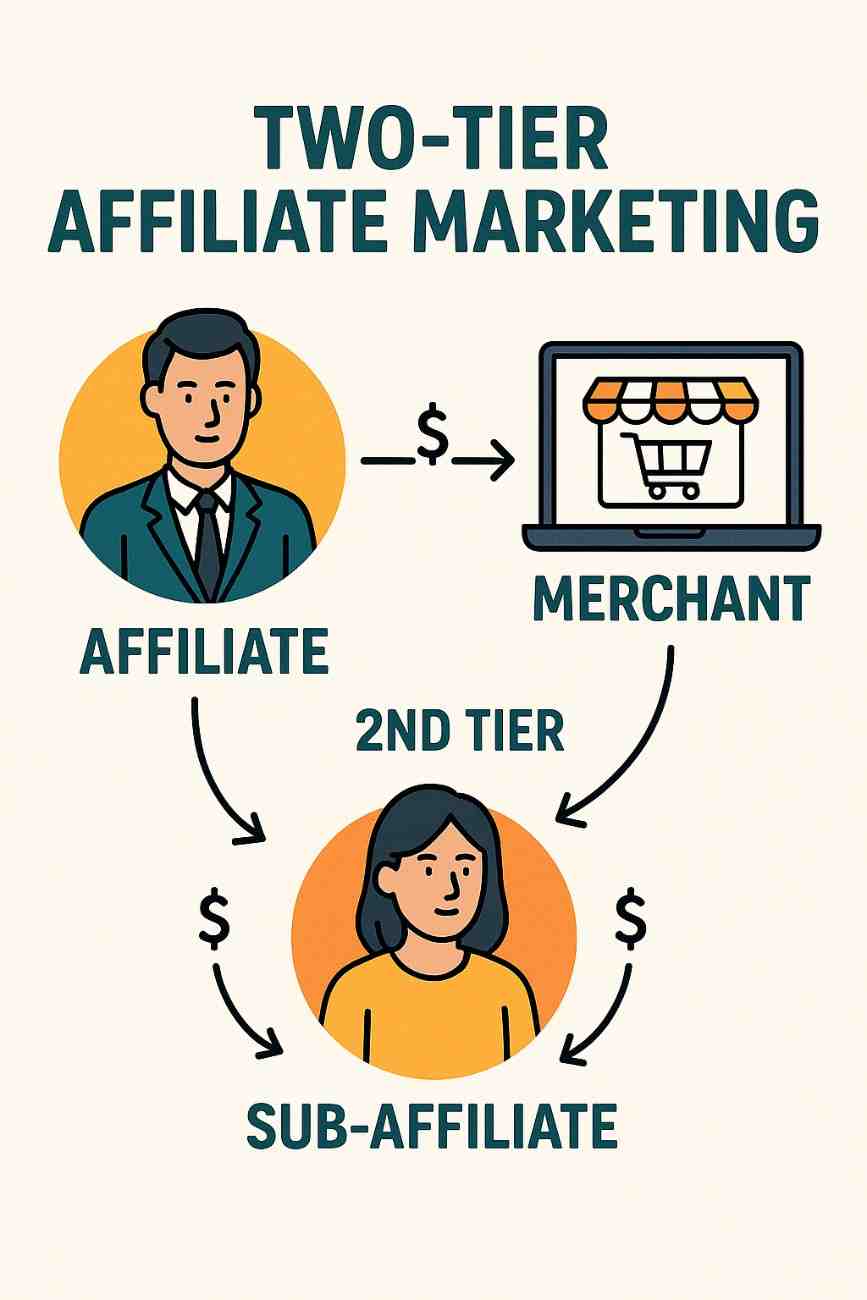
Two-tier affiliate marketing is a form of affiliate marketing that allows affiliates not only to earn commissions for referring customers (as in the traditional model) but also to earn additional commissions for referring other affiliates who, in turn, generate sales or leads.

In simpler terms:

  • Tier 1: You refer a customer and earn a commission.

  • Tier 2: You refer another affiliate (often called a “sub-affiliate”), and you earn a percentage of their commissions or a fixed bonus whenever they refer customers.

This model is often compared to multi-level marketing (MLM), but it’s not the same. Two-tier affiliate marketing typically stops at the second level (two tiers only), whereas MLM can have unlimited levels or downlines.


2. How Does Two-Tier Affiliate Marketing Work?

Here’s how the process typically unfolds:

Step 1: Sign Up as an Affiliate

You join an affiliate program that offers two-tier commission structures. The program provides you with two types of links:

  • Product links to promote to customers

  • Referral links to invite other affiliates

Step 2: Promote the Product

You share your affiliate links through blogs, videos, social media, email newsletters, etc. If someone clicks your link and makes a purchase, you earn a commission — just like in standard affiliate marketing.

Step 3: Recruit Other Affiliates

You also promote the affiliate program itself, encouraging others to join. You share your referral link for the affiliate program with friends, bloggers, influencers, or marketers.

Step 4: Earn Tier-Two Commissions

Once your referred affiliate starts promoting the product and earns commissions, you receive a second-tier commission, typically a small percentage of their earnings or sales.


Example Structure of Commissions:

Let’s say:

  • Tier 1 commission: 30% per sale

  • Tier 2 commission: 10% of sub-affiliate’s earnings

If:

  • You directly sell a product worth ₹2,000 → You earn ₹600 (30%)

  • You recruit another affiliate who sells the same product → They earn ₹600 (30%), and you earn ₹60 (10%) from their sale.

Over time, if your referred affiliates perform well, your passive earnings from Tier 2 can become substantial — even if you’re not actively making sales yourself.


3. Real-World Example:

Company: ConvertKit (Email Marketing Tool)

ConvertKit, an email marketing software for creators, offers a two-tier affiliate program.

  • Tier 1 commission: 30% recurring for life on direct referrals

  • Tier 2 commission: 5% recurring commission on referred affiliates’ earnings

Scenario:

Ravi is a digital marketer who signs up for ConvertKit’s affiliate program. He promotes ConvertKit on his blog and earns recurring income each time someone signs up and pays for the service.

Ravi also refers his friend Neha, a YouTuber, to become a ConvertKit affiliate. Neha starts promoting ConvertKit and earns ₹10,000 per month in affiliate commissions.

Thanks to the two-tier system, Ravi earns ₹500 (5% of ₹10,000) every month — without any extra effort beyond recruiting Neha.

If Ravi refers 10 such affiliates who each earn ₹10,000/month, he earns ₹5,000/month passively from Tier 2 alone.


4. Benefits of Two-Tier Affiliate Marketing

a. Passive Income

The biggest benefit of two-tier affiliate marketing is the opportunity to earn passive income. Once you recruit productive affiliates, you earn from their success indefinitely — even if you take a break from active promotion.

b. Encourages Affiliate Growth

Two-tier models incentivize affiliates to build teams. This creates a network of motivated affiliates, increasing the reach of the merchant’s product through exponential growth.

c. Higher Earning Potential

Unlike traditional models that rely solely on individual performance, two-tier systems reward you for team-building and network expansion. This opens the door to much higher earnings over time.

d. Mutual Support Among Affiliates

Senior affiliates (top-level) are motivated to mentor and support their sub-affiliates, since their earnings are tied to their success. This creates a more engaged and educational affiliate community.

e. Reduced Merchant Workload

Merchants benefit by acquiring affiliates at scale without direct recruitment. Existing affiliates act as recruiters, helping the business grow organically with minimal effort from the company.

f. Viral Potential

The referral aspect gives the program a viral effect, especially when affiliate marketers actively encourage their audiences to join the program as sub-affiliates.


5. Challenges of Two-Tier Affiliate Marketing

While the model is attractive, it does come with some potential issues:

a. Complexity

Managing two levels of commission payouts, tracking, and reporting requires advanced affiliate software. Without the right systems, things can get disorganized.

b. Commission Dilution

Some merchants may offer lower Tier 1 commissions to offset the cost of Tier 2 payouts, making it slightly less lucrative for solo affiliates.

c. Risk of Abuse

There’s a risk that some people will focus on recruiting affiliates only and not promoting the actual product — leading to reduced product visibility and potential spam.

d. Not Widely Available

Not all affiliate programs offer two-tier structures. Most affiliate programs are single-tier, so affiliates have fewer options when looking for programs with this structure.


6. Who Should Use Two-Tier Affiliate Marketing?

Ideal for Affiliates Who:

  • Have an audience of marketers or creators who could also become affiliates

  • Want to diversify income streams beyond direct product promotion

  • Are comfortable building networks and offering mentorship or guidance

Ideal for Businesses Who:

  • Want to scale quickly with limited budget

  • Believe in peer-driven promotion

  • Can manage the technical complexity of tiered commission systems


7. Tools and Platforms That Support Two-Tier Affiliate Models

Several platforms make it easier to set up and manage two-tier affiliate programs:

  • Post Affiliate Pro

  • Tapfiliate

  • FirstPromoter

  • LeadDyno

  • ReferralCandy (for eCommerce)

These tools allow for:

  • Tracking multiple tiers of referrals

  • Managing custom commission rates

  • Providing reporting dashboards for both tiers

  • Ensuring secure and timely payouts


8. Difference Between Single-Tier and Two-Tier Affiliate Marketing

Feature Single-Tier Affiliate Marketing Two-Tier Affiliate Marketing
Commission Source From personal referrals only From personal referrals and sub-affiliates
Recruitment Earnings No earnings for referring other affiliates Earn a percentage of sub-affiliates’ activity
Earning Potential Limited to direct sales Higher potential via network-building
Complexity Simple to manage Requires advanced tracking and software
Ideal For Product-focused marketers Team-building marketers

9. Conclusion

Two-tier affiliate marketing is a powerful model that adds a new layer of opportunity for those in the affiliate marketing space. It allows affiliates not only to earn commissions on their direct promotional efforts but also to build a team of sub-affiliates whose performance contributes to their passive income. This dual earning strategy transforms affiliate marketing from a transactional model into a scalable and sustainable income stream.

For businesses, two-tier programs create a viral network effect, expanding reach without the need for large marketing budgets. For affiliates, it’s an opportunity to leverage influence and mentorship to create recurring revenue.

While it requires more organization and ethical management than single-tier systems, the rewards — both financially and professionally — can be far greater. With the right tools, a focused strategy, and a willingness to support others, two-tier affiliate marketing can be a game-changer for anyone looking to grow in the digital economy.


Example in Summary:
If you’re a blogger who signs up for a two-tier affiliate program and refer 10 affiliates — each making ₹10,000/month in commissions — you could be earning ₹1,000 from each (10%), totaling ₹10,000/month in passive income, even if you make no direct sales yourself. That’s the true power of two-tier affiliate marketing.

What is the Google Search Network?

The Google Search Network (GSN) is one of the core components of Google Ads, Google’s advertising platform. It allows advertisers to display text ads on search engine results pages (SERPs), across a network of Google-owned properties and partner search sites whenever users search for keywords relevant to the advertiser’s business, products, or services.

This form of advertising leverages the intent-based nature of search engines, where users are actively looking for something. Because the user is already expressing interest or intent, ads displayed through the Google Search Network often see higher click-through rates (CTR) and conversion rates than other types of online advertising.

Definition of Google Search Network (GSN)

The Google Search Network is a group of search-related websites and apps where your ads can appear. It includes:

  1. Google Search – Ads appear above or below organic search results.

  2. Google Search Partners – Includes smaller search engines and Google product pages such as:

    • Google Maps

    • Google Shopping (for text ads)

    • Google Images

    • YouTube (in limited search functions)

    • Non-Google websites that have partnered with Google (like AOL and other directories)

These platforms allow advertisers to reach users who are actively searching for their services or products.

🧠 How Does Google Search Network Work?

1. Keyword-Based Targeting

When advertisers create a Search Campaign on Google Ads, they choose a set of keywords they want to target. These are words or phrases that users are likely to enter when searching for related products or services.

For example, a business selling running shoes might target keywords like:

  • “buy running shoes online”

  • “best sports shoes for men”

  • “Nike running shoes price”

When a user types one of these queries into Google Search or a search partner’s site, the system checks which ads are eligible to show.

2. Ad Auction

When multiple advertisers bid on the same or similar keyword, an automated auction is triggered. Google ranks the ads based on:

  • Ad Rank, calculated using:

    • Maximum Bid (the most you’re willing to pay per click)

    • Quality Score (relevance of ad, expected CTR, landing page experience)

    • Expected impact of ad extensions

Note: The ad with the highest Ad Rank wins the best position, but it doesn’t necessarily pay the highest amount—just enough to beat the next competitor.

3. Ad Formats on Search Network

On the Search Network, the typical ad format includes:

  • Headline(s) (1–3 parts)

  • Description (1–2 parts)

  • Display URL

  • Ad Extensions (optional but highly recommended)

Ad extensions like call buttons, site links, location information, and ratings can improve visibility and CTR.


💼 Types of Ads on the Google Search Network

  1. Text Ads – The most common format. Show up on search results based on keyword intent.

  2. Responsive Search Ads (RSAs) – Ads where Google automatically tests different combinations of headlines and descriptions to find the most effective versions.

  3. Call-Only Ads – Designed to encourage phone calls rather than website visits.

  4. Dynamic Search Ads (DSAs) – Use your website content to generate headlines automatically and match search queries not covered by your keyword list.

  5. Shopping Ads (Text Format) – Product-based ads that appear in search results (different from full Shopping campaigns).

🎯 Benefits of Advertising on the Google Search Network

1. High Intent Traffic

Users are actively searching for something they want. Your ad appears just when they are ready to act, making Search Network traffic high in quality.

2. Broad Reach

Your ads can appear not only on Google but also on partner sites, expanding your reach across the internet without extra setup.

3. Cost Control

You only pay when someone clicks (Pay-Per-Click), and you can control your budget on a daily or monthly basis.

4. Measurable Results

Track:

  • Clicks

  • Impressions

  • Conversion rate

  • Cost-per-conversion

  • ROI

5. Ad Extensions Improve Performance

You can use callouts, sitelinks, location extensions, etc., to enhance your ad visibility and increase CTR.

📈 Performance Metrics for Search Network Ads

Metric What it Means
CTR (Click-Through Rate) How many users clicked vs. how many saw the ad
CPC (Cost-Per-Click) How much you pay per click
Impressions Number of times your ad was shown
Conversions Number of users who took a desired action
Quality Score Rating of your ad relevance and experience
Ad Rank Determines position and visibility

🛍️ Real-World Example: Lazoro – Handcrafted Wall Art

Let’s take the example of Lazoro, a business selling handcrafted metal wall art in India through its website www.lazoro.in.

🎯 Goal:

Drive traffic and sales to the website by targeting people searching for premium wall art.

🛠️ Step-by-Step Campaign Setup on the Google Search Network:

1. Campaign Type:

  • Search Network Only

2. Keywords Targeted:

Keyword Match Type
“buy metal wall art online” Phrase Match
“custom wall decor India” Exact Match
“handmade wall hanging” Broad Match Mod
“unique home wall decoration ideas” Phrase Match

3. Ad Copy Example:

Headline 1: Custom Metal Wall Art Online
Headline 2: Handcrafted Elegance for Your Walls
Headline 3: Shop Now – Lazoro.in

Description:
Decorate your space with unique, handmade metal wall art. Free shipping across India. Secure checkout. Explore the latest collection now!

Display URL: www.lazoro.in/wall-art

4. Ad Extensions Used:

  • Sitelinks:

    • Shop by Category

    • Personalized Gifts

    • Customer Reviews

    • New Arrivals

  • Callout Extensions:

    • 100% Handmade

    • Free Delivery

    • Secure Checkout

    • Custom Designs Available

  • Location Extension (optional if local store exists)

5. Bidding Strategy:

  • Maximize Clicks or Target CPA (Cost Per Acquisition)

6. Results (Hypothetical):

Metric Value
Budget/day ₹2,000
Clicks/day 150
Average CPC ₹13.33
Conversion Rate 8%
Daily Conversions 12
Average Order Value ₹2,000
Daily Revenue ₹24,000

With only ₹2,000 in ad spend, Lazoro could generate 12 purchases worth ₹24,000, making it a high-ROI campaign.

🧩 Google Search Network vs. Google Display Network

Feature Search Network Display Network
Ad Trigger User search intent Audience behavior, interests
Ad Type Text-focused ads Visual (banners, images, videos)
Conversion Intent High Medium to low
CTR Higher Lower
Targeting Basis Keywords Audience segments, demographics, content

🧠 Tips for Effective Search Network Campaigns

  1. Use Exact and Phrase Match Keywords to target intent-based searches.

  2. Write Compelling Ad Copy with clear calls-to-action.

  3. Use Ad Extensions to add more value and visibility.

  4. Optimize Landing Pages for speed and relevance.

  5. Set Negative Keywords to avoid irrelevant traffic.

  6. Track Conversions and adjust bids or keywords based on performance.

  7. Test Multiple Ad Variations using Responsive Search Ads.

🧭 Final Thoughts

The Google Search Network is one of the most efficient and profitable ways to advertise online, especially for businesses that offer products or services people are actively searching for. It’s driven by user intent, meaning the traffic you get is already interested in what you offer.

Whether you’re running an eCommerce store like Lazoro, offering local services, or trying to generate leads for your B2B business, advertising on the Google Search Network provides the tools and targeting you need to succeed.

By mastering the keyword strategy, crafting compelling ad copy, and using smart bidding and extensions, you can build a high-performing campaign that delivers measurable results and drives real growth for your business.

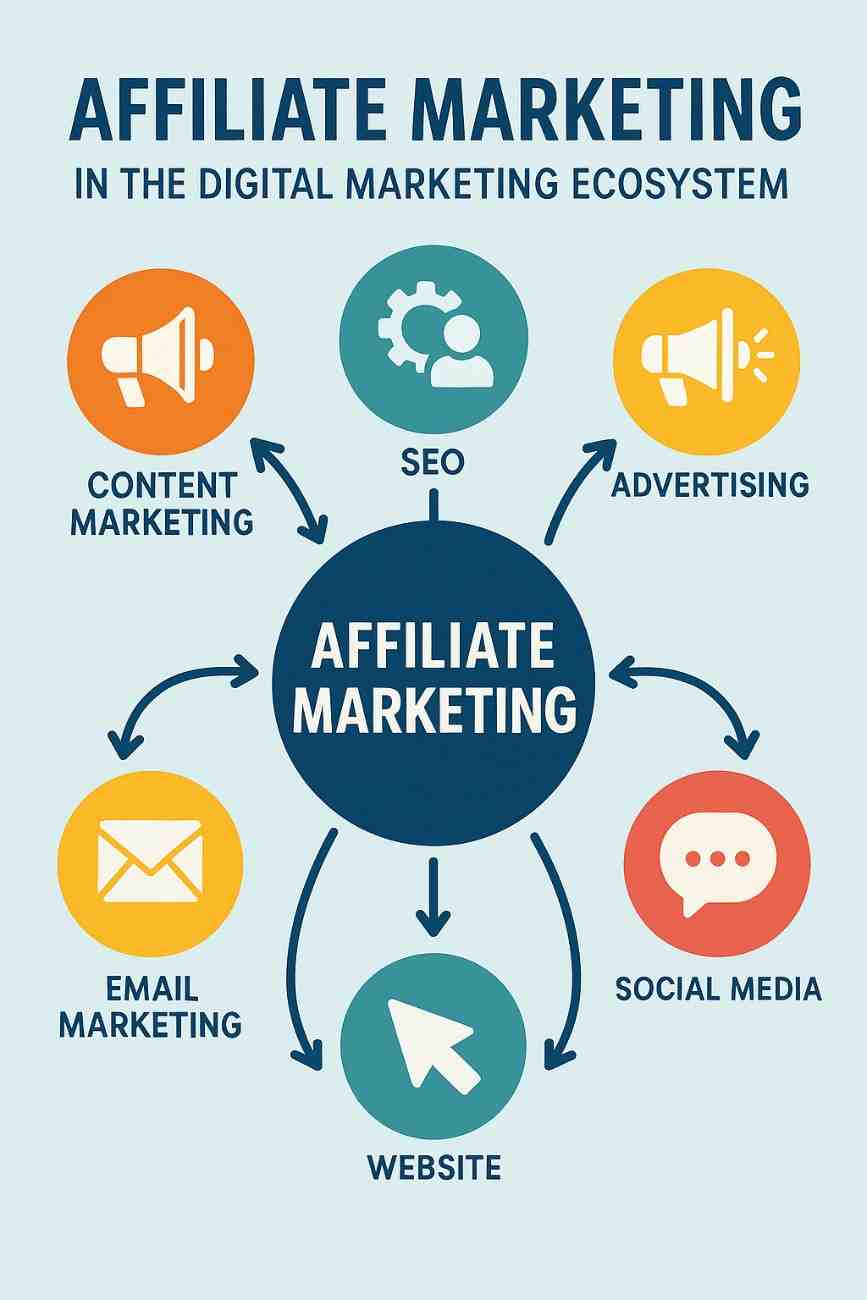
How does affiliate marketing fit into the digital marketing ecosystem?

How Affiliate Marketing Fits into the Digital Marketing Ecosystem

Affiliate marketing is a performance-based marketing strategy that has become an integral component of the digital marketing ecosystem. It operates as a symbiotic relationship between merchants, affiliates, and consumers, enabling businesses to expand their reach while providing affiliates with opportunities to earn commissions. By aligning with other digital marketing channels and leveraging technology, affiliate marketing enhances brand visibility, drives conversions, and delivers measurable results. This essay explores how affiliate marketing fits into the broader digital marketing ecosystem, examining its role, synergies with other strategies, benefits, challenges, and real-world applications, with a detailed example to illustrate its practical integration.


Understanding Affiliate Marketing

Affiliate marketing involves three primary stakeholders: the merchant (the business selling a product or service), the affiliate (the promoter who markets the merchant’s offerings), and the consumer (the end user). Affiliates earn commissions by driving specific actions, such as sales, leads, or clicks, through their promotional efforts, typically using unique tracking links. These actions are tracked via affiliate networks (e.g., Amazon Associates, ShareASale) or in-house programs, ensuring accurate attribution and payouts.

Unlike traditional advertising, affiliate marketing is performance-driven, meaning merchants pay only for successful outcomes. This low-risk, high-reward model makes it a versatile tool within the digital marketing ecosystem, complementing strategies like search engine optimization (SEO), content marketing, social media marketing, email marketing, and paid advertising.


The Digital Marketing Ecosystem

The digital marketing ecosystem encompasses all online strategies and channels businesses use to attract, engage, and convert customers. Key components include:

  • SEO: Optimizing websites to rank higher on search engines like Google.
  • Content Marketing: Creating valuable content (e.g., blogs, videos) to educate and engage audiences.
  • Social Media Marketing: Leveraging platforms like Instagram, X, and LinkedIn to build brand awareness.
  • Email Marketing: Using targeted email campaigns to nurture leads and drive conversions.
  • Paid Advertising: Running ads on platforms like Google Ads, Meta Ads, or programmatic networks.
  • Influencer Marketing: Partnering with influencers to promote products to their followers.
  • Analytics and Data: Using tools like Google Analytics to measure performance and optimize campaigns.

Affiliate marketing integrates seamlessly with these components, acting as a bridge that connects promotional efforts with measurable outcomes. Its flexibility allows it to amplify the effectiveness of other channels while providing unique advantages.


The Role of Affiliate Marketing in the Ecosystem

Affiliate marketing serves multiple functions within the digital marketing ecosystem, making it a versatile and scalable strategy.

  1. Performance-Based Revenue Generation:
    • Affiliate marketing aligns with the ecosystem’s focus on ROI. Merchants pay commissions only when desired actions occur, ensuring cost-effectiveness.
    • This performance-driven model contrasts with channels like display advertising, where costs are incurred regardless of outcomes.
  2. Expanded Reach and Brand Awareness:
    • Affiliates, ranging from bloggers to influencers to niche websites, extend a merchant’s reach to diverse audiences.
    • By tapping into affiliates’ established trust and credibility, brands gain access to targeted markets that may be difficult to reach through traditional channels.
  3. Synergy with Content-Driven Strategies:
    • Affiliate marketing thrives on content, such as product reviews, tutorials, or comparison guides, which aligns with content marketing and SEO goals.
    • Affiliates often create evergreen content that drives organic traffic over time, enhancing a brand’s visibility on search engines.
  4. Scalable Customer Acquisition:
    • Affiliate programs allow merchants to scale customer acquisition without significant upfront costs, as affiliates bear the promotional expenses.
    • This scalability complements paid advertising, where budgets limit reach, by leveraging affiliates’ organic or paid efforts.
  5. Data-Driven Optimization:
    • Affiliate networks provide detailed analytics on clicks, conversions, and commissions, enabling merchants and affiliates to optimize campaigns.
    • This data integrates with broader marketing insights, informing strategies across channels like email marketing or social media.

Synergies with Other Digital Marketing Channels

Affiliate marketing’s strength lies in its ability to complement and enhance digital marketing strategies, creating a cohesive ecosystem.

  1. SEO and Content Marketing:
    • Affiliates often rely on SEO-optimized content, such as blog posts or YouTube videos, to drive traffic to merchant websites. For example, a blogger reviewing fitness equipment might target keywords like “best treadmills 2025,” boosting both their own and the merchant’s search rankings.
    • Merchants benefit from backlinks generated by affiliate content, improving their domain authority and organic visibility.
  2. Social Media Marketing:
    • Affiliates use platforms like Instagram, TikTok, or YouTube to promote products, aligning with social media marketing’s focus on engagement. An influencer sharing an affiliate link in a product demo video leverages their audience’s trust to drive conversions.
    • Merchants can amplify affiliate efforts by providing branded content or running parallel social media campaigns.
  3. Email Marketing:
    • Affiliates integrate affiliate links into email campaigns, promoting products to subscribers. For instance, a newsletter featuring software recommendations might include affiliate links to SaaS tools.
    • Merchants can support affiliates by providing email templates or exclusive offers, enhancing conversion rates.
  4. Paid Advertising:
    • Some affiliates use paid ads (e.g., Google Ads or Meta Ads) to promote affiliate links, complementing merchants’ paid campaigns. This requires careful coordination to avoid bidding competition.
    • Merchants benefit from affiliates’ targeted ad spend, which extends their reach without additional budget.
  5. Influencer Marketing:
    • Influencers often participate in affiliate programs, blending influencer and affiliate marketing. A beauty influencer promoting a skincare brand via an affiliate link combines authentic storytelling with trackable results.
    • This synergy enhances trust and conversions, as influencers’ recommendations carry significant weight.

Benefits of Affiliate Marketing in the Ecosystem

Affiliate marketing offers unique advantages that enhance its fit within the digital marketing landscape.

  1. Cost-Effectiveness:
    • Merchants pay only for results, minimizing financial risk compared to channels like paid ads or sponsorships.
    • Affiliates bear promotional costs, allowing merchants to allocate budgets elsewhere.
  2. Trust and Credibility:
    • Affiliates with established audiences (e.g., bloggers, YouTubers) lend credibility to merchants, as consumers trust recommendations from familiar sources.
    • This trust amplifies conversion rates, especially for high-ticket or subscription-based products.
  3. Flexibility and Diversity:
    • Affiliate marketing spans industries, from e-commerce to SaaS to financial services, and supports various commission models (e.g., one-time, recurring).
    • Affiliates use diverse channels (blogs, social media, email), ensuring broad coverage within the ecosystem.
  4. Measurable Results:
    • Advanced tracking technology provides granular data on performance, enabling precise optimization.
    • This aligns with the ecosystem’s emphasis on data-driven decision-making.
  5. Passive Income for Affiliates:
    • Affiliates benefit from recurring commissions or evergreen content, creating sustainable income streams.
    • This incentivizes long-term partnerships, benefiting both affiliates and merchants.

Challenges of Affiliate Marketing in the Ecosystem

Despite its strengths, affiliate marketing faces challenges that impact its integration into the digital marketing ecosystem.

  1. Tracking and Attribution Issues:
    • Cookie-based tracking can be disrupted by ad blockers, browser privacy settings, or cookie expiration, leading to lost commissions.
    • Cross-device tracking remains a challenge, as consumers may click affiliate links on one device but convert on another.
  2. Competition and Saturation:
    • Popular niches (e.g., tech, finance) attract numerous affiliates, increasing competition and requiring sophisticated strategies.
    • Merchants may struggle to attract high-quality affiliates in crowded markets.
  3. Fraud and Compliance:
    • Fraudulent activities, such as fake clicks or sales, can undermine program integrity.
    • Affiliates must comply with regulations (e.g., FTC disclosure rules) and merchants’ terms, which can vary across programs.
  4. Dependency on Affiliates:
    • Merchants rely on affiliates’ promotional efforts, which may lead to inconsistent results if affiliates underperform.
    • Poor-quality affiliates (e.g., those using spammy tactics) can harm brand reputation.
  5. Program Management:
    • Running an affiliate program requires resources for tracking, reporting, and affiliate support.
    • Merchants must balance commission rates to attract affiliates while maintaining profitability.

Example of Affiliate Marketing in the Ecosystem

To illustrate affiliate marketing’s role, consider a hypothetical scenario involving a SaaS company and an affiliate.

Scenario: “GrowEasy,” a SaaS platform offering email marketing tools, launches an affiliate program through the ShareASale network, offering a 30% recurring commission on subscriptions. Sarah, a digital marketing blogger, joins the program to promote GrowEasy to her audience of small business owners.

Integration Across Channels:

  1. Content Marketing and SEO:
    • Sarah writes a blog post titled “Top Email Marketing Tools for Small Businesses in 2025,” featuring GrowEasy. She optimizes the post for keywords like “best email marketing software,” driving organic traffic.
    • The post includes her affiliate link, and backlinks to GrowEasy’s site improve its SEO.
  2. Social Media Marketing:
    • Sarah shares the blog post on her X account and Instagram, posting a short video demo of GrowEasy’s features with her affiliate link in her bio.
    • GrowEasy retweets Sarah’s post, amplifying its reach to their followers.
  3. Email Marketing:
    • Sarah sends a newsletter to her 5,000 subscribers, highlighting GrowEasy’s benefits and including her affiliate link. She offers a downloadable guide on email marketing as a lead magnet, linking to GrowEasy’s trial.
    • GrowEasy provides Sarah with a branded email template, ensuring consistent messaging.
  4. Paid Advertising:
    • Sarah runs a small Google Ads campaign targeting “email marketing software,” directing clicks to her blog post. She ensures compliance with GrowEasy’s ad policies.
    • GrowEasy’s own Meta Ads campaign complements Sarah’s efforts, targeting similar audiences.
  5. Results:
    • Sarah’s blog post generates 50 trial signups, with 20 converting to paid subscriptions at $50/month. Her 30% commission yields $300/month in recurring income ($15 x 20).
    • GrowEasy gains $1,000/month in revenue ($50 x 20) while paying $300 in commissions, achieving a positive ROI.
    • Sarah’s content continues driving traffic, and GrowEasy’s brand visibility grows through her multi-channel promotion.

Analysis: This example shows how affiliate marketing integrates with SEO, content, social media, email, and paid ads to create a cohesive strategy. Sarah’s efforts amplify GrowEasy’s reach, while GrowEasy’s support (e.g., templates, retweets) enhances her success, demonstrating mutual benefits within the ecosystem.


Future Trends and Evolution

Affiliate marketing continues to evolve within the digital marketing ecosystem, driven by technological advancements and consumer behavior shifts:

  • AI and Personalization: AI tools enable affiliates to create hyper-targeted content and merchants to optimize affiliate programs based on predictive analytics.
  • Mobile and App-Based Affiliate Marketing: With increasing mobile usage, affiliate programs are adapting to app-based tracking and promotions.
  • Privacy Regulations: Stricter laws (e.g., GDPR, CCPA) are pushing merchants toward cookieless tracking solutions, such as server-side tracking or first-party data.
  • Micro-Influencers and Niche Affiliates: Brands are partnering with smaller, niche-focused affiliates for higher engagement and trust.
  • Integration with Emerging Platforms: Affiliates are exploring new platforms like TikTok, Discord, or Web3 ecosystems to reach younger audiences.

Conclusion

Affiliate marketing is a vital pillar of the digital marketing ecosystem, offering a performance-based, scalable, and synergistic approach to customer acquisition. By integrating with SEO, content marketing, social media, email, and paid advertising, it amplifies brand reach and drives conversions while providing affiliates with sustainable income opportunities. Its benefits—cost-effectiveness, credibility, and measurability—make it a cornerstone strategy, though challenges like tracking issues and competition require careful management. The example of Sarah and GrowEasy illustrates how affiliate marketing leverages multiple channels to achieve mutual success, underscoring its adaptability and value. As technology and consumer preferences evolve, affiliate marketing will remain a dynamic and essential component of digital marketing, shaping the future of online commerce.

What are the different types of Google Ads campaigns?


Definition:

Pay-Per-Click (PPC) is a form of online advertising where advertisers pay a fee each time their ad is clicked. Essentially, it’s a way of buying visits to your website rather than trying to “earn” those visits organically through methods like SEO.

The most common and widely used platform for PPC is Google Ads, but other platforms like Bing Ads, Facebook Ads, Instagram Ads, LinkedIn Ads, and YouTube Ads also support PPC models.

How PPC Works:

  1. Advertiser creates an ad and selects relevant keywords or target audience criteria.

  2. The ad is entered into an auction whenever a user searches for those keywords or fits the targeting.

  3. The platform decides which ad(s) to display based on:

    • The advertiser’s bid (maximum willing to pay for a click),

    • The ad’s relevance and quality (Quality Score),

    • Expected Click-Through Rate (CTR).

  4. If your ad gets clicked, you pay the platform a small fee.

  5. If managed well, the fee is trivial compared to the value of the conversion (a sale, lead, sign-up, etc.).

Example of PPC:

Suppose you run a business that sells running shoes online.

  • You set up a PPC campaign with Google Ads.

  • Your ad targets the keyword: “Buy Running Shoes Online”.

  • A user types that exact keyword into Google.

  • Your ad appears at the top of the search results.

  • The user clicks on your ad → is taken to your website.

  • You pay Google, say ₹25 for that click.

  • If the user buys a pair of shoes worth ₹2,500, the PPC ad has given you a great return on investment.

Popular PPC Platforms:

Platform Description
Google Ads Most popular PPC platform; includes Search, Display, YouTube, Shopping ads.
Bing Ads Similar to Google Ads; lower competition and costs.
Facebook Ads PPC based on interests, behaviors, and demographics.
Instagram Ads Visual PPC ads through Meta (Facebook) platform.
LinkedIn Ads Ideal for B2B and professional services.
Amazon Ads PPC ads for products sold on Amazon.

Advantages of PPC Advertising:

  1. Immediate Results: Start driving traffic within minutes.

  2. Highly Targeted: Choose audience by keywords, location, device, interests, age, etc.

  3. Budget Control: Set daily/monthly limits; no overspending.

  4. Measurable ROI: Track clicks, conversions, cost-per-click, and more.

  5. Scalable: Increase budget and reach as performance improves.

Disadvantages of PPC Advertising:

  1. Costly if unmanaged: Without optimization, costs can exceed revenue.

  2. Click Fraud: Competitors or bots may click on your ads.

  3. Learning Curve: Requires understanding of bidding, keywords, targeting, etc.

  4. Short-Term Visibility: Unlike SEO, traffic stops once the budget is exhausted.

Common PPC Metrics:

Metric Meaning
CPC (Cost Per Click) Amount paid for each ad click.
CTR (Click-Through Rate) % of people who saw the ad and clicked.
Impressions Number of times the ad was shown.
Conversion Rate % of clicks that result in a conversion (sale, sign-up).
Quality Score Google’s rating of your ad quality and relevance.
Ad Rank Determines your ad’s position on the page.

Conclusion:

PPC advertising is one of the most effective and immediate digital marketing tools available. Whether you’re a small business or a large enterprise, PPC allows you to reach your target audience, generate leads, and drive sales in a controlled and measurable way.

When managed strategically, PPC campaigns can deliver high ROI and serve as a key component in any digital marketing strategy.


Would you like help creating a PPC strategy for your business like Lazoro or Mehta Groccers?


You said:
give me an example according to business brand name ZARA
ChatGPT said:

Certainly! Here’s a Pay-Per-Click (PPC) advertising example tailored specifically for the fashion brand ZARA, a globally recognized name in the retail clothing industry.

🧥 PPC Advertising Example for ZARA

🛍️ Business Overview:

ZARA is an international fashion retailer offering trendy clothing, shoes, and accessories for men, women, and children. The brand frequently updates its inventory and targets style-conscious consumers worldwide.

🎯 Objective of the PPC Campaign:

To drive traffic to the ZARA online store and increase sales of their new summer collection.


📊 PPC Campaign Setup (Google Ads)

1. Campaign Type:

  • Search Ads (for Google Search)

  • Display Ads (for visual awareness on partner websites)

  • Shopping Ads (showcase product images, prices, etc.)

2. Target Audience:

  • Location: India, UK, USA (based on regional campaigns)

  • Demographics: Women, Age 18–40

  • Interests: Fashion, online shopping, luxury brands

3. Keywords Targeted:

Keyword Match Type
“ZARA summer collection 2025” Exact
“buy ZARA dresses online” Phrase
“ZARA women’s fashion” Broad Match Mod
“latest ZARA arrivals” Phrase
“ZARA store near me” Exact

4. Ad Copy Example (Search Ad):

Headline 1: New ZARA Summer Dresses 2025
Headline 2: Shop Trendy Looks Online
Headline 3: Free Shipping & Easy Returns

Description:
Explore ZARA’s latest summer arrivals – stylish, sustainable, and affordable. Limited-time offers. Shop now before stocks run out!

Display URL:
www.zara.com/in/summer-dresses

5. Ad Extensions Used:

Extension Type Example
Sitelink Women’s Collection
Callout Free Shipping
Structured Snippet Styles: Maxi, Midi, Floral, Linen
Location Extension Shows nearby ZARA stores in user’s area

6. Bidding Strategy:

  • Maximize Conversions using smart bidding

  • Target Cost Per Acquisition (CPA) = ₹300


7. Landing Page:


💰 Results (Hypothetical for Illustration):

  • Daily Budget: ₹10,000

  • Clicks/Day: 500

  • Average CPC: ₹20

  • Conversions (Sales): 50

  • Conversion Rate: 10%

  • Revenue/Day: ₹1,00,000 (average order value ₹2,000)

ROI:

  • Ad Spend: ₹10,000

  • Sales: ₹1,00,000

  • Profit (after costs): Strong ROI if profit margin is 40%+


🧠 Why PPC Works for ZARA

  • Brand Awareness: People searching “ZARA” already have buying intent.

  • Seasonal Promotions: Highlighting summer, winter, sale events.

  • Highly Visual Products: Display and Shopping Ads showcase product style.

  • Local + Online Strategy: Ads can push foot traffic to stores or online sales.

👗 Bonus Tip:

Remarketing Campaigns:
ZARA can use Display or YouTube Ads to retarget users who:

  • Visited their site but didn’t buy.

  • Added items to the cart but abandoned checkout.

Ads like “Still Thinking About That Dress?” with a 10% discount can recapture interest and increase conversions.

Conclusion:

This example demonstrates how ZARA can leverage PPC advertising through Google Ads to drive targeted traffic, increase online sales, and build a strong digital presence. The same strategy, when localized or adapted, can be used for seasonal collections, new launches, or flash sales.

Would you like a similar PPC campaign example for your business like Lazoro or Mehta Groccers?


You said:
Explain in not less than 1200 words “5. What are the different types of Google Ads campaigns?” and give an appropriate example
ChatGPT said:

Sure! Here’s a detailed explanation of “What are the different types of Google Ads campaigns?” in more than 1200 words, including appropriate examples for better understanding.


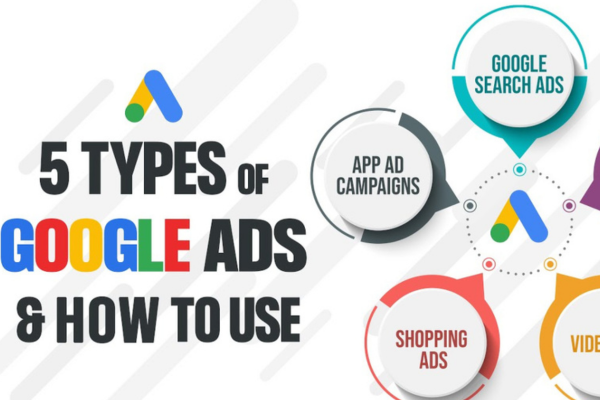
🧠 What Are the Different Types of Google Ads Campaigns?

In the ever-evolving world of digital marketing, Google Ads stands out as a powerful platform that helps businesses reach their customers effectively. With over 8.5 billion searches happening on Google every day, advertisers are given a wide array of campaign types to meet specific marketing goals—whether it’s increasing website traffic, generating leads, promoting mobile apps, or boosting product sales.

To make the most of Google Ads, it’s crucial to understand its different campaign types, each designed to serve distinct business objectives. Selecting the right campaign type plays a vital role in targeting the right audience and maximizing your return on investment (ROI).


🎯 Overview of Google Ads Campaign Types

As of 2025, Google Ads offers the following main campaign types:

  1. Search Campaigns

  2. Display Campaigns

  3. Shopping Campaigns

  4. Video Campaigns

  5. App Campaigns

  6. Performance Max Campaigns

  7. Local Campaigns (now integrated into Performance Max)

  8. Smart Campaigns

Let’s explore each type in detail, with practical examples.

1. 🔍 Search Campaigns

🔧 What It Is:

Search campaigns allow your text ads to appear on Google’s search results page when users search using keywords related to your product or service.

🎯 Ideal For:

  • Generating leads

  • Driving website traffic

  • Promoting a product or service at the moment of intent

🧱 Ad Format:

  • Text-based ads

  • Ad Extensions (Call, Location, Sitelinks, etc.)

🛍️ Example:

Let’s say Mehta Groccers, an online grocery store, wants to attract people searching for fresh vegetables online.

  • Keyword Targeted: “Buy organic vegetables online”

  • Ad Example:

    pgsql
    Fresh Organic Vegetables – Mehta Groccers
    Delivered To Your Doorstep. No Preservatives, 100% Fresh. Order Now!

When users search that keyword, the ad appears at the top of the search results, driving traffic to Mehta Groccers’ website.

2. 🖼️ Display Campaigns

🔧 What It Is:

Display campaigns place visual banner or image ads across Google’s Display Network, which includes over 2 million websites, apps, and Google-owned properties like Gmail and YouTube.

🎯 Ideal For:

  • Brand awareness

  • Re-engaging previous visitors (retargeting)

  • Introducing products to new customers

🧱 Ad Format:

  • Static or animated banners

  • Responsive image ads

🖼️ Example:

Imagine Lazoro, a brand selling handcrafted metal wall art, wants to increase awareness.

  • Their banner ads show visually stunning images of their art pieces.

  • These ads appear on websites related to home decor, interior design blogs, and even on YouTube.

Even if users don’t click immediately, the display ad builds brand recall and encourages future engagement.

3. 🛒 Shopping Campaigns

🔧 What It Is:

Shopping campaigns are tailored for eCommerce businesses. These ads showcase product images, prices, and store names directly on the Google Shopping tab and in search results.

🎯 Ideal For:

  • Driving sales for physical products

  • Reaching customers with high purchase intent

🧱 Ad Format:

  • Product title

  • Image

  • Price

  • Merchant name

  • Promotions (if any)

🛒 Example:

Suppose ZARA wants to promote its new summer collection through Google Shopping:

  • Product: “Floral Midi Dress – ZARA”

  • When someone searches for “floral dresses online,” ZARA’s product appears with the dress image, price (e.g., ₹3,499), and a direct link to buy.

This type of campaign is highly effective because it allows users to see the product before clicking, increasing qualified traffic and conversion rate.

4. 🎥 Video Campaigns

🔧 What It Is:

Video campaigns allow businesses to promote video content across YouTube and other video partner sites in the Google Display Network.

🎯 Ideal For:

  • Brand storytelling

  • Engaging customers visually and emotionally

  • Product demonstrations and tutorials

🧱 Ad Format:

  • Skippable in-stream ads

  • Non-skippable in-stream ads

  • Bumper ads (6-second ads)

  • In-feed video ads

🎥 Example:

Imagine ZARA releases a new ad video showcasing its latest “Eco-Friendly Linen Collection.”

  • ZARA can run this video before fashion-related content on YouTube.

  • Viewers interested in fashion trends see the ad before watching a fashion influencer’s video, increasing visibility and engagement.

This campaign boosts brand perception and can lead to a significant uplift in traffic to the website or app.

5. 📱 App Campaigns

🔧 What It Is:

App campaigns promote mobile applications across Google Search, Play Store, YouTube, Discover, and the Display Network using automated targeting and bidding.

🎯 Ideal For:

  • Driving app installs

  • Increasing in-app actions (e.g., purchases, sign-ups)

  • Boosting app engagement

🧱 Ad Format:

  • Auto-generated ads using app assets like description, icon, video, and user ratings

📲 Example:

Suppose ZARA wants to promote its mobile shopping app.

  • It runs an App Campaign for Installs targeting fashion-savvy users aged 18–35.

  • The ads show up when users search for fashion apps, watch styling videos, or browse fashion blogs.

  • When clicked, the user is taken directly to the Play Store or App Store.

The campaign can even optimize for in-app purchases, not just installs.

6. ⚡ Performance Max Campaigns

🔧 What It Is:

Performance Max (PMax) is Google’s newest campaign type that combines automation, machine learning, and optimization across all Google properties using a single campaign.

🎯 Ideal For:

  • Businesses with multiple objectives (sales, leads, local visits)

  • Wanting full-funnel advertising with minimal manual management

🧱 Ad Format:

  • Uses a mix of text, image, video, and product feed

  • Automatically adjusts assets and targeting for best results

Example:

Let’s say Lazoro launches a Performance Max campaign to sell its entire metal wall art catalog.

  • Assets: Product feed, lifestyle images, promotional videos

  • Google uses machine learning to decide when and where to show ads across Search, Display, Gmail, YouTube, Maps, and Discover

  • Optimizes for conversions like “Add to Cart” or “Purchase”

PMax campaigns are ideal for eCommerce brands wanting broad exposure with minimum effort.

7. 📍 Local Campaigns (now part of Performance Max)

🔧 What It Was:

Local campaigns helped drive store visits by promoting physical locations across Search, Maps, YouTube, and Display.

Now, it’s integrated into Performance Max but is still worth mentioning as a campaign goal.

🎯 Ideal For:

  • Businesses with physical locations

  • Driving store foot traffic

🧱 Ad Format:

  • Store address, directions, open hours, call button

📍 Example:

ZARA’s physical outlet in Mumbai can show local ads when someone nearby searches “ZARA store near me.”

Users see:

  • Map listing

  • Store details

  • Directions with one tap

8. 💡 Smart Campaigns

🔧 What It Is:

Smart campaigns are automated campaigns designed for small businesses or beginners. Google handles most of the work—from keyword targeting to ad creation and bidding.

🎯 Ideal For:

  • Small business owners

  • Those with limited time or technical knowledge

🧱 Ad Format:

  • Basic text ads

  • Automatically optimized by Google

🧠 Example:

Suppose a small boutique brand, “Trekovate Fashion Studio”, wants to promote its handcrafted jackets.

With a Smart Campaign, the owner simply enters:

  • Business goal (e.g., get calls, website visits)

  • Business info

  • Ad copy and location

Google takes care of the rest—placing the ads across search and display, optimizing for performance.


📊 Comparison Table of Google Ads Campaign Types:

Campaign Type Best For Ad Format Main Channels
Search Ads High-intent leads Text ads Google Search
Display Ads Brand awareness Image, GIF, Banner ads Display Network, Gmail
Shopping Ads Product sales Product images + prices Google Shopping, Search
Video Ads Storytelling, engagement YouTube video ads YouTube, GDN
App Campaigns App installs and in-app actions Auto-generated ads Search, Play Store, YouTube
Performance Max Full funnel conversions Multi-asset, dynamic All Google properties
Smart Campaigns Simple setup for small businesses Auto-generated text/image ads Search & Display

Google Ads offers a variety of campaign types to cater to different business goals, budgets, and target audiences. Whether you’re looking to increase product sales, boost brand visibility, or drive app downloads, there’s a campaign type tailored for you.

What is Pay-Per-Click (PPC) advertising?

Definition:

Pay-Per-Click (PPC) is a form of online advertising where advertisers pay a fee each time their ad is clicked. Essentially, it’s a way of buying visits to your website rather than trying to “earn” those visits organically through methods like SEO.

The most common and widely used platform for PPC is Google Ads, but other platforms like Bing Ads, Facebook Ads, Instagram Ads, LinkedIn Ads, and YouTube Ads also support PPC models.

How PPC Works:

  1. Advertiser creates an ad and selects relevant keywords or target audience criteria.

  2. The ad is entered into an auction whenever a user searches for those keywords or fits the targeting.

  3. The platform decides which ad(s) to display based on:

    • The advertiser’s bid (maximum willing to pay for a click),

    • The ad’s relevance and quality (Quality Score),

    • Expected Click-Through Rate (CTR).

  4. If your ad gets clicked, you pay the platform a small fee.

  5. If managed well, the fee is trivial compared to the value of the conversion (a sale, lead, sign-up, etc.).

Example of PPC:

Suppose you run a business that sells running shoes online.

  • You set up a PPC campaign with Google Ads.

  • Your ad targets the keyword: “Buy Running Shoes Online”.

  • A user types that exact keyword into Google.

  • Your ad appears at the top of the search results.

  • The user clicks on your ad → is taken to your website.

  • You pay Google, say ₹25 for that click.

  • If the user buys a pair of shoes worth ₹2,500, the PPC ad has given you a great return on investment.

PPC Advertising Example for ZARA

🛍️ Business Overview:

ZARA is an international fashion retailer offering trendy clothing, shoes, and accessories for men, women, and children. The brand frequently updates its inventory and targets style-conscious consumers worldwide.

🎯 Objective of the PPC Campaign:

To drive traffic to the ZARA online store and increase sales of their new summer collection.

📊 PPC Campaign Setup (Google Ads)

1. Campaign Type:

  • Search Ads (for Google Search)

  • Display Ads (for visual awareness on partner websites)

  • Shopping Ads (showcase product images, prices, etc.)

2. Target Audience:

  • Location: India, UK, USA (based on regional campaigns)

  • Demographics: Women, Age 18–40

  • Interests: Fashion, online shopping, luxury brands

3. Keywords Targeted:

Keyword Match Type
“ZARA summer collection 2025” Exact
“buy ZARA dresses online” Phrase
“ZARA women’s fashion” Broad Match Mod
“latest ZARA arrivals” Phrase
“ZARA store near me” Exact

4. Ad Copy Example (Search Ad):

Headline 1: New ZARA Summer Dresses 2025
Headline 2: Shop Trendy Looks Online
Headline 3: Free Shipping & Easy Returns

Description:
Explore ZARA’s latest summer arrivals – stylish, sustainable, and affordable. Limited-time offers. Shop now before stocks run out!

Display URL:
www.zara.com/in/summer-dresses

5. Ad Extensions Used:

Extension Type Example
Sitelink Women’s Collection
Callout Free Shipping
Structured Snippet Styles: Maxi, Midi, Floral, Linen
Location Extension Shows nearby ZARA stores in user’s area

6. Bidding Strategy:

  • Maximize Conversions using smart bidding

  • Target Cost Per Acquisition (CPA) = ₹3007. Landing Page:

💰 Results (Hypothetical for Illustration):

  • Daily Budget: ₹10,000

  • Clicks/Day: 500

  • Average CPC: ₹20

  • Conversions (Sales): 50

  • Conversion Rate: 10%

  • Revenue/Day: ₹1,00,000 (average order value ₹2,000)

Popular PPC Platforms:

Platform Description
Google Ads Most popular PPC platform; includes Search, Display, YouTube, Shopping ads.
Bing Ads Similar to Google Ads; lower competition and costs.
Facebook Ads PPC based on interests, behaviors, and demographics.
Instagram Ads Visual PPC ads through Meta (Facebook) platform.
LinkedIn Ads Ideal for B2B and professional services.
Amazon Ads PPC ads for products sold on Amazon.

Advantages of PPC Advertising:

  1. Immediate Results: Start driving traffic within minutes.

  2. Highly Targeted: Choose audience by keywords, location, device, interests, age, etc.

  3. Budget Control: Set daily/monthly limits; no overspending.

  4. Measurable ROI: Track clicks, conversions, cost-per-click, and more.

  5. Scalable: Increase budget and reach as performance improves.

Disadvantages of PPC Advertising:

  1. Costly if unmanaged: Without optimization, costs can exceed revenue.

  2. Click Fraud: Competitors or bots may click on your ads.

  3. Learning Curve: Requires understanding of bidding, keywords, targeting, etc.

  4. Short-Term Visibility: Unlike SEO, traffic stops once the budget is exhausted.

Common PPC Metrics:

Metric Meaning
CPC (Cost Per Click) Amount paid for each ad click.
CTR (Click-Through Rate) % of people who saw the ad and clicked.
Impressions Number of times the ad was shown.
Conversion Rate % of clicks that result in a conversion (sale, sign-up).
Quality Score Google’s rating of your ad quality and relevance.
Ad Rank Determines your ad’s position on the page.

PPC advertising is one of the most effective and immediate digital marketing tools available. Whether you’re a small business or a large enterprise, PPC allows you to reach your target audience, generate leads, and drive sales in a controlled and measurable way.

When managed strategically, PPC campaigns can deliver high ROI and serve as a key component in any digital marketing strategy.

How does Google Ads work?

Introduction

In today’s digital economy, online visibility can make or break a business. With billions of searches happening on Google daily, businesses are constantly looking for ways to reach potential customers online. This is where Google Ads, formerly known as Google AdWords, plays a critical role. Google Ads is one of the most powerful online advertising platforms that allows businesses to reach their target audiences right when they are searching for products or services.

But how does Google Ads really work? What happens behind the scenes after you type a keyword into Google and see ads at the top of your search results? Let’s explore the system, structure, and strategy behind this powerful tool.

What is Google Ads?

Google Ads is an online advertising platform developed by Google, where advertisers bid to display brief advertisements, service offerings, product listings, or videos to web users. These ads can appear in search results, on non-search websites, mobile apps, and YouTube videos.

Google Ads operates primarily under a pay-per-click (PPC) model. This means advertisers pay only when a user clicks on their ad. The platform helps businesses of all sizes to get visibility across Google’s vast digital real estate.

Types of Google Ads Campaigns

Google Ads offers several types of campaigns, depending on business goals and the audience you want to reach:

  1. Search Ads

    • Appear on Google Search Engine Results Pages (SERPs).

    • Example: A user searches “best running shoes,” and your shoe store ad appears at the top.

  2. Display Ads

    • Banner ads shown across Google’s Display Network (GDN), which includes over 2 million websites and apps.

    • Ideal for brand awareness.

  3. Shopping Ads

    • Feature product images, prices, and merchant names.

    • Appear when users search for products to buy online.

  4. Video Ads

    • Shown on YouTube and other Google video partners.

    • Great for storytelling and brand engagement.

  5. App Campaigns

    • Promote your mobile app across Search, Play Store, YouTube, and more.

  6. Performance Max Campaigns

    • New AI-powered campaign that runs across all Google properties (Search, Display, Maps, YouTube, Gmail, etc.) using automatio

    • How Does Google Ads Work?

At its core, Google Ads operates on an auction system, but it’s more than just bidding the highest amount. Let’s break it down:

Step-by-Step Breakdown

1. Keyword Research and Targeting

It all begins with keywords—the words and phrases that users type into Google’s search bar.

  • Advertisers choose keywords relevant to their product or service.

  • These keywords trigger their ads to appear when searched.

Example: A local bakery selects keywords like “birthday cakes near me” or “custom cupcakes delivery.”

2. Creating the Ad

Advertisers create text or visual ads that include:

  • Headline(s)

  • Description

  • Display URL

  • Call to Action (CTA)

Ad extensions (e.g., phone numbers, sitelinks, reviews) can enhance the appearance.

3. Setting Up the Campaign

Advertisers define:

  • Budget: Daily or monthly limits.

  • Bidding Strategy: Choose manual bidding or automated strategies like Target CPA (cost-per-acquisition), ROAS (return on ad spend), etc.

  • Targeting Options:

    • Location: Show ads in specific countries, cities, or radius.

    • Demographics: Age, gender, income.

    • Device: Desktop, mobile, tablet.

    • Time: Days and hours when ads should appear.

4. The Google Ads Auction

When a user performs a search, Google scans all relevant ads and initiates an instantaneous auction to decide:

  • Which ads to show

  • In what order

  • At what cost

Contrary to popular belief, the highest bid doesn’t always win. The winner is determined by something called Ad Rank.

What is Ad Rank?

Ad Rank = Maximum Bid × Quality Score

Let’s break this formula:

a. Maximum Bid

  • This is the highest amount an advertiser is willing to pay for a click.

b. Quality Score

A score from 1–10 based on:

  • CTR (Click-Through Rate) – How likely people are to click your ad.

  • Ad Relevance – How closely your ad matches the user’s intent.

  • Landing Page Experience – Is your website helpful and easy to navigate?

A higher Quality Score means:

  • Lower cost per click (CPC)

  • Higher ad position

5. Ad Placement and Cost

  • Once Google calculates Ad Ranks, the ad with the highest rank gets the top position.

  • Advertisers only pay when someone clicks on the ad (PPC).

  • The actual amount paid is just enough to beat the Ad Rank of the next competitor, not necessarily the full bid.

For example:
If Advertiser A bids ₹100 and has a Quality Score of 10, and Advertiser B bids ₹150 with a Quality Score of 5, Advertiser A will still rank higher and pay less.

6. Tracking and Optimization

Once your ads are running, you must monitor and optimize:

  • Click-Through Rate (CTR) – How engaging is your ad?

  • Conversion Rate – Are users taking desired actions (buy, sign up)?

  • Cost Per Conversion – How much are you paying per customer?

Tools like Google Analytics and Google Ads Conversion Tracking help you measure ROI and tweak strategies.

7. Automation and Smart Campaigns

Google offers Smart Bidding and AI-powered tools to optimize bids automatically. You can also use Responsive Search Ads where Google mixes and matches different headlines and descriptions to find the best-performing combination.

Real-Life Example of Google Ads in Action

Let’s consider a fictional company: “Lazoro Wall Art”, which specializes in handcrafted metal wall art and decor. Let’s see how they use Google Ads:

Objective:

Drive more traffic and sales to their online store, www.lazoro.in.

Step-by-Step Campaign Setup:

  1. Keyword Research:

    • Keywords: “buy metal wall art,” “custom wall decor India,” “handmade wall art online.”

  2. Ad Creation:

    • Headline: “Handcrafted Metal Wall Art – Free Shipping in India”

    • Description: “Shop unique, artistic metal decor for your home. 100% handmade. Order now from Lazoro!”

    • Display URL: www.lazoro.in

  3. Campaign Settings:

    • Budget: ₹1,000/day

    • Bidding Strategy: Maximize conversions

    • Location Targeting: India only

    • Device Targeting: All devices

    • Ad Extensions: Call button, Sitelinks (Categories like “Nature Art,” “Anime Wall Art”)

  4. Landing Page Optimization:

    • Fast-loading product pages

    • Clear product info and “Buy Now” buttons

    • Mobile-friendly UI

  5. Ad Auction Results:

    • Competing against other decor stores.

    • Lazoro has high relevance and great landing pages → earns high Quality Score.

    • Wins top 2 ad slots at ₹15 per click even though others bid ₹25+.

  6. Performance Monitoring:

    • 500 clicks in 1 week

    • 50 sales

    • Conversion Rate: 10%

    • Cost per conversion: ₹150

    • ROI is strong due to high product margins.

Benefits of Google Ads

  • Targeted Reach: Reach the right audience at the right time.

  • Cost Control: Set budgets and only pay for clicks.

  • Measurable Results: Track every impression, click, and conversion.

  • Speed: Get instant traffic, unlike SEO which takes time.

  • Scalability: Start small, then scale with performance.

Challenges to Consider

  • Competition: Highly competitive niches can drive up costs.

  • Click Fraud: Some bots or competitors may click ads.

  • Constant Optimization: Requires active management for best results.

  • Learning Curve: Complex interface for beginners.

Conclusion

Google Ads is an incredibly powerful marketing platform that, when used correctly, can transform businesses by driving targeted traffic, increasing brand awareness, and boosting sales. Its unique blend of reach, targeting, and performance tracking makes it an essential tool for modern digital marketers.

Understanding how Google Ads works—from keyword selection, ad creation, auctions, to optimization—gives advertisers the power to control their online presence and outperform competitors.

Whether you’re a local shop or a global e-commerce brand like Lazoro, leveraging Google Ads strategically can bring measurable, scalable success in today’s crowded online marketplace.

How to Become a Digital Marketing Specialist

Digital marketing is one of the fastest-growing fields today. Many people are interested in building a career in digital marketing, and becoming a digital...

What is SMM in Digital Marketing

SMM, or Social Media Marketing, is one of the most important parts of digital marketing. In simple words, SMM is the process of using...

What is Google Analytics in Digital Marketing

Google Analytics is one of the most important tools in digital marketing. It helps businesses understand how people interact with their websites and online...

What is Google AdWords in Digital Marketing

Google AdWords is one of the most important tools in digital marketing. Many businesses use AdWords to reach their target audience online and increase...

What Is CPM in Digital Marketing

In digital marketing, understanding how your ads are priced and measured is very important. Different advertising models help marketers track performance and control spending....